Filmmaker Spike Lee has publicly defended Lionsgate’s highly anticipated Michael Jackson biopic, Michael, amidst widespread criticism regarding its decision to exclude the music icon’s child sexual abuse allegations. Lee, an Oscar-winning director with a personal and professional connection to the late pop superstar, emphasized that the film’s narrative scope, concluding in 1988, logically predates the emergence of these allegations. His remarks highlight a significant point of contention for a film that has already garnered immense commercial success despite a polarizing critical reception.
Spike Lee’s Stance and Personal Connection to the King of Pop
In a recent interview with CNN, Spike Lee expressed his profound admiration for Michael, revealing he had seen the film twice and "loved" it. His primary defense against critics centered on the biopic’s defined timeline. "First of all, if you’re a movie critic, and you’re complaining about the stuff — all this other stuff — but the movie ends at ’88," Lee explained, addressing the anachronism he perceives in the criticism. "The stuff you’re talking about, accusations, happen [later]. So you’re critiquing the film on something that you want in, but it doesn’t work in the timeline of the film. But people showed up. Worldwide, people showed their love."
Lee’s connection to Michael Jackson runs deep, extending beyond mere appreciation. He collaborated directly with Jackson, directing the music video for the powerful 1996 song "They Don’t Care About Us." Furthermore, Lee helmed two significant documentaries exploring different facets of Jackson’s career: 2012’s Bad 25, commemorating the 25th anniversary of Jackson’s seminal album Bad, and 2016’s Michael Jackson’s Journey From Motown to Off the Wall, which delved into the artist’s early solo career and transition from Motown to his groundbreaking 1979 album. This history positions Lee not merely as an observer but as a long-standing associate and admirer, lending a personal weight to his defense. During the interview, Lee also expressed a broader sentiment of loss for both Jackson and Prince, stating, "I miss Mike. I miss Prince. I mean, these are my brothers. I worked with both of them. Both beautiful, beautiful people."
The Michael Biopic: Production Challenges and Narrative Choices
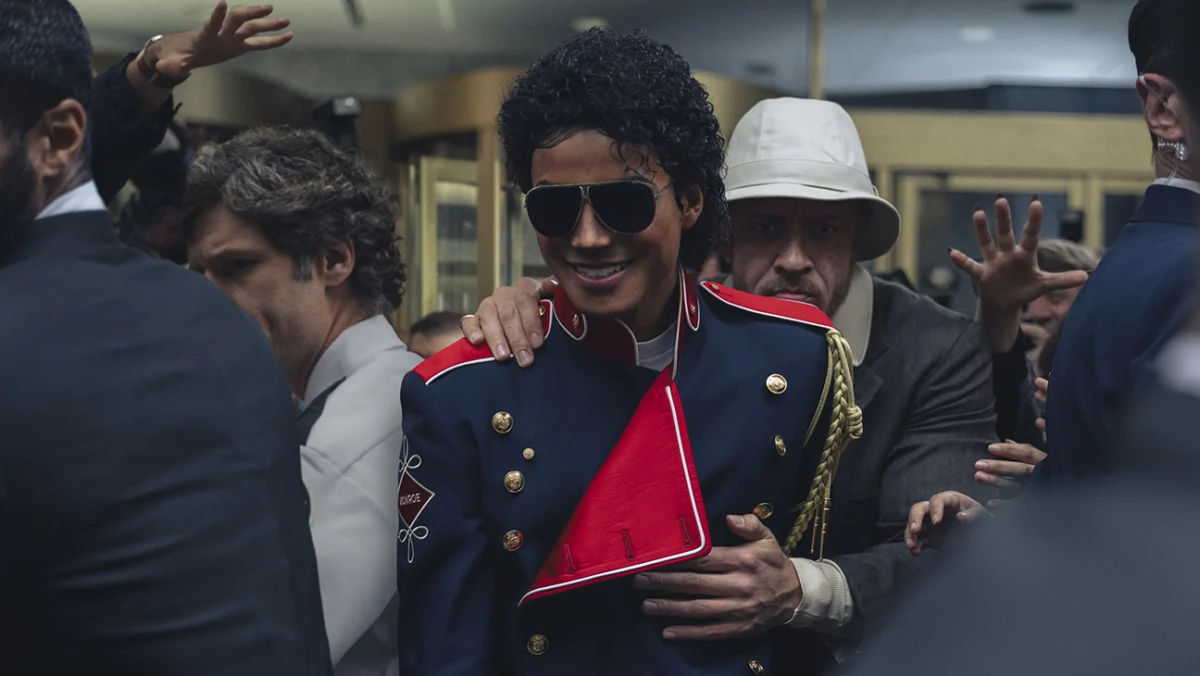
The Michael biopic, directed by Antoine Fuqua and starring Jaafar Jackson (Michael’s nephew) in the titular role, has navigated a complex production journey marked by significant creative and logistical challenges. Initial reports indicated that the film, backed by the Michael Jackson estate, faced a substantial overhaul due to an "oversight" related to the portrayal of the child sexual abuse allegations. According to The Hollywood Reporter, these allegations were initially a prominent part of the film’s third act. However, a crucial detail emerged: a past accuser had reached a settlement with the Jackson estate that included a clause guaranteeing he would not be depicted in any future commercial projects. This contractual obligation necessitated a dramatic restructuring of the film’s narrative.
The impact of this discovery was profound, leading to 22 days of additional photography and a complete re-working of the ending. This extensive reshoot not only added millions to the production budget but also pushed the film’s release date back by a full year, from April 2025 to April 2026. The decision to conclude the film in 1988, as defended by Spike Lee, effectively circumvents the period in Jackson’s life when the first public accusations surfaced. The initial allegations against Jackson first came to public attention in 1993, with the civil lawsuit filed by the Chandler family. This timeline places the primary controversies outside the biographical scope of Michael, allowing the film to focus on Jackson’s meteoric rise to fame, his creative genius, and his unparalleled impact on global music and culture, up to the peak of his Bad album era.
Critical Reception Versus Commercial Triumph
Despite the internal production challenges and the ongoing debate surrounding its narrative omissions, Michael has emerged as a formidable commercial success. The film has reportedly grossed over $400 million worldwide, solidifying its position as one of the top-grossing musical biopics in cinematic history. This box office performance stands in stark contrast to its critical reception, which has been largely negative. Review aggregators and film critics have widely panned the movie, with common criticisms often revolving around its perceived hagiographic approach, its reluctance to delve into the darker aspects of Jackson’s life, and a general lack of critical distance from its subject.
The disparity between critical and commercial success for Michael highlights a recurring trend in the entertainment industry, particularly concerning biopics of complex public figures. Audiences, driven by nostalgia, curiosity, and an enduring love for Jackson’s music, have flocked to theaters, demonstrating a clear demand for his story on the big screen. For many moviegoers, the opportunity to relive Jackson’s iconic performances and celebrate his musical legacy appears to outweigh concerns about biographical completeness or critical scrutiny. This phenomenon suggests that for certain legendary artists, the sheer power of their cultural impact can transcend critical evaluations, particularly when a film is endorsed and shaped by their estate.
The Timeline of Allegations and Public Scrutiny
To fully appreciate the context of Spike Lee’s defense and the film’s narrative choices, it is essential to briefly outline the timeline of the child sexual abuse allegations against Michael Jackson. The first widely publicized accusation emerged in 1993, when 13-year-old Jordan Chandler accused Jackson of molestation. This led to a civil lawsuit that was eventually settled out of court for an undisclosed sum, reportedly around $20 million. No criminal charges were filed at that time.
The allegations resurfaced dramatically in 2003 when Jackson was arrested and charged with multiple counts of child molestation involving Gavin Arvizo. The highly publicized trial concluded in 2005 with Jackson being acquitted on all counts. Despite the acquittal, the public perception of Jackson remained deeply divided, with many believing the allegations while others staunchly defended his innocence.
The conversation was reignited in 2019 with the release of the HBO documentary Leaving Neverland, which featured detailed accounts from Wade Robson and James Safechuck, who alleged they were abused by Jackson as children. The documentary sparked renewed debate and further polarized public opinion, leading to calls for boycotts of Jackson’s music and removal of his content from various platforms, while also prompting vigorous defenses from his estate and loyal fans.
By ending Michael in 1988, the filmmakers have deliberately chosen to conclude the narrative before any of these public allegations came to light. This decision, while defended by Lee as a matter of chronological accuracy within the film’s scope, is precisely what has drawn criticism from those who believe any comprehensive portrayal of Jackson’s life must address these controversies, regardless of the timeline chosen for a single film.
Biopics, Estates, and the Quest for Historical Accuracy
The Michael biopic exemplifies the inherent challenges and ethical dilemmas faced by filmmakers when crafting biographical narratives, especially when dealing with figures whose lives are marked by both extraordinary achievements and significant controversy. The involvement of an artist’s estate, while often providing unparalleled access to archives, music rights, and personal insights, can also exert considerable influence over the narrative, potentially leading to a sanitized or idealized portrayal.
The Michael Jackson estate, which co-produces the film, has an undeniable interest in safeguarding and rehabilitating Jackson’s legacy. This objective naturally informs the creative decisions made for Michael. The contractual obligation to avoid depicting a specific accuser further complicated matters, necessitating the creative workaround of a fixed chronological endpoint. This raises broader questions about the balance between artistic freedom, historical accuracy, and the commercial imperatives of biographical filmmaking, particularly when estate control is a factor.
Filmmakers often grapple with how to present a "complete" picture of a subject. Some biopics choose to focus on specific periods or themes, while others attempt a cradle-to-grave narrative. The choice made for Michael — to focus on the genesis of his superstardom and conclude before the allegations — allows for a celebratory narrative arc, but it inevitably leaves a significant portion of his later, more turbulent life unexplored.
Broader Impact and Future Implications
The success of Michael at the box office, coupled with its contentious critical reception, underscores the enduring power of Michael Jackson’s artistry and the complexity of his public image. The film’s approach sets a precedent for how future biopics of controversial figures might navigate sensitive subjects, especially when backed by estates with specific narrative interests.
The consideration of a potential sequel to Michael, as reported by The Hollywood Reporter, suggests that the filmmakers are aware of the narrative gaps. A sequel would logically be tasked with covering the later half of Jackson’s life, including the period when the child sexual abuse allegations emerged and dominated public discourse. Should a sequel proceed, it would face even greater scrutiny and pressure to address these complex issues with journalistic integrity and sensitivity. The challenge for any future installment would be to reconcile the estate’s desire to protect Jackson’s legacy with the public expectation for a more comprehensive and unflinching portrayal of his life, warts and all.
Ultimately, Spike Lee’s defense of Michael serves as a focal point in a larger debate about biographical filmmaking, historical truth, and the enduring legacy of one of the most iconic, yet profoundly complicated, figures in music history. The film’s performance and the discourse surrounding its omissions will likely continue to shape discussions on how art reflects, or chooses not to reflect, the full spectrum of human experience.