Ryusuke Hamaguchi, the acclaimed Japanese director, has once again pushed artistic boundaries with his latest feature, "All of a Sudden," a Franco-Japanese co-production that premiered at the prestigious 2026 Cannes Film Festival. The film, a profound exploration of human connection, healthcare ethics, and broader societal critiques, marks Hamaguchi’s venture into working with a predominantly French cast and crew, adding his name to a distinguished list of Asian filmmakers who have undertaken such ambitious transcultural projects. While ambitious, these cross-border productions often navigate a complex landscape of linguistic differences, cultural nuances, and logistical challenges, frequently leading to varied critical reception. "All of a Sudden," despite some structural critiques, has garnered significant attention, particularly for its powerful performances, with lead actresses Virginie Efira and Tao Okamoto jointly receiving the Best Actress prize at Cannes.
Hamaguchi’s Evolving Vision and Transcultural Collaborations
Ryusuke Hamaguchi has rapidly ascended to global cinematic prominence, celebrated for his intricate narratives, profound character studies, and a distinctive reliance on dialogue to unravel the complexities of human relationships and societal structures. His previous works, such as the Oscar-winning "Drive My Car" (2021) and the critically lauded "Wheel of Fortune and Fantasy" (2021), established him as a master of contemporary Japanese cinema capable of resonating with international audiences. His decision to helm "All of a Sudden" in France represents a significant step in his career, mirroring the paths of other renowned Asian directors who have sought to broaden their artistic horizons by collaborating with European film industries.
This trend of transcultural filmmaking is not new. Directors like Wong Kar-wai with "My Blueberry Nights" (2007), Hou Hsiao-Hsien with "Flight of the Red Balloon" (2007), and Apichatpong Weerasethakul with "Memoria" (2021) have previously ventured into foreign territories, often seeking new artistic perspectives, access to different funding models, and the opportunity to work with diverse talents. These collaborations, while enriching, inherently present unique challenges. Filmmakers must navigate language barriers, adapt to different production methodologies, and ensure the cultural authenticity of their narratives, particularly when exploring sensitive themes. Hamaguchi’s endeavor with "All of a Sudden" underscores these complexities, as he grapples with the inherent difficulties of directing in a language he does not natively speak and interpreting cultural contexts that are not his own. The film’s co-writing and translation by Léa Le Dimna were crucial in bridging the linguistic divide, aiming for a naturalistic French dialogue that often eludes such international co-productions.
Thematic Core: "Humanitude" and the Crisis of Care
At the heart of "All of a Sudden" lies a compelling and timely critique of the global healthcare system, particularly as it pertains to elder care. The narrative centers on Marie-Lou Fontaine, portrayed by Virginie Efira, a dedicated manager of a private nursing home in the Parisian suburbs. Marie-Lou embarks on a mission to implement Humanitude, an actual humane care philosophy developed by French experts Yves Gineste and Rosette Marescotti. This technique emphasizes respect, dignity, and empathy in the care of elderly residents, prioritizing their psychological and emotional well-being over conventional efficiency and profit-driven models.
The film meticulously portrays Marie-Lou’s uphill battle against institutional inertia and entrenched cynicism. She faces significant resistance from both the nursing home’s corporate management, whose primary concern is shareholder returns and financial metrics, and a staff that views her innovative ideas as impractical and overly idealistic. This conflict exposes the systemic flaws prevalent in many modern care facilities worldwide, where understaffing, burnout, and a focus on cost-cutting often compromise the quality of patient care. According to a 2023 report by the World Health Organization, the global demand for long-term elder care is projected to triple by 2050, exacerbating existing pressures on staff and resources. The film’s use of a real care facility and its actual residents as extras lends a stark authenticity to this depiction, grounding the theoretical discussions in a tangible, lived reality.
Hamaguchi uses Marie-Lou’s struggle to pose fundamental questions: Can profit-driven institutions truly transform into compassionate havens for the vulnerable? Is it possible to uphold human dignity within a system often characterized by depersonalization? The film’s exploration of Humanitude serves as a powerful commentary on the urgent need for ethical reform in elder care, advocating for a shift towards person-centered approaches that recognize the inherent worth of every individual.
Didacticism and Societal Critique
"All of a Sudden" is characterized by a notably didactic approach, a stylistic choice that has drawn both praise for its intellectual ambition and criticism for its perceived lack of subtlety. The film frequently employs direct exposition to address pressing societal issues, with characters often delivering extensive monologues that feel akin to lectures. One particularly notable scene involves Marie-Lou using a whiteboard to illustrate the systemic problems embedded within contemporary capitalism, discussing the concentration of wealth, the implications of declining birth rates in developed nations, and the looming crisis of resource scarcity.
This explicit articulation of societal ills extends beyond the immediate context of the nursing home, aiming to connect individual struggles with broader global challenges. The film suggests that the failures within the healthcare system are symptomatic of deeper maladies affecting market-driven societies. While some viewers may find this directness intellectually stimulating, others might perceive it as overly expository, detracting from the narrative’s organic flow. This stylistic choice, however, is consistent with Hamaguchi’s history of dialogue-heavy films, where intellectual discourse often serves as a primary vehicle for thematic exploration. He challenges the audience to engage directly with complex ideas, using his characters as conduits for philosophical and sociological inquiry rather than purely emotional ones.
The Role of Art and Philosophical Dialogue
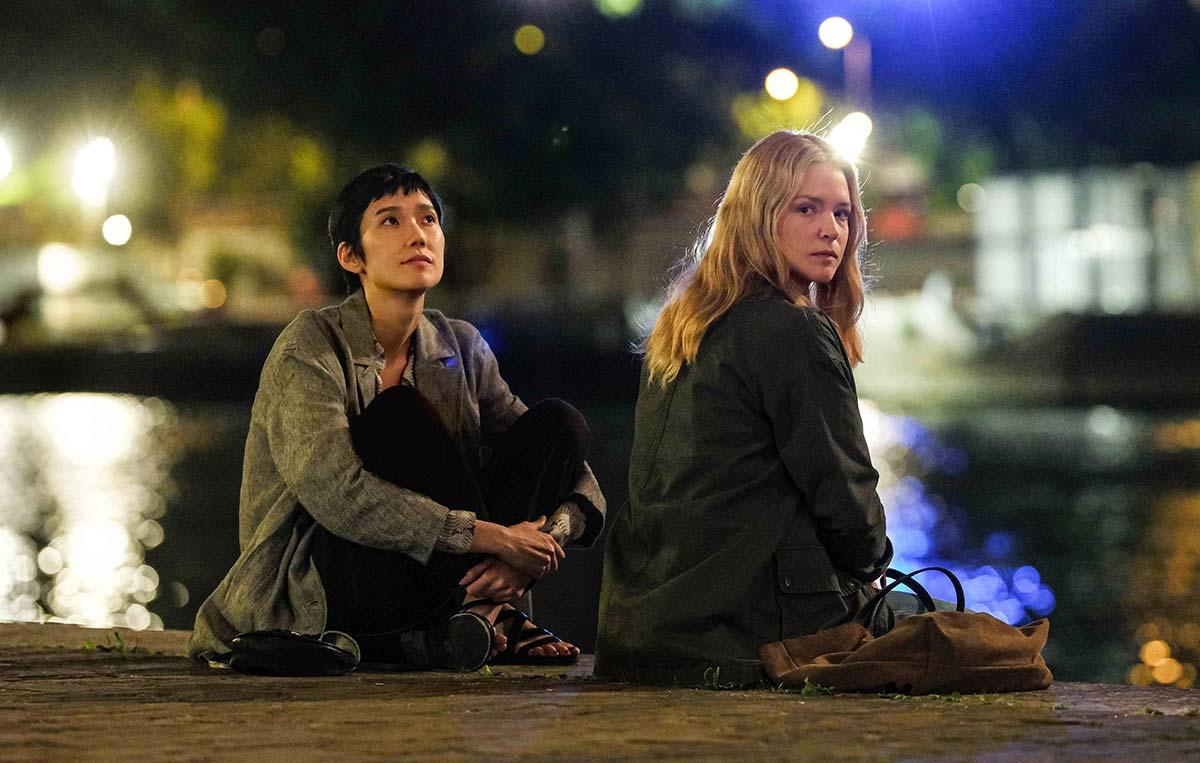
Beyond the critique of the healthcare system, "All of a Sudden" introduces art as another potential solution to societal fragmentation. This aspect is primarily explored through the burgeoning friendship between Marie-Lou and Mari Morisaki, a Japanese playwright portrayed by Tao Okamoto. Their chance encounter blossoms into a deep bond, fueled by shared intellectual curiosity and a mutual appreciation for artistic expression. Marie-Lou, deeply moved by one of Morisaki’s plays, finds a kindred spirit in the artist.
Their conversations, often set against the picturesque backdrop of the Seine, delve into profound philosophical territories. They discuss the "evils of late capitalism and extractivism," alongside the transformative power of art. These extensive dialogues are central to the film’s philosophical underpinnings and draw direct inspiration from "You and I – The Illness Suddenly Get Worse," a real-life book comprising the correspondence between philosopher Makiko Miyano and medical anthropologist Maho Isono. Miyano, like the character of Mari Morisaki, was living with metastatic breast cancer during the period of these exchanges, adding a poignant layer of authenticity and urgency to the film’s reflections on life, illness, and mortality. Miyano’s subsequent passing imbues the film’s discussions with a profound sense of gravitas, elevating them beyond mere academic discourse.
However, the film’s literary origins are evident in these exchanges, which, while rich in intellectual content, sometimes struggle to translate into naturalistic cinematic dialogue. The conversations, though deeply meaningful, occasionally feel more like a transcript of philosophical debate than spontaneous human interaction. This narrative choice, coupled with the rather convenient plot point of Marie-Lou’s inexplicable fluency in Japanese (a detail the original review highlights as a contrivance, especially given actress Virginie Efira’s native language), underscores the film’s experimental nature. Viewers’ acceptance of these narrative devices largely dictates their engagement with the film’s core ideas.
Performances and Cannes Recognition
Despite its structural and stylistic peculiarities, "All of a Sudden" achieves significant emotional resonance, particularly through the compelling performances of its lead actresses. Virginie Efira as Marie-Lou Fontaine and Tao Okamoto as Mari Morisaki deliver nuanced and deeply affecting portrayals. Their ability to imbue characters who could easily become mere mouthpieces for "Big Ideas" with genuine humanity and depth is a testament to their skill. Efira, known for her versatility in French cinema, brings a fierce determination and vulnerability to Marie-Lou, embodying the tireless advocate for humane care. Okamoto, a Japanese actress and model with international experience, portrays Mari Morisaki with a quiet strength and intellectual intensity that perfectly complements Efira’s character.
Their collaborative efforts in breathing life into these roles were recognized at the 2026 Cannes Film Festival, where both actresses were jointly awarded the Best Actress prize. This prestigious accolade from one of the world’s most influential film festivals not only celebrates their individual talents but also validates Hamaguchi’s directorial vision in eliciting such powerful performances within a challenging narrative framework. Their chemistry, though occasionally forced by plot contrivances, ultimately carries the film’s emotional weight, particularly in moments of shared vulnerability and quiet companionship. The film’s success in portraying deeply touching moments, even beyond the subplot involving terminal cancer, lies in its assured depiction of genuine respect and connection between people, often conveyed through the melodramatic mode in which Hamaguchi excels. Melodrama, with its universal focus on emotions and relationships, transcends cultural and linguistic barriers, allowing the film to communicate profound feelings and ideas in a universally accessible language.
Broader Implications and Metafictional Intent
"All of a Sudden" extends to a runtime of over three hours and fifteen minutes, a length that contributes to its perceived verbosity and repetition. This extended duration allows Hamaguchi to delve deeply into his thematic concerns, but it also tests the audience’s endurance, potentially leading to a sense of narrative bloat. The film’s ultimate message, however, transcends its structural criticisms.
The question of why Hamaguchi chose to transpose this deeply personal and philosophical narrative to France remains open to interpretation. While the French dialogue, carefully crafted with Léa Le Dimna, feels authentic, the Japanese characters sometimes appear to exist in a distinct narrative space, as if they have "wandered onto the wrong soundstage." This apparent incongruity, however, might be intentional. Given the film’s recurring emphasis on theatre and performance – characters are seen watching and later performing a play – this disjunction could be a deliberate metafictional device.
In this reading, "All of a Sudden" might be interpreted as a Brechtian statement, using the artificiality of its setting and certain narrative contrivances to highlight the constructed nature of reality and the transformative power of art, fiction, and performance. By drawing attention to the theatricality of human interaction and the power of storytelling, Hamaguchi might be challenging the audience to consider how narratives, both personal and societal, shape our understanding of the world. The film implicitly asks whether art, in its myriad forms, can truly touch audiences, change lives, and contribute to a more humane and equitable world. This makes "All of a Sudden" a bold, albeit flawed, experiment in global cinema, one that invites rigorous intellectual engagement while simultaneously striving for profound emotional impact. It solidifies Hamaguchi’s reputation as a filmmaker unafraid to tackle complex philosophical questions through the lens of human experience, even as he navigates the intricate landscape of international co-productions.