The landscape of physical production in Los Angeles is undergoing a significant technological transformation as Orbital Studios, a prominent player in the virtual production sector, officially announces the relocation of its headquarters to the historic Television City campus. Moving from its previous base in the downtown Arts District to the expansive 25-acre facility on Beverly Boulevard, Orbital Studios brings with it a sophisticated array of LED volumes and a dedicated research and development laboratory. This strategic move, announced jointly by Orbital Studios and Television City management, signals a pivotal shift in how legacy studio lots are adapting to the digital demands of modern filmmaking and television episodic production.
By integrating Orbital’s proprietary technology into the infrastructure of one of Hollywood’s most storied production hubs, Television City is positioning itself as a leader in the next generation of content creation. The partnership aims to provide incoming productions with immediate access to high-end virtual production (VP) tools, which have become increasingly essential for major studio projects seeking to reduce location costs while maintaining high visual fidelity.
The Evolution of Virtual Production and the Orbital Integration
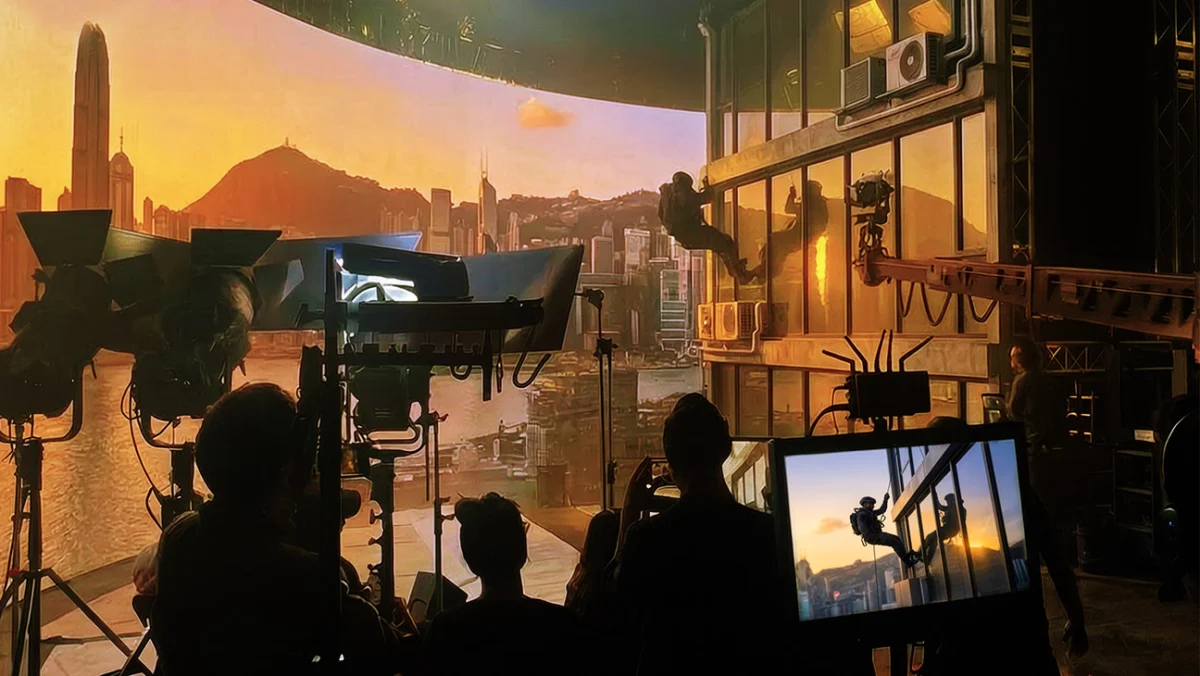
Virtual production represents a convergence of filmmaking, real-time game engine technology, and large-scale LED hardware. Unlike traditional green-screen methods, which require extensive post-production to composite backgrounds, virtual production utilizes "In-Camera Visual Effects" (ICVFX). This involves displaying high-resolution digital environments on massive LED walls—often referred to as "volumes"—behind the actors. The camera’s movement is tracked in real-time, allowing the digital background to shift with the correct parallax, creating a seamless illusion of depth and lighting that is captured directly on the sensor.
Orbital Studios has established itself as a pioneer in this field, having provided the technical backbone for high-profile projects such as History’s "World War II with Tom Hanks" and the Netflix series "Nemesis." The firm’s relocation to Television City includes the installation of multiple LED walls that offer varied configurations for different production scales. Furthermore, the establishment of an R&D lab on-site suggests that the partnership will focus not just on current service delivery but also on the advancement of new technologies, including the integration of Artificial Intelligence (AI) and real-time rendering optimizations.
The technical capabilities Orbital brings to the lot are already being deployed on active projects. The studio is currently facilitating work on "The Drop: A Snowfall Saga," a spinoff of the critically acclaimed FX series "Snowfall." Previous successes, such as their work on "Nemesis," demonstrated the studio’s ability to recreate hyper-realistic versions of urban environments like downtown Los Angeles through advanced digital scans, allowing productions to "shoot" in complex city centers without the logistical nightmare of street closures or permits.
A Chronology of Innovation and Expansion at Television City
Television City, originally opened by CBS in 1952, has long been a cornerstone of the American broadcast industry. For decades, it was the birthplace of iconic programs ranging from "The Price Is Right" and "The Young and the Restless" to "American Idol" and "The Late Late Show with James Corden." However, the transition of the facility from a network-owned asset to an independent production hub began in earnest in 2019, when Hackman Capital Partners acquired the site for approximately $750 million.
Since the acquisition, Television City has been the subject of a massive $1.25 billion modernization plan titled "TVC 2050." This ambitious project seeks to upgrade the aging infrastructure to meet the demands of 21st-century streaming and cinematic production. The timeline of recent developments highlights the facility’s aggressive push toward modernization:
- 2019: Hackman Capital Partners completes the purchase of CBS Television City, rebranding it simply as Television City.
- 2021: Plans for "TVC 2050" are unveiled, proposing the addition of new soundstages, office space, and production support facilities to the 25-acre lot.
- 2023: Television City faces legal and local opposition, most notably from Rick Caruso, owner of the adjacent shopping center The Grove. Caruso’s legal challenges focused on the environmental and traffic impacts of the expansion, though Television City has continued to move forward with its modernization goals.
- 2024: Amidst a general downturn in Los Angeles-based production following the 2023 industry strikes, Television City announces a diversification of its client base, including a plan to open stages to digital influencers and content creators in 2025.
- Late 2024: The partnership with Orbital Studios is finalized, cementing the lot’s status as a high-tech hub for virtual production.
Industry Data: The Economic Imperative for Virtual Production
The move by Orbital Studios comes at a critical juncture for the Los Angeles film industry. According to recent reports from FilmLA, the official film office for the City and County of Los Angeles, production levels have struggled to return to pre-pandemic and pre-strike highs. In the third quarter of 2024, production activity remained nearly 40% below the five-year average.
In this climate, efficiency is the primary driver of production decisions. Virtual production offers several economic advantages that Television City hopes will attract domestic and international projects back to the Hollywood area:
- Reduced Travel and Logistics: By simulating global locations within an LED volume, productions can eliminate the costs associated with flying large crews and equipment to international destinations.
- Controlled Environments: VP allows for "Golden Hour" lighting to be maintained for 12 hours a day, removing the unpredictability of weather and natural light, which often leads to costly production delays.
- Sustainability: The reduction in physical set construction and long-distance travel aligns with the industry’s increasing focus on environmental sustainability and carbon footprint reduction.
- Post-Production Savings: Because a significant portion of the visual effects are captured in-camera, the time and budget required for traditional post-production compositing are significantly reduced.
The global virtual production market was valued at approximately $1.8 billion in 2022 and is projected to grow at a compound annual growth rate (CAGR) of over 15% through 2030. By embedding Orbital Studios into its permanent infrastructure, Television City is positioning itself to capture a significant share of this growing market.
Perspectives from Leadership: Bridging Heritage and Technology
The leadership of both organizations has emphasized that this partnership is not merely a real estate transaction but a strategic alignment of values. Anthony Mazziotti, Television City Studios’ executive director of stage operations and marketing, highlighted the importance of maintaining the lot’s relevance in a competitive global market.
"We could not be more excited to welcome Orbital Studios to Television City," Mazziotti stated. "Their work puts this lot among the most advanced production environments anywhere, while honoring everything these stages have stood for. This is exactly the kind of partnership that keeps Television City both iconic and essential."
Mazziotti’s comments reflect a broader strategy by Hackman Capital Partners to ensure that legacy studios do not become relics of the past. By integrating cutting-edge technology like LED volumes and R&D labs, Television City aims to offer a "one-stop-shop" for creators who need both the physical space of a traditional soundstage and the digital capabilities of a modern VFX house.
A.J. Wedding, the founder and CEO of Orbital Studios, echoed this sentiment, focusing on the historical weight of the location. "Walking these stages, you feel the weight of what was made here," Wedding said. "Generations of crews poured everything they had into these rooms. That legacy makes us determined to get it right. We’re bringing the latest in virtual production technology and the most talented virtual art and AI artists inside spaces that helped define American television, because the best way to honor a storied place is to make sure the next great stories happen there, too."
Broader Impact and the Future of Los Angeles Production
The relocation of Orbital Studios to Television City is a microcosm of the larger shifts occurring within the entertainment industry. As streaming platforms and studios demand higher production values on tighter schedules, the traditional barriers between "production" and "post-production" are dissolving.
Furthermore, the inclusion of an AI-focused R&D lab within Orbital’s new headquarters suggests that the next phase of this evolution will involve generative AI. This technology is expected to further streamline the creation of digital environments, allowing artists to generate complex backgrounds through natural language processing or automated 3D modeling, further reducing the time required to prep a virtual stage.
However, the move also takes place against a backdrop of local challenges. The ongoing legal friction with neighboring entities like Rick Caruso’s The Grove highlights the difficulties of modernizing urban studio lots in densely populated areas. The success of the Orbital-Television City partnership will likely serve as a test case for how legacy facilities can successfully pivot toward technology-heavy business models while navigating the complexities of Los Angeles real estate and community relations.
For the local workforce, the arrival of Orbital Studios brings new opportunities for technical training and employment. Virtual production requires a specialized skill set—including Unreal Engine technicians, volume operators, and digital environment artists—that differs significantly from traditional set dressing or lighting. The presence of a dedicated R&D lab on the lot could facilitate a knowledge transfer that helps keep the Los Angeles crew base at the forefront of global industry standards.
As Television City prepares for its 2025 expansion and its opening to the influencer economy, the presence of Orbital Studios provides a foundational layer of technical excellence. Whether it is a high-budget Marvel-style cinematic sequence or a sophisticated digital backdrop for a streaming drama, the integration of these two entities ensures that Television City remains a vital organ in the body of Hollywood production. The move confirms that while the methods of storytelling are changing rapidly, the physical geography of the industry continues to find ways to reinvent itself for a new era.