In this bi-weekly series reviewing classic science fiction and fantasy books, Alan Brown looks at the front lines and frontiers of the field; books about soldiers and spacers, scientists and engineers, explorers and adventurers. Stories full of what Shakespeare used to refer to as “alarums and excursions”: battles, chases, clashes, and the stuff of excitement.
Today, the focus shifts to a beloved childhood gem, The Mad Scientists’ Club, a collection of short stories that masterfully captures the spirit of youthful inventiveness and playful mischief. The book chronicles the escapades of a group of boys driven by a singular ambition: to harness the power of science for the creation of remarkable contraptions, often with the benevolent aim of orchestrating lighthearted pranks within their community. For many readers, myself included, the narratives resonated deeply, mirroring the unfulfilled aspirations of their own childhoods, where the practicalities of scientific endeavor, the cost of specialized equipment, and the inherent challenges of organization often proved insurmountable. Yet, the protagonists of Brinley’s tales, a cohort of remarkably clever youngsters, managed to overcome these obstacles. They pooled their resources, often bolstered by rewards earned through their own accomplishments, established a dedicated clubhouse complete with written bylaws, and even appeared to adhere to formal procedural guidelines, meticulously following Robert’s Rules of Order for their club meetings.
While some might question the classification of this work as science fiction, it is essential to recognize that the genre is not exclusively bound to futuristic settings. The Mad Scientists’ Club is, fundamentally, a work of fiction centered on aspiring scientists. I recall a conversation with my father, a proud engineer with a distinguished background in combat engineering during World War II and subsequent experience in the aerospace industry, where I described the book. His response, characteristic of his practical engineering mindset, suggested it sounded more like a "mad engineers’ club" than a "mad scientists’ club." He articulated that these boys weren’t engaged in abstract experimentation or hypothesis testing; rather, they were adept at applying established scientific principles to achieve tangible, specific goals. Though the precise wording may have faded from memory, the sentiment of his observation remains indelibly imprinted.
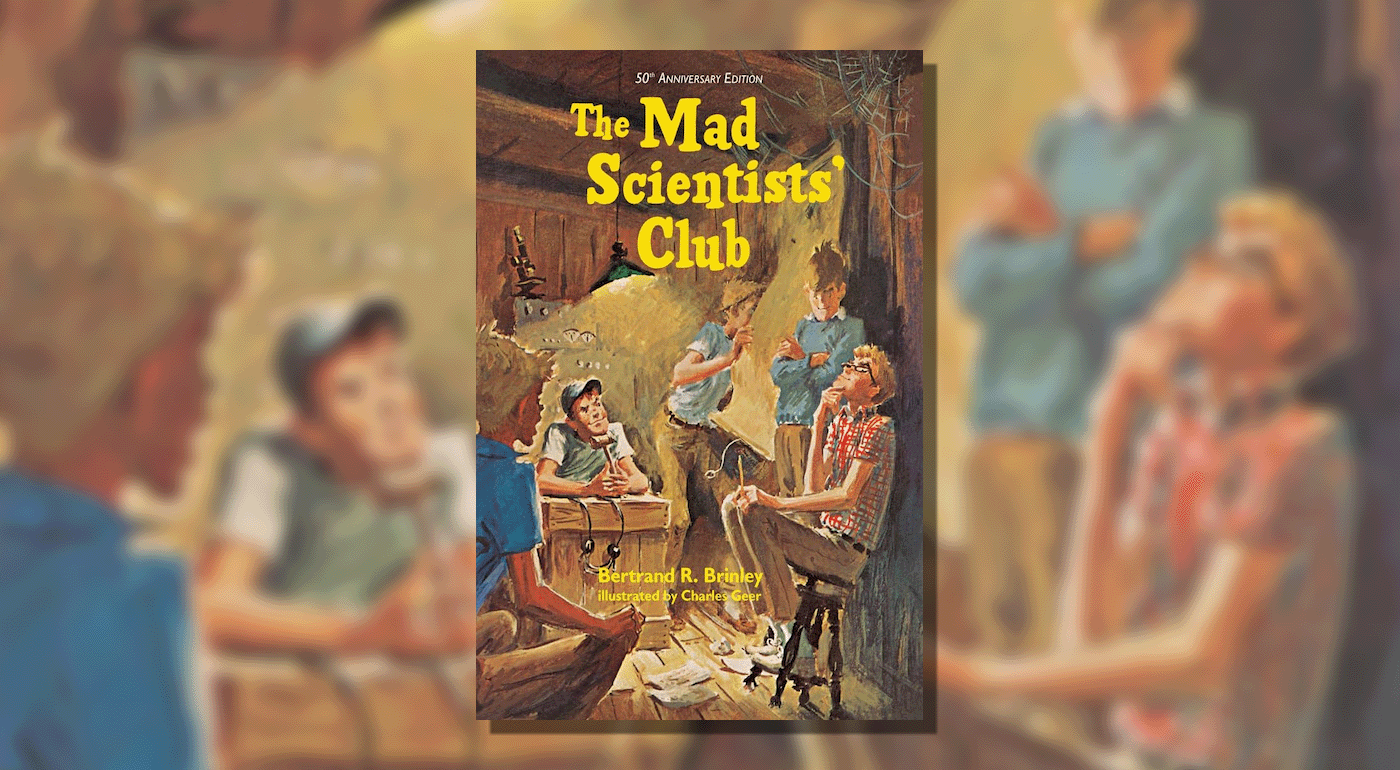
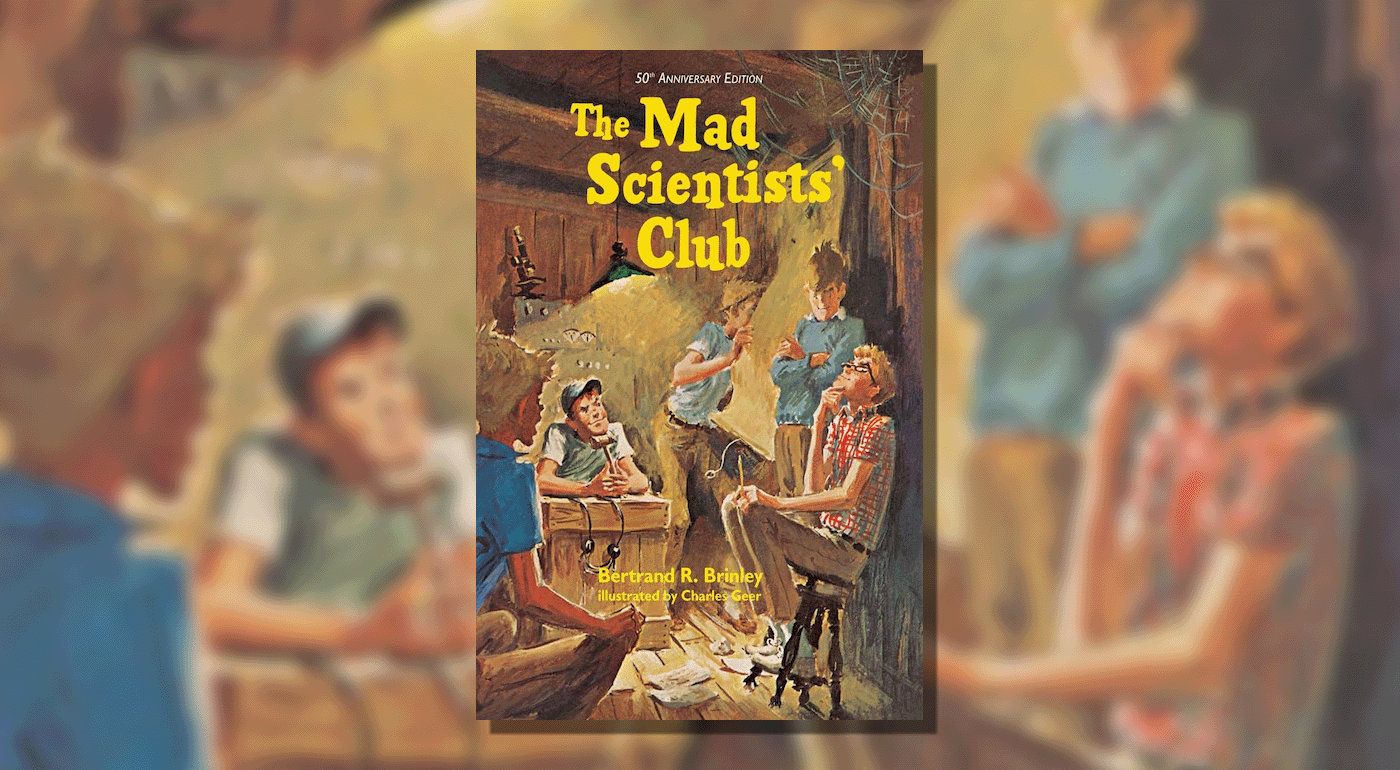
My own cherished copy of the book is a Scholastic Book Services paperback edition from 1965, likely acquired through one of the order forms frequently distributed in elementary schools. The illustrations are the work of Charles Greer, a celebrated illustrator of children’s literature during that era. His artistic style, characterized by a seemingly loose and sketchy yet deceptively precise approach, captivated my youthful imagination, prompting hours spent attempting to replicate its distinctive flair. Several of the stories had previously graced the pages of Boys’ Life magazine, though my initial encounter with these tales occurred within the anthology format of this particular collection, preceding my family’s subscription to the publication.
The Author and His Vision: Bertrand R. Brinley
Bertrand R. Brinley (1917-1994) was an American author whose literary legacy is largely defined by his captivating portrayal of the Mad Scientists’ Club. His published fiction predominantly features the adventures of this ingenious group of boys, chronicled across twelve short stories. The majority, if not all, of these narratives first appeared in Boys’ Life magazine before being consolidated into book form in The Mad Scientists’ Club (1965) and The New Adventures of the Mad Scientists’ Club (1968). Brinley also penned two short novels, The Big Kerplop! (1974) and The Big Chunk of Ice (2005), though publication challenges delayed their widespread availability for several years. In his professional life, Brinley worked as a systems analyst for Lockheed and later for Bell Labs. He was also an active participant in local theater groups. His military service included stints in the Army during World War II and the Korean War, where he contributed to special services and public affairs initiatives. Much of the biographical information readily available about Brinley originates from The Mad Scientists’ Club website, a resource established by his son, Sheridan.
Charles Greer: The Artistic Architect of Imagination
Charles Greer (1922-2008) was a prominent American painter, illustrator, and author, whose creative output primarily served the realm of children’s and young adult literature. His distinctive illustrations were a familiar sight during my formative years, adorning numerous books I encountered, including the The Mad Scientists’ Club series, the Miss Pickerel series, The Secret Raft, and The Marvelous Inventions of Alvin Fernald. Greer’s ability to imbue his illustrations with a sense of wonder and kinetic energy undoubtedly contributed to the enduring appeal of the stories he helped bring to life.
The Enduring Joy of Hands-On Creation
In the 1960s, when I first delved into the adventures of the Mad Scientists’ Club, I was only a few years younger than the protagonists themselves. While the complexity and creativity of our childhood endeavors never quite matched the elaborate inventions depicted in the books, the impulse to build and create was a shared passion. Our youthful pursuits involved constructing treehouses and lean-tos in wooded areas, fashioning rafts for lake expeditions, and engaging in a wide array of experiments. I distinctly remember receiving chemistry sets for Christmas, alongside experimental kits from renowned companies like A.C. Gilbert and Scientific American. These gifts fueled my imagination, leading to projects such as building electromagnetic cranes capable of lifting toy cars and assembling a crystal radio set that could tune into AM broadcasts. Telescopes and a variety of other gadgets were also part of this inventive landscape, though not all of them functioned as intended. One particularly ill-advised invention was a rudimentary diving bell, fashioned from a large bucket placed over my head and weighted down with a substantial rock. In retrospect, this contraption posed a significant risk of asphyxiation or drowning.
It might be tempting to interpret these reflections as an "old man yells at cloud" scenario, lamenting a perceived decline in real-world engagement among contemporary youth. Certainly, the digital landscape, with its captivating video games and computers, draws the attention of my son’s generation. However, I made a concerted effort to foster his experimental spirit. We shared particularly memorable experiences launching rockets, once even sending an ant as a passenger for a school science project. He developed a practical aptitude with tools, and serendipitously, married a young woman who had assisted her father in his part-time construction business. This practical skill set now often benefits me, as they frequently help with household projects, a reversal of the typical generational dynamic.
In recent years, a noticeable resurgence in interest in vocational trades among young people has emerged, perhaps influenced by the growing awareness of artificial intelligence potentially automating certain office jobs. An old friend of mine coaches robotics teams, and my granddaughter actively participated in programming the robots for her high school team. Her engagement has also extended to theater, where she contributes behind the scenes, managing lighting and sound. This work not only involves programming but also the physical manipulation of equipment to support performances. This practical experience has led to her securing a part-time position within the university’s Information Technology department.
Therefore, while the temptation to adopt a nostalgic, critical stance might occasionally arise, I must acknowledge that a vibrant community of budding young "mad scientists" continues to thrive. These individuals are actively engaged in creating tangible things in the real world, finding joy and fulfillment in the process.
The Mad Scientists’ Club: A Cast of Curious Characters
Before delving into the seven short stories that comprise the book, it is pertinent to introduce the members of the club. The narrative is presented in the first person, from the perspective of Charlie. His name appears only once, and while he is consistently at the center of the club’s antics, he remains a silent observer, contributing no dialogue. The club’s president, and often the voice of reason during their discussions, is Jeff Crocker. Henry Mulligan, the vice-president, serves as the group’s deep thinker and the chief architect behind most of their ingenious creations. Dinky Poore is characterized by his small stature and frequent agitation, while Freddy Muldoon, who is heavyset, is primarily concerned with matters of sustenance. The remaining members are Homer Snodgrass and Mortimer Dalrymple.
Several other townspeople play significant roles in the unfolding tales. Freddy’s cousin, Harmon Muldoon, a former club member expelled for divulging secrets to outsiders, now leads a rival group of boys. Harmon’s sister, Daphne, is depicted as attractive and is an object of affection for many club members. Mayor Scragg is a pompous and opportunistic politician, frequently flustered by the club’s pranks. Colonel March commands the local Air Force base and becomes involved in several of the boys’ adventures. Zeke Boniface, the burly proprietor of the local junkyard, supplies the club with many of the raw materials for their inventive projects, and his truck, affectionately nicknamed "Richard the Deep Breather," is often made available to support their endeavors.
According to Wikipedia, the fictional town of Mammoth Falls is based on West Newbury, Massachusetts, Brinley’s childhood home. However, certain locations mentioned in the stories evoke for me a sense of a Midwestern setting.
A Chronicle of Clever Capers: The Stories Within
The collection commences with a striking introduction in "The Strange Sea Monster of Strawberry Lake." During the summer months, one of the boys conceives the idea of constructing a sea monster to deceive the townspeople. They fabricate a canvas creature mounted on a frame over a canoe, launching their creation from a secluded cove. The ruse generates a significant sensation, with reports of the sea monster actually boosting local tourism and delighting merchants. However, their scheme proves too successful, placing their secret at constant risk of exposure. When the boys learn that hunters are planning to bag the creature, they opt to enhance their automaton with a small trolling motor and radio controls. Following further misadventures, they relocate the monster to a raft and set it ablaze in the middle of the lake, thereby destroying the evidence.
In "The Big Egg," the gang discovers a fossilized dinosaur egg and reports their find to a natural history museum in New York. Their local rivals attempt to steal the egg and substitute it with a forgery. However, a duplicate egg is already in play. A spirited bait-and-switch contest ensues, during which the club employs radio equipment to track the eggs. Thanks to Henry’s ingenuity, they ultimately prevail. The story concludes with their decision to attempt to hatch the egg, with the narrative hinting at their success.
"The Secret of the Old Cannon" centers on Homer’s growing camaraderie with Daphne Muldoon at the library, which sparks jealousy among the other club members. Daphne then uncovers a clue suggesting that a historical cannon, long ago plugged with concrete, might be connected to an unsolved bank robbery. Henry procures a gastroscope from a local hospital—a sophisticated device for its time, now commonly used for colonoscopies—and maneuvers it into the touchhole of the cannon. Inside, they discover an old valise. The boys then heat the cannon’s barrel to expand it, enabling them to remove the concrete plug and retrieve the valise. They replace it with a decoy bag and then restore the concrete plug. Their rival, Harmon, attempts to claim credit for the discovery, only to be embarrassed when the concrete plug is broken out and the money is not found. The boys then reveal the original valise, earning the credit they, and Daphne, rightfully deserve.
"The Unidentified Flying Man of Mammoth Falls" unfolds during Founder’s Day, a town celebration honoring Hannah Kimball, a local heroine credited with repelling Native American attacks with a blunderbuss and subsequently driving them away through a stunt involving a scarecrow. The boys devise a prank where they place a mannequin, equipped with a speaker, on a pedestal beside Kimball’s statue. They pretend the mannequin is a suicidal man contemplating a leap. As an adult reader, this particular scene no longer carries the same humorous weight. A gas bag then bursts from the mannequin’s chest, inflating and causing it to float away. The remainder of the story details the boys’ slapstick efforts to retrieve their "flying man" without attracting the attention of authorities or the Air Force. Colonel March, however, appears to discern the truth by the story’s conclusion.
"The Great Gas Bag Race" presents another aerial adventure, this time with the boys constructing a balloon to compete in a local air race. Their balloon utilizes helium, with altitude control managed by releasing additional helium for lift and then employing a compressor to return helium to the gas bottle for descent—a theoretically plausible, though unconventional, method for lighter-than-air craft. To minimize weight, only Henry (for navigation), Charlie (for narration), and Dinky (due to his small size) crew the balloon. Harmon’s rival gang also participates with a balloon but encounters trouble and crashes into a lake. Demonstrating compassion, the boys assist their rivals.
Harmon attempts to impress a group of local girls by staying overnight in a purportedly haunted house in "The Voice in the Chimney." The club naturally orchestrates a terrifying experience for Harmon and his friends. They repeat their pranks when the mayor and local sheriff decide to demonstrate their courage by spending the night there as well. While their elaborate hoax is successful, like many of the book’s adventures, this particular narrative arguably warrants a "do not attempt at home" disclaimer.
The collection concludes with "Night Rescue," a story that shifts to a more serious tone. An Air Force fighter jet from the local base crashes, and the club volunteers to assist in the search and rescue operation. The mayor, mindful of their past pranks, initially seeks to exclude them, but Colonel March integrates them into the effort. Drawing upon my own experience with search and rescue operations, I found the description of the process to be remarkably realistic. The boys employ parachute flares to ascertain wind patterns and then utilize a leapfrog technique with flashlights, following compass bearings to locate the aviator and provide him with first aid. In the end, they are rewarded not only with accolades but also with a helicopter ride home courtesy of the Air Force.
The Enduring Appeal of The Mad Scientists’ Club
When I was young, I read The Mad Scientists’ Club until its cover detached, thoroughly enjoying every moment. The book has remarkably withstood the test of time. The technology depicted remains plausible, and it is conceivable that children today might be inspired to undertake similar inventive projects. The only aspect that feels distinctly dated is the pronounced segregation of boys and girls prevalent in the social landscape of sixty years ago. Fortunately, thanks to the efforts of small presses, the book remains accessible today, offering a worthwhile read for contemporary audiences.
I eagerly anticipate discussions regarding The Mad Scientists’ Club specifically, or fictional narratives of young inventors more broadly.