The 60th edition of the Karlovy Vary International Film Festival (KVIFF) recently hosted the world premiere of Yuliia Hontaruk’s profound documentary, To Die to Live, a film that offers a uniquely long-term perspective on the ongoing conflict in Ukraine and its indelible impact on the human spirit. Debuting in the prestigious Special Screenings program, the film distinguishes itself from the growing body of documentaries on Ukraine by chronicling a twelve-year journey, tracing the lives of three Ukrainian volunteers from the frontlines of 2014, through their challenging attempts to reintegrate into civilian life, and back into the crucible of war in 2022. This comprehensive scope provides an unparalleled insight into the cyclical nature of conflict and the persistent struggle for existence in its shadow.
The Genesis of a Long-Term Chronicle: 2014 to 2022
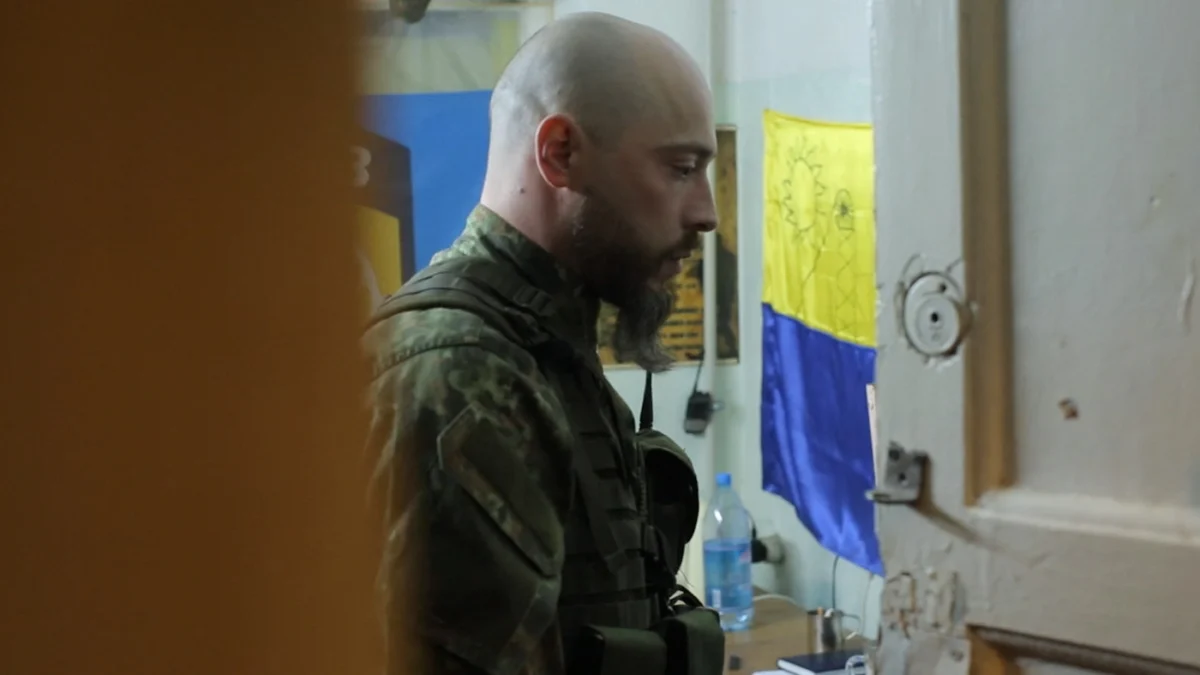
To Die to Live is not merely a war film; it is a meticulous human chronicle, meticulously following three individuals – Shakhta, Dancer, and Potter – who initially volunteered for the army in 2014 to confront the burgeoning Russo-Ukrainian conflict in Eastern Ukraine. Their initial two years on the frontlines left an indelible mark, a trauma that, as the film suggests, accompanied their every subsequent second. The narrative deftly navigates their arduous return to civilian life following the Minsk agreements, a period characterized by the impossible task of reconciling their wartime experiences with the demands of an ordinary existence that no longer quite fit. This fragile peace was shattered in February 2022 with Russia’s full-scale invasion, compelling them once more to confront the war they had hoped to leave behind.
Director Yuliia Hontaruk, known for her previous work Ten Seconds, initially believed she was embarking on a conventional war documentary in 2014. However, as she reveals in a poignant director’s statement, the true essence of her film emerged only after the initial fighting subsided and her subjects attempted to navigate peacetime. "When the Minsk agreements came and they returned home, I followed them back. And that is when the real film began," Hontaruk shares. "What I witnessed in the years that followed was a profound and painful journey." This evolution of perspective underscores the film’s core thematic strength: its focus shifted from the immediate brutality of conflict to its enduring psychological and societal repercussions, particularly the long and arduous road to self-reintegration.
Karlovy Vary: A Platform for Timely and Impactful Cinema
The selection of To Die to Live for the 60th Karlovy Vary International Film Festival’s Special Screenings program highlights its perceived significance and artistic merit. KVIFF, one of the oldest and most respected film festivals in the world, particularly within Central and Eastern Europe, has a long-standing tradition of showcasing challenging, socially relevant, and artistically daring cinema. Its commitment to amplifying diverse voices and narratives, especially those from regions undergoing significant geopolitical shifts, makes it an ideal platform for a film of this nature. The festival’s description of To Die to Live as "a quietly devastating film about the impossible task of making peace with death and the unrelenting desire to live" resonates deeply with KVIFF’s curatorial ethos, which often favors films that explore the complexities of human existence against broader societal backdrops.
The festival’s decision to feature a Ukrainian documentary with such a long-term scope also reflects the ongoing international attention and solidarity with Ukraine. While numerous documentaries have emerged since 2022 focusing on the immediate crisis, To Die to Live offers a crucial historical depth, reminding audiences that the conflict did not begin in 2022 but has been a defining reality for many Ukrainians for over a decade. This extended timeline allows for a more nuanced understanding of the war’s cumulative toll and the profound resilience required to navigate it.
Thematic Depth: Transformation and the Insistence of Life
Hontaruk’s ultimate realization about her film’s subject matter is perhaps its most compelling aspect. "What began as a portrait of conflict became something I never expected: a film about transformation, about the long and difficult road back to oneself, about how stubbornly life insists on continuing even in the shadow of death," she explains. This shift in focus elevates To Die to Live beyond a mere documentation of events, transforming it into a profound meditation on the human condition. It explores the intricate psychological landscape of veterans grappling with post-traumatic stress, the alienation felt upon returning to a world that moved on, and the persistent, almost defiant, urge to live fully despite profound loss and trauma.
The film’s exploration of "making peace with death" is particularly poignant. It delves into the existential challenges faced by those who have witnessed and inflicted violence, who have lived on the precipice of mortality, and who must then find a way to integrate those experiences into a meaningful future. Yet, Hontaruk insists that despite its delicate subject matter, the film is "life-affirming." She states, "Because despite everything, despite all the loss and rupture and years of waiting, life has proven itself stronger than death. Again and again, men choose it. That is the film I set out to make, even when I didn’t know it yet." This message of enduring hope and the stubborn insistence of life, even in the face of overwhelming adversity, provides a powerful and universal resonance.
The Broader Context: Ukraine’s Decade of Conflict
To fully appreciate To Die to Live, it is essential to understand the historical arc of the Russo-Ukrainian conflict. The war did not begin with the full-scale invasion of February 2022, but rather in early 2014 with Russia’s annexation of Crimea and its subsequent instigation and support of separatist movements in the Donbas region of Eastern Ukraine. This period, often referred to as the Anti-Terrorist Operation (ATO) or Joint Forces Operation (JFO) by Ukraine, saw intense fighting, the establishment of a frontline, and significant casualties.
The Minsk Agreements, signed in September 2014 and February 2015, aimed to establish a ceasefire and a political resolution, but they largely failed to bring lasting peace. Instead, they led to a protracted, low-intensity conflict characterized by trench warfare, artillery duels, and intermittent skirmishes, often referred to as a "frozen conflict" or "stalemate." During these years (2015-2022), while international attention often waned, thousands of Ukrainian soldiers and volunteers remained on the frontlines, and communities near the contact line continued to suffer. It was during this period that the three protagonists of Hontaruk’s film attempted to return to civilian life, grappling with the psychological scars of war in a society that was trying to normalize an abnormal situation.
The full-scale invasion of February 2022 dramatically escalated the conflict, transforming it into a conventional war across broad swathes of Ukrainian territory. This resurgence of conflict forced many veterans and volunteers, including Shakhta, Dancer, and Potter, to once again take up arms, demonstrating the profound and cyclical nature of their personal and national struggle. The film thus serves as a vital historical document, illustrating the continuity of the conflict and its long-term impact on those who have repeatedly answered the call to defend their nation.
The Filmmaking Team and Production Details
To Die to Live is a testament to collaborative filmmaking, bringing together a dedicated team under Hontaruk’s vision. Written and directed by Hontaruk herself, the documentary is a Babylon 13 Production, a collective known for its commitment to documenting Ukrainian realities, particularly in times of crisis. The cinematography, crucial for capturing both the stark realities of war and the intimate moments of civilian life, was a collaborative effort by Denys Strashnyi, Yurii Gruzinov, and Hontaruk. This multi-faceted approach to visual storytelling likely contributes to the film’s nuanced perspective.
The editing process, often the heart of a documentary’s narrative construction, involved a significant team: Roman Liubyi, Uģis Olte, Mykola Bazarkin, Hontaruk, Iryna Stetsenko, Pavlo Zelenov, and Petro Tsymbal. Such a large editing team suggests a complex and intricate narrative structure, essential for weaving together twelve years of footage and diverse personal stories into a cohesive and emotionally resonant whole. The producers, including Hontaruk, Ivanna Khitsinska, Alexandra Bratyshchenko, Uldis Cekulis, Katarina Krnacova, and Ihor Savychenko, represent a significant collaborative effort, likely spanning national borders given the international nature of film co-productions, further amplifying the film’s reach and potential impact.
Implications and Broader Significance
The premiere of To Die to Live at KVIFF holds several significant implications. Firstly, it offers a crucial contribution to the international understanding of the war in Ukraine, moving beyond immediate headlines to explore the deep, enduring human cost. By focusing on a twelve-year trajectory, the film counters any perception of the conflict as a recent phenomenon, instead framing it as a sustained national ordeal that has profoundly shaped a generation.
Secondly, the documentary serves as a powerful testament to the resilience of the Ukrainian people. The protagonists’ repeated decision to choose life, to try to reintegrate, and then to return to defend their homeland, encapsulates a spirit of unwavering determination. This narrative is vital for fostering continued international empathy and support.
Finally, To Die to Live underscores the indispensable role of documentary filmmaking as a historical record and a tool for empathy. In an era of rapidly consumed news cycles, a film that takes a decade to craft offers a rare opportunity for deep reflection and understanding. It challenges viewers to confront the complex realities of war, not just as geopolitical events, but as deeply personal and transformative experiences. Hontaruk’s film, therefore, is not just about Ukraine; it is about the universal human struggle to find meaning and purpose in the aftermath of trauma, and the enduring power of the human spirit to insist on life, even when confronted by death. Its journey from Karlovy Vary promises to spark important conversations and deepen global awareness of the long shadows cast by conflict.