Kimbo Kim’s feature debut, "Forte," has rapidly emerged as a significant voice in contemporary genre cinema, charting a complex psychological horror narrative rooted in a critique of the film industry’s creative processes. Developed through the Bucheon International Fantastic Film Festival’s (BIFAN) NAFF It Project, the film underscores a growing trend of genre-bending independent cinema finding fertile ground in international festivals. Its selection for the prestigious SXSW London 2025 and an invitation to the Noves Visions section of the 2025 Sitges Film Festival signals a promising international trajectory for the South Korean production, highlighting its critical and artistic resonance on a global stage.
The Genesis of "Forte": BIFAN and the NAFF It Project
The development of "Forte" through BIFAN’s NAFF (Network of Asian Fantastic Films) It Project is a testament to the festival’s crucial role in fostering emerging talent and innovative genre cinema. BIFAN, established in 1997, has long been a vanguard for fantastic films in Asia, cultivating a vibrant ecosystem for horror, fantasy, and sci-fi. The NAFF It Project, an integral component of the festival’s industry platform, serves as a crucial incubator for promising genre film projects, offering opportunities for pitching, networking, and securing co-production and financing. For "Forte," this platform provided the foundational support necessary to translate Kimbo Kim’s ambitious vision from concept to production. The project’s rigorous selection process ensures that only the most compelling and commercially viable genre narratives receive support, underscoring the inherent quality and potential recognized in "Forte" from its nascent stages. This development pathway is increasingly vital for independent filmmakers, particularly those venturing into the often resource-intensive genre space, offering a credible stamp of approval and access to a network of industry professionals.
Kimbo Kim’s Ascendancy: From Producer to Director
Kimbo Kim’s journey to directing "Forte" follows a notable career trajectory, previously marked by his work as a producer. Most notably, Kim produced Giovanni Fumu’s "Abroad," a film that garnered significant acclaim at BIFAN in 2023, securing both the Audience Award and the Best Actor Award. This prior success as a producer provided Kim with invaluable insight into the filmmaking process, from project development and financing to navigating festival circuits and audience reception. The critical recognition for "Abroad" likely influenced the industry’s perception of Kimbo Kim, establishing him as a discerning talent with an eye for compelling narratives and strong performances. The transition from producer to director for "Forte" reflects a natural progression, allowing Kim to directly infuse his artistic vision into the narrative and aesthetic fabric of the film. This background also informs "Forte"’s thematic undercurrents, particularly its critique of the film industry itself, suggesting a nuanced understanding of the pressures and power dynamics inherent in creative production.
A Deep Dive into "Forte": Narrative and Thematic Layers
"Forte" plunges audiences into a meticulously crafted world where artistic ambition collides with psychological dread. The narrative centers on Yeonji, a prodigious young composer whose dream job at the secluded Studio Forte, nestled deep within the mountains, quickly devolves into a nightmarish ordeal. Initially drawn by the promise of an inspiring artistic haven, Yeonji soon finds the studio’s atmosphere oppressive and unsettling. Her role, instead of being one of creative contribution, is reduced to that of a hired hand, subservient to the authority of the senior composer, Jeonghwa. Yeonji is tasked with assisting on the score for an upcoming movie, a seemingly straightforward assignment that becomes increasingly complicated by the bizarre behavior and eventual disappearance of another composer, Haejoon.
As Yeonji becomes more deeply entangled in the project, the studio’s hidden tensions begin to fray. The film deftly explores complex themes of authorship, credit, exploitation, and power dynamics within a creative environment. These issues gradually reshape Yeonji’s relationships with Jeonghwa and the rest of the team, eroding her initial enthusiasm and replacing it with a growing sense of unease. Simultaneously, Yeonji begins to experience increasingly disturbing visions—fragments of the forest, mud, fire, and death, punctuated by an inexplicable, menacing presence surrounding the studio. Her once-burning ambition and desire for recognition morph into a potent cocktail of fear, resentment, and psychological collapse, drawing her inexorably into the violent and enigmatic mystery shrouding Studio Forte. The film masterfully builds its suspense, transforming a seemingly idyllic setting into a crucible of psychological torment and supernatural horror.
Crafting the Horror: Visuals, Sound, and Atmosphere
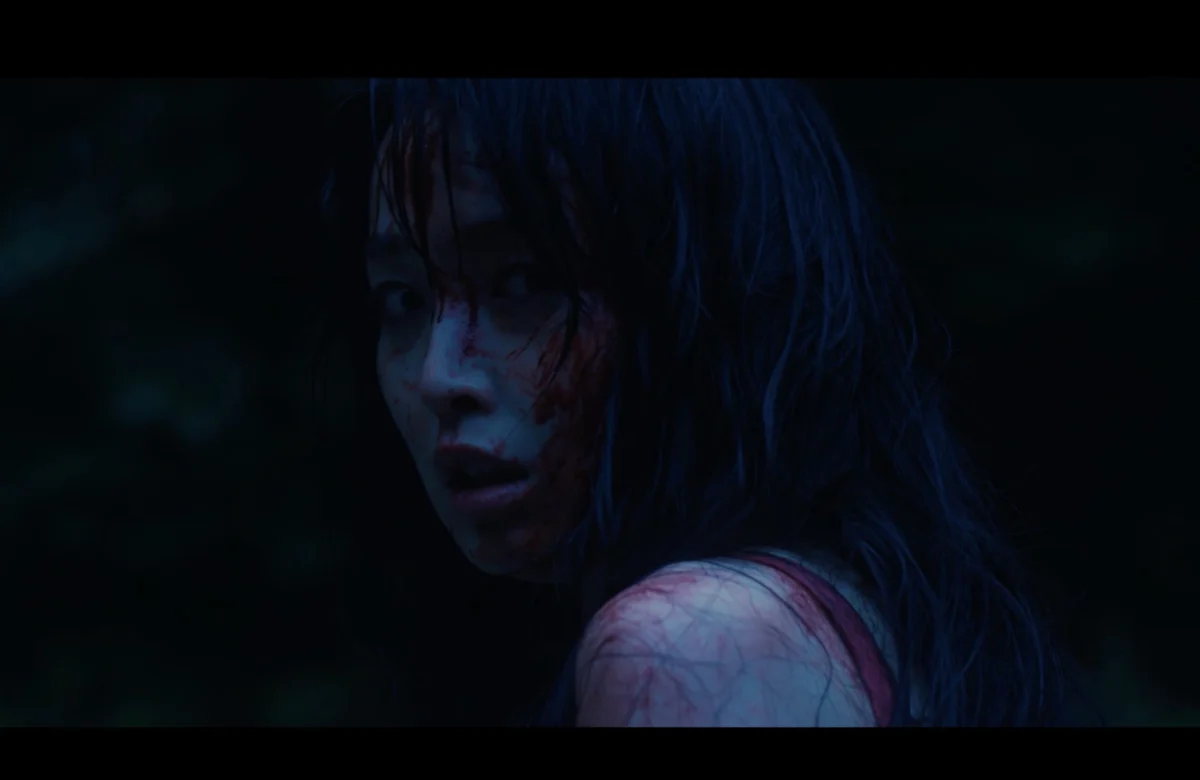
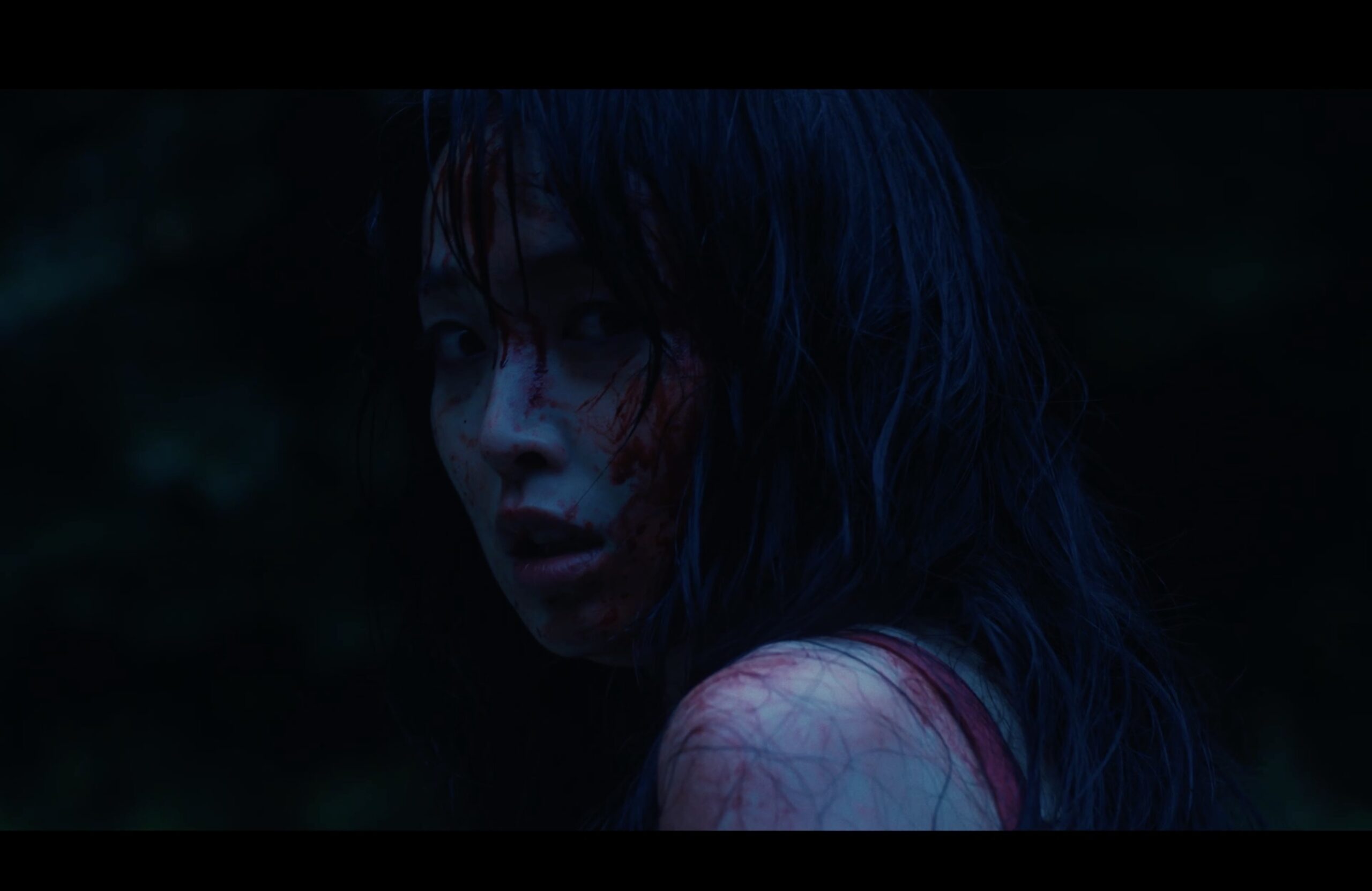
Kimbo Kim’s directorial prowess shines through in "Forte"’s immersive atmosphere and sophisticated audiovisual approach, which are widely considered among the film’s strongest attributes. The film’s gradual descent into horror is orchestrated with precision, leveraging both the psychological unraveling of its protagonist and the unsettling beauty of its natural setting. Park Jeong-min’s cinematography is a standout, capturing the studio within the forest as it transforms from a tranquil, idyllic retreat into a locus of dread. The visual narrative is punctuated by striking imagery—the "creatures" that haunt Yeonji’s visions, the eerie interiors of the studio, and the destructive power of fire—all rendered with impressive clarity and a keen eye for detail. The deliberate use of color grading further enhances the visuals, underscoring the shift in Yeonji’s perception and the studio’s darkening aura. A particularly effective visual motif is the way Yeonji finds herself under constant, unsettling surveillance, a visual representation of her burgeoning paranoia and the oppressive environment.
Lee Hee-jeong’s production design is equally commendable, meticulously crafting a space that feels both aspirational and claustrophobic. The juxtaposition of the natural world with the manufactured environment of the studio accentuates the film’s central conflict between organic creativity and industrial production. Fréderic Alvarez’s original score is integral to the film’s atmospheric success, seamlessly blending with the narrative’s various emotional and horrific beats. The music does not merely accompany the visuals but actively contributes to the mounting tension and psychological unease. Lee Jung-hwan’s editing maintains a brisk and fitting tempo, propelling the story forward with urgency, particularly as Yeonji’s reality begins to fracture. While the film’s final sequences, described as lengthy and music video-like, have been noted by some as slightly excessive, potentially slowing the narrative momentum, they can also be interpreted as a bold artistic statement, perhaps commenting on the extreme circumstances that sometimes fuel profound creativity. The overall pacing, however, ensures a compelling and immersive experience, clocking in at a taut 77 minutes.
Performances Driving the Narrative
The compelling performances at the heart of "Forte" are crucial to its impact, particularly the nuanced portrayal of Yeonji by Im Chae-young. Her transformation from an eager, ambitious young composer to a psychologically tormented individual is rendered with remarkable depth and credibility. Im Chae-young navigates Yeonji’s evolving emotional landscape—from initial enthusiasm to fear, resentment, and eventual collapse—with a performance that anchors the film’s complex narrative. This nuanced depiction allows the audience to fully invest in Yeonji’s journey, amplifying the horror she experiences. Opposite her, Lee Jung-eun delivers a pitch-perfect performance as Jeonghwa, the senior composer and a figure of authority. Lee Jung-eun embodies the character’s demanding and subtly menacing presence, effectively conveying the power dynamics at play within the studio and contributing significantly to the oppressive atmosphere Yeonji faces. The interplay between these two central performances is a cornerstone of the film’s dramatic and psychological tension.
Festival Recognition and International Acclaim
The selection of "Forte" for SXSW London 2025 and the Noves Visions section of the 2025 Sitges Film Festival represents a significant validation of its artistic merit and commercial potential. SXSW, particularly its London iteration, is renowned for showcasing innovative and boundary-pushing cinema across various genres, attracting a global audience and industry professionals. Inclusion in such a festival provides invaluable exposure and positions "Forte" as a film to watch. Similarly, the Sitges Film Festival, based in Catalonia, Spain, is one of the world’s foremost fantastic film festivals, revered for its curation of cutting-edge horror, fantasy, and sci-fi cinema. The Noves Visions section specifically highlights films that push thematic and stylistic boundaries, making "Forte" a natural fit. These selections are not merely ceremonial; they are critical stepping stones for independent films, opening doors to international distribution, sales, and further festival invitations. For a debut feature, this level of early international recognition is a strong indicator of the film’s universal appeal and its capacity to resonate with diverse audiences beyond its country of origin. Industry analysts suggest that such early accolades will significantly boost the film’s profile, paving the way for wider theatrical releases and streaming acquisitions.
The Broader Canvas: "Forte" as a Commentary on the Creative Industry
Beyond its surface as a psychological horror film, "Forte" functions as a biting critique of the creative industries, particularly the film and music sectors. Kimbo Kim uses the seemingly niche world of soundtrack and music composition as a microcosm to explore broader issues of artistic exploitation, intellectual property, and the often-unseen struggles faced by emerging artists. The film’s narrative implicitly questions the romanticized notion of artistic pursuit, exposing the harsh realities of hierarchical structures, ego clashes, and the commodification of creativity. The protagonist, Yeonji, embodies the vulnerability of young talent striving for recognition in a system that often prioritizes profit and established authority over genuine artistic contribution.
The gradual erosion of Yeonji’s creative voice and her treatment as a mere "hired hand" resonates with countless stories of artists struggling to maintain integrity and ownership of their work. The director’s arrival in the narrative, inspecting the music for his film, further emphasizes the commercial pressures that can overshadow artistic collaboration. While the film culminates in supernatural horror, its underlying commentary on credit, authorship, and the psychological toll of creative labor offers a timely and relevant perspective. It suggests that the true horror often lies not in the supernatural, but in the insidious ways human ambition and industry pressures can corrupt and consume individuals, transforming inspiring spaces into oppressive ones. This dual narrative of personal breakdown and systemic critique elevates "Forte" beyond a conventional genre piece, cementing its place as a thought-provoking contribution to contemporary cinema.
South Korean Cinema’s Evolving Landscape
"Forte" emerges within a vibrant and globally influential South Korean film industry, renowned for its technical prowess, narrative innovation, and willingness to push genre boundaries. South Korean cinema has consistently produced critically acclaimed and commercially successful films across diverse genres, from the psychological thrillers of Bong Joon-ho and Park Chan-wook to the social dramas that captivate international audiences. The industry’s robust support for independent filmmakers and genre experimentation through initiatives like BIFAN’s NAFF It Project ensures a steady stream of fresh voices and unique stories. "Forte" contributes to this rich tapestry by offering a distinctive blend of psychological horror and industry critique, showcasing the continued evolution of South Korean genre filmmaking. Its international festival recognition further solidifies South Korea’s reputation as a powerhouse of compelling cinematic storytelling, demonstrating its capacity to produce films that are both culturally specific and universally resonant. The success of films like "Forte" inspires further investment in diverse narratives and directorial visions, ensuring the continued dynamism of the industry.
Looking Ahead: The Future of Kimbo Kim and "Forte"
Despite some minor criticisms regarding pacing in its final moments, "Forte" stands as a compelling and artistically significant debut for Kimbo Kim. Its impressive audiovisual execution, combined with an intriguing and layered narrative, positions it as a noteworthy addition to the psychological horror genre. The film’s critical reception and its strong showing at prominent international festivals suggest a promising future for both the film and its director. For "Forte," the upcoming screenings at SXSW London and Sitges will be crucial in building momentum, attracting further distribution deals, and solidifying its reputation among genre aficionados and broader cinephiles. For Kimbo Kim, "Forte" firmly establishes him as a director with a distinctive voice, a keen eye for atmospheric storytelling, and a willingness to explore complex social commentaries through the lens of genre cinema. His trajectory, from a successful producer to a critically acclaimed director, marks him as a talent to watch closely in the evolving landscape of global filmmaking. The themes explored in "Forte"—ambition, exploitation, and psychological descent—are timeless and universally understood, ensuring its continued relevance and potential for lasting impact on audiences and the film industry discourse.