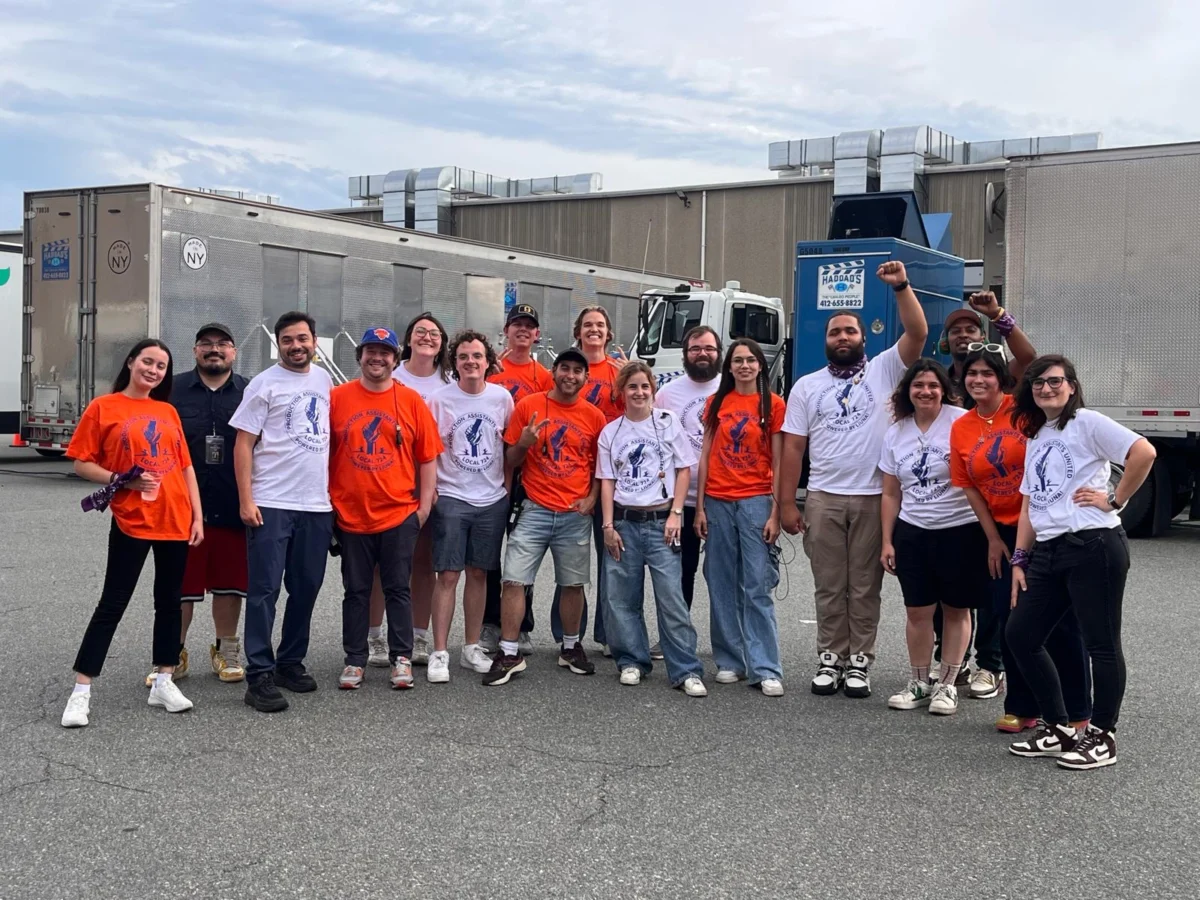
Production assistants working on the set of CBS’ anticipated Silicon Valley-themed legal drama Cupertino officially filed for a union election on Friday, marking a significant escalation in the ongoing movement to organize entry-level workers within the entertainment industry. The group of 23 production assistants (PAs) is seeking representation through Production Assistants United, a labor organization affiliated with the Hollywood-based LiUNA Local 724. This move represents the first time the burgeoning union has targeted a production under the CBS Studios banner, signaling an expansion of labor organizing efforts into one of the industry’s most prominent television production houses.
The series, headlined by Mike Colter, is currently filming in New Jersey despite its title, which references the California city synonymous with Apple’s global headquarters. Created by the acclaimed duo Robert and Michelle King—the minds behind critically successful legal dramas such as The Good Wife and The Good Fight—Cupertino follows a former tech lawyer who, after a high-stakes betrayal by his previous employer, pivots to representing underdogs in complex litigation against silicon giants. The irony of a production centered on legal advocacy for the disenfranchised facing its own internal labor challenge has not gone unnoticed by industry observers.
The Push for Representation and Workplace Protections
The filing with the National Labor Relations Board (NLRB) comes at a time of heightened labor consciousness across the Hollywood landscape. In a collective statement released to the media, the organizers for the Cupertino production assistants emphasized the essential but often overlooked nature of their contributions to the filming process. They argued that the grueling demands of production work necessitate the same protections afforded to more established guilds, such as those representing actors, writers, and directors.
"The entertainment industry on the production level is full of incredibly hardworking craftspeople and laborers," the group stated. "Healthcare, turnarounds, and fair wages are all safeguards for workers to ensure that they are given a high quality of life. Why have production assistants been conditioned to think they don’t deserve those things as well?"
Central to the dispute is the "12-hour guarantee," a standard in many non-union deal memos that ensures PAs are paid for a minimum of 12 hours of work, even if the production day ends sooner. According to representatives for Production Assistants United, there has been a concerning trend in the New York and New Jersey production hubs where studios have begun to omit this guarantee, effectively lowering the floor for PA compensation. While the Cupertino production has not yet been accused of removing this specific guarantee, the organizing workers stated that a union contract is necessary to codify these standards and prevent future erosion of their livelihoods.
Contextualizing the Production of Cupertino
Cupertino is slated to be a flagship addition to the CBS fall schedule. The casting of Mike Colter brings a high-profile lead to the series, following his successful runs in Evil and Marvel’s Luke Cage. The production’s decision to film in New Jersey reflects a broader industry trend of utilizing the state’s aggressive film and digital media tax credits, which offer up to 35% in transferable tax credits for qualified production expenses. This financial incentive has made New Jersey a primary alternative to both New York City and Los Angeles for high-budget television dramas.
However, the geographic shift has also brought New Jersey into the crosshairs of labor organizers who are following the work as it moves across state lines. The PAs on Cupertino argue that as the industry evolves and production hubs expand, the basic rights of the workforce must remain a priority. Their statement highlighted a perceived decline in industry standards: "Especially right now, studios are actively eroding the old standard for PA contracts—taking away 12-hour guarantees and lowering pay rates. Our union effort is a way for us to ensure that we can have a voice in these conversations that determine our livelihoods."
A Chronology of PA United’s Rapid Expansion
The filing for Cupertino is part of a larger, successful trajectory for Production Assistants United. Since its inception and affiliation with LiUNA Local 724 in early 2025, the group has moved with remarkable speed to organize sets across various major studios. The timeline of their recent victories provides a roadmap for the current effort:
- Early 2025: PA United successfully unionizes its first major shows under the Warner Bros. Television umbrella, including the medical drama The Pitt and the hit comedy Abbott Elementary.
- Mid-2025: The movement expands to include George & Mandy’s First Marriage and the long-running drama All American.
- Late 2025/Early 2026: The union moves into Universal Television territory, successfully organizing the crews of Chicago Med and Chicago Fire.
- Current Status: Beyond the Cupertino filing, the union is actively negotiating a first contract with Universal Television for the Netflix-bound series The Four Seasons.
This rapid succession of filings suggests a well-coordinated strategy to target high-visibility productions, creating a "domino effect" that encourages workers on other sets to seek similar representation. The inclusion of CBS Studios in this list marks a significant milestone, as it completes the union’s reach into the "Big Three" legacy television production entities.

Economic and Structural Challenges for Production Assistants
Production assistants are often referred to as the "backbone" of a film set, responsible for everything from managing lockups and directing background actors to handling administrative tasks and ensuring the safety of the crew. Despite these responsibilities, they have historically occupied the lowest rung of the production hierarchy, often excluded from the benefits and overtime protections enjoyed by members of IATSE (International Alliance of Theatrical Stage Employees) or the Teamsters.
Data from recent industry surveys suggest that entry-level production wages have not kept pace with the rising cost of living in major production hubs. In the New York-New Jersey area, where Cupertino is based, the cost of housing and transportation has increased significantly over the last three years. For a production assistant working 14 to 16 hours a day, the lack of a union-mandated "turnaround" time—the minimum period of rest between shifts—can lead to severe exhaustion and safety concerns, particularly for those who must drive home after a long wrap.
The push for a 12-hour guarantee is not merely about the hours worked, but about financial predictability. In an industry characterized by freelance contracts and intermittent employment, a guaranteed daily rate allows workers to budget effectively. When studios move toward "actual hours worked" models without a guarantee, it often results in a "race to the bottom" for wages, according to labor advocates.
Industry Reactions and the Silence of the Studios
As of the time of the filing, CBS Studios has declined to comment on the unionization effort. This silence is typical of major studios during the initial phases of an NLRB filing, as they evaluate their legal options and prepare for the election process. In previous cases involving PA United, studios have occasionally challenged the composition of the "bargaining unit," arguing that certain roles within the PA department should be excluded from the union.
Industry analysts suggest that the studios are watching these developments with caution. The cumulative effect of multiple unionized shows could lead to an industry-wide standard for production assistants, similar to the Basic Agreement that governs most other crafts in Hollywood. For the studios, this would mean increased labor costs and less flexibility in scheduling, but for the labor movement, it represents a necessary correction to decades of perceived exploitation.
Broader Implications for the Future of Hollywood Labor
The unionization of the Cupertino PAs is a microcosm of a larger "bottom-up" labor movement in the United States. Following the dual strikes of the Writers Guild of America (WGA) and the Screen Actors Guild (SAG-AFTRA) in 2023, there has been a palpable shift in the power dynamics on film sets. Crew members who were once hesitant to organize for fear of being blacklisted or replaced are now finding strength in numbers and the support of established unions like LiUNA.
If the Cupertino election is successful, it will further solidify PA United’s position as a permanent fixture in the entertainment industry. It also places additional pressure on other non-union productions in the New Jersey and New York regions to improve their working conditions voluntarily or face similar organizing drives.
The long-term impact of this movement could redefine the entry-level experience in Hollywood. Historically, the role of a production assistant was viewed as a "rite of passage"—a period of low pay and long hours that served as a prerequisite for moving into more senior roles. However, as the industry has become more corporate and the "middle class" of Hollywood has shrunk, many workers find themselves remaining in PA or coordinator roles for much longer periods. For these career PAs, unionization is not just about a temporary pay raise; it is about establishing a sustainable career path with access to healthcare and retirement benefits.
As Cupertino prepares for its fall premiere, the focus will remain on the screen, but the behind-the-scenes struggle for labor rights will likely continue to shape the narrative of its production. The outcome of the upcoming union election will serve as a bellwether for the future of CBS Studios’ relationship with its frontline workers and the broader momentum of Production Assistants United in the competitive landscape of modern television.