The final broadcast of CBS News Radio on Friday marked the conclusion of a nearly century-long tenure in American broadcasting, signaling the end of an era for a medium that once defined the national conversation. The cessation of operations, announced earlier this year by CBS News leadership, has sent ripples through the media industry, sparking a fierce confrontation between the network’s management and the Writers Guild of America East (WGAE), the union representing the journalists who maintained the service’s editorial standards for seven decades. As the microphones went cold, the legacy of a news organization that once hosted legendary figures such as Edward R. Murrow, Dan Rather, and Robert Trout was left to the history books, leaving 26 veteran staff members unemployed and over 700 affiliate stations searching for a new source of national news.
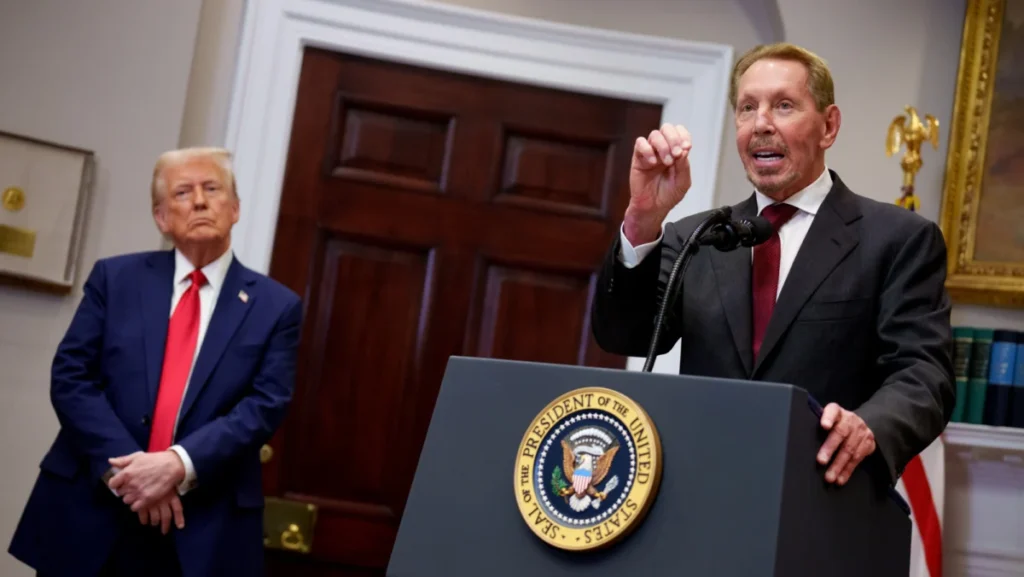
The decision to shutter the radio division was formally communicated in March by CBS News editor-in-chief Bari Weiss and president Tom Cibrowski. In a joint statement, the executives attributed the closure to a "shift in radio station programming strategies" and the "challenging economic realities" facing traditional broadcast media. The move is part of a broader, more aggressive restructuring of CBS News under its new parentage, following the high-profile merger between Skydance Media and Paramount Global in the summer of 2025. David Ellison, the CEO of the newly formed Paramount Skydance, appointed Weiss—the former New York Times opinion writer and founder of The Free Press—to lead the news division with a mandate to modernize and streamline operations.
The Union’s Scathing Critique and the Call for Accountability
The Writers Guild of America East, which has represented CBS News writers, desk associates, and assignment editors since 1954, did not allow the closure to pass without a public and pointed condemnation of the network’s leadership. In a fiery statement released on the final day of broadcasting, the union accused David Ellison and Bari Weiss of breaching the trust of both their employees and the American public. The union characterized the decision as "reckless and shortsighted," arguing that the closure of the radio wing erodes a vital pillar of the free press.
According to the WGAE, the impact of the shutdown extends far beyond the immediate job losses of the 26 members who held decades of experience. The union highlighted that the service provided essential news infrastructure to more than 700 affiliated stations across the United States, many of which serve rural or underserved communities where national news access is limited. "David Ellison and Bari Weiss broke its trust with its employees and its audience in a single reckless and shortsighted decision," the union’s statement read. "This closure erodes a vital news source for listeners… and 26 WGAE members with decades of experience and dedication to journalism will be out of work."
Furthermore, the union has signaled its intent to hold CBS accountable through the enforcement of its collective bargaining agreement. This includes a public demand for "fair severance" for all impacted employees, ensuring that those who dedicated their careers to the network are not left without a financial safety net during a period of industry-wide contraction.
A Historical Perspective: From the Blitz to the Digital Age
To understand the weight of the CBS News Radio closure, one must look back at its foundational role in 20th-century history. Founded in the late 1920s, the network’s radio division became the gold standard for broadcast journalism during World War II. It was here that Edward R. Murrow revolutionized news with his "This is London" reports, bringing the sounds of the Blitz into American living rooms and establishing the concept of the "foreign correspondent" in the broadcast era.
The "World News Roundup," which premiered in 1938, was the longest-running news program in broadcast history. It served as a daily ritual for millions of Americans, providing a concise and authoritative summary of global events. Over the decades, the radio desk served as a proving ground for some of the most respected names in the industry. Robert Trout, known as the "Iron Man of Radio," anchored the network’s coverage of major events for years, while Dan Rather transitioned from the grit of radio reporting to the heights of the "CBS Evening News."
The closure represents a final decoupling of CBS from its original roots. While the brand name remains in television and digital formats, the loss of the radio division signifies a retreat from the "live and local" synergy that once made CBS the most influential media organization in the world. Analysts suggest that the move reflects a wider industry trend where legacy media companies are divesting from high-overhead terrestrial assets to fund leaner, algorithm-driven digital platforms.
Corporate Consolidation and the Paramount-Skydance Strategy
The dissolution of CBS News Radio is inextricably linked to the corporate maneuvers of Paramount Skydance. Since David Ellison took the helm, the company has been under intense pressure to improve margins and compete with tech-driven streaming giants. Bari Weiss’s tenure as editor-in-chief has been marked by significant upheaval, including multiple rounds of layoffs across the news division and a complete overhaul of the CBS Evening News. Under her leadership, the flagship program was redesigned around anchor Tony Dokoupil, with a renewed focus on digital-first content and "identity-agnostic" reporting styles.
However, the restructuring of CBS News appears to be only one piece of a larger puzzle. Paramount Skydance is currently pursuing a merger with Warner Bros. Discovery (WBD), a move that would consolidate two of the largest media portfolios in the world. Central to this potential deal is the acquisition of CNN, which is owned by WBD. The WGAE has explicitly linked the closure of CBS News Radio to its opposition to this impending merger, which is currently awaiting regulatory approval.
The union expressed deep concern that the leadership style exhibited by Ellison and Weiss at CBS—prioritizing cost-cutting and ideological shifts over traditional journalistic infrastructure—would be replicated on a larger scale if they were to gain control of CNN. "Ellison and Weiss at the helm of CBS News has led to a further erosion in the integrity of the free press," the WGAE stated. "We are troubled that this trend will continue if Paramount-Skydance is able to merge with Warner Bros. Discovery and acquire CNN." In response, the union has urged its members and the public to sign the #BlockTheMerger petition, which has already garnered over 5,000 signatures.
Economic Data and Industry Implications
The "challenging economic realities" cited by CBS leadership are reflected in broader market data. According to industry reports from 2024 and early 2025, terrestrial radio advertising revenue has seen a steady decline, dropping by an estimated 4-6% annually as advertisers migrate toward podcasting and social media platforms. While radio still reaches a significant portion of the American adult population, the monetization of national news feeds has become increasingly difficult for networks that do not own their own local stations.
For the 700+ affiliates that relied on CBS News Radio, the shutdown creates an immediate void. Many of these stations are small-market broadcasters that do not have the resources to maintain their own national or international news bureaus. Historically, these affiliates paid for the rights to carry CBS programming, or provided commercial airtime in exchange for the feed. With CBS exiting the space, these stations are forced to turn to competitors like ABC News Radio or the Associated Press, or potentially abandon national news coverage altogether in favor of syndicated talk or music programming.
This contraction contributes to the growing phenomenon of "news deserts," where local populations lose access to verified, professional journalism. While digital news is ostensibly available everywhere, the loss of a passive, reliable audio news source in cars and homes across the country represents a significant shift in how information is consumed.
Timeline of the CBS News Radio Decline
- Summer 2024: Initial rumors of a Paramount-Skydance merger begin to circulate as Paramount Global seeks a buyer to manage its debt load.
- March 2025: Bari Weiss and Tom Cibrowski officially announce the impending closure of the radio division, citing a need for a "digital-first" strategy.
- June 2025: The Skydance-Paramount merger closes. David Ellison assumes the role of CEO and reaffirms his commitment to "right-sizing" the news division.
- July 2025: Reports emerge regarding a potential secondary merger between Paramount Skydance and Warner Bros. Discovery.
- August 2025: WGA East begins a public campaign against the closure, filing grievances regarding severance and the preservation of journalistic integrity.
- October 2025: CBS News Radio officially signs off for the last time.
The Future of News at Paramount Skydance
As CBS News Radio fades into silence, the network’s future now rests on its digital and streaming initiatives. Bari Weiss has emphasized a strategy that prioritizes the CBS News 24/7 streaming channel and the expansion of the "Free Press" style of reporting into the CBS ecosystem. This shift is intended to capture a younger, more politically diverse audience that has largely abandoned traditional broadcast schedules.
However, critics argue that by cutting its radio ties, CBS is losing its most resilient link to the American public. During national emergencies or technological failures, radio has historically been the most reliable medium for disseminating information. The closure of the radio division is seen by many as a gamble—a bet that the prestige of the CBS brand can survive without the constant, ubiquitous presence of its "World News Roundup" and top-of-the-hour updates.
The final words from the WGA East served as a poignant tribute to the century of work that preceded this Friday’s sign-off. Invoking the iconic closing line of Edward R. Murrow—a phrase that came to symbolize the courage of the press during the McCarthy era and was later immortalized in film—the union offered a somber farewell. "We honor and celebrate the amazing journalists and media workers who made CBS News Radio a pillar of journalism. Good night, and good luck."
As the industry watches the regulatory proceedings of the Paramount-WBD merger, the silence left by CBS News Radio serves as a stark reminder of the volatile state of modern media. The transition from a public service model to a streamlined corporate asset continues to reshape the landscape, leaving both journalists and audiences to navigate a world with fewer voices at the center of the dial.