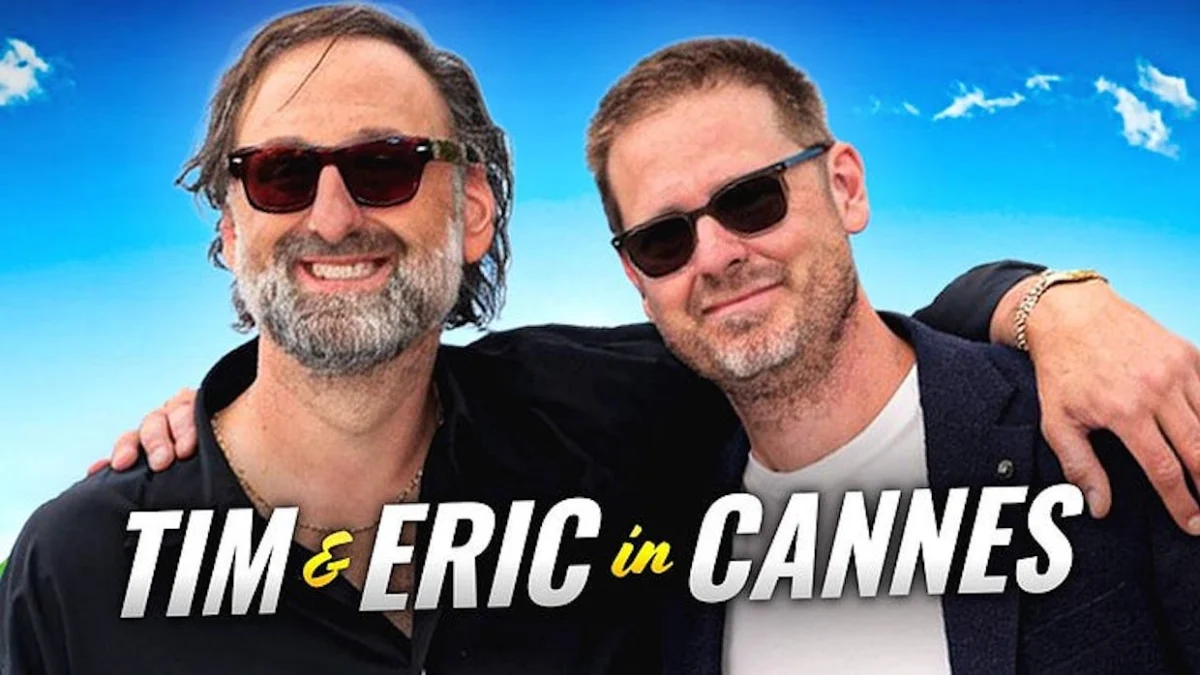
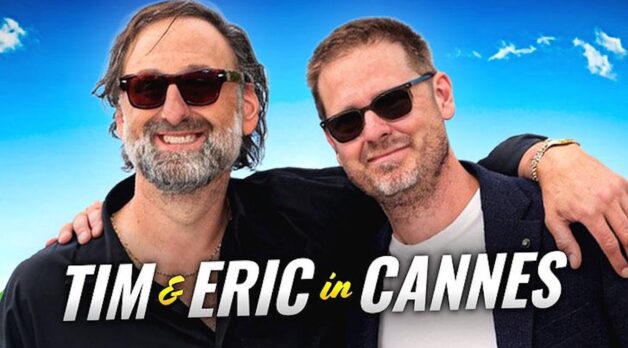
The iconic comedy duo, Tim Heidecker and Eric Wareheim, synonymous with pioneering surrealist humor, recently graced the 79th Cannes Film Festival, marking a significant moment in their unconventional careers. Their presence was occasioned by the premiere of Quentin Dupieux’s latest feature, Full Phil, which debuted in the prestigious Midnight Screenings section. This appearance at one of the world’s most venerable film festivals underscores the enduring influence and evolving trajectories of two artists who have consistently challenged comedic norms and shaped digital culture.
The Duo’s Enduring Legacy: From Temple University to Cultural Phenomenon
Tim Heidecker and Eric Wareheim first forged their creative partnership as students at Temple University in Philadelphia, a collaboration that would eventually redefine American humor. Their breakout success came with Tim and Eric Awesome Show, Great Job!, an Adult Swim sketch comedy series that aired from 2007 to 2010. This program was a groundbreaking exercise in "chaotic-good" surrealism, often described as public-access television filtered through a distorted funhouse mirror. Its lo-fi aesthetic, deliberate awkwardness, and gleefully grotesque humor resonated deeply, especially with a burgeoning internet culture. Critics and audiences alike recognized its unique voice, influencing a generation of comedians and content creators who embraced its experimental spirit. The show’s impact extended beyond television, becoming a viral sensation through early social media platforms and fundamentally remaking the landscape of online comedy. It garnered a cult following and critical acclaim for its innovative approach, often cited as a precursor to many of the internet-native comedic styles prevalent today.
Divergent Paths, Shared Spirit: Solo Ventures and Independent Ethos
In the 15 years since Awesome Show concluded its initial run, both Heidecker and Wareheim have embarked on diverse and often wildly experimental solo ventures, while maintaining a sporadic collaborative relationship. Tim Heidecker, together with Gregg Turkington, has cultivated another distinct comedic universe through the multimedia psychodrama On Cinema at the Cinema (2011-present). This evolving project, spanning podcasts, web series, and feature films, delves into a meta-narrative exploring film criticism, political commentary, and personal breakdown, all delivered with Heidecker’s signature deadpan satire. Beyond this, Heidecker has also toured extensively, releasing six well-received rock albums, showcasing his musical talents.
In a development that generated considerable media attention, Heidecker was announced in April as the new creative director of InfoWars. This move, orchestrated by The Onion, signals a bold satirical intervention aimed at "wresting Alex Jones’s propaganda empire from his supplement-enhanced grip." This initiative aligns with Heidecker’s long-standing use of satire to critique media and political landscapes.
Eric Wareheim, conversely, has leaned into the persona of a bon vivant. He has authored cookbooks, reflecting his passion for culinary arts, and established himself as a winemaker, with his Las Jaras Wines gaining critical praise. More recently, Wareheim has turned his attention to horticulture, establishing himself as a "garden-plant guru," a venture that reflects a deeper engagement with nature and aesthetics. These varied pursuits highlight the duo’s shared commitment to exploring diverse creative avenues while maintaining an underlying independent spirit that has defined their careers.
A French Connection: Collaborating with Quentin Dupieux
The reunion of the "Beaver Boys," as Heidecker and Wareheim affectionately call themselves, in Quentin Dupieux’s Full Phil is a natural fit. Dupieux, a prolific French filmmaker and musician (under the moniker Mr. Oizo), is celebrated for his unique brand of vulgar surrealism and existential meta-comedy. His filmography, often characterized by absurdist premises, deadpan humor, and unconventional narratives, shares significant stylistic and thematic DNA with Tim and Eric’s work. This creative synergy is not new; Wareheim has previously appeared in two of Dupieux’s films, Wrong Cops (2013) and Reality (2014), establishing a "little brotherhood" between them.
Full Phil premiered as one of two Dupieux films at Cannes this year, alongside Vertiginous, underscoring the director’s prolific output and consistent presence at the festival. Dupieux himself has humorously described Full Phil as "Emily in Paris in hell," hinting at its darkly comedic and off-kilter tone. The film centers on a wealthy man, played by Woody Harrelson, attempting to mend his relationship with his estranged daughter, portrayed by Kristen Stewart, through a lavish trip to the French capital. However, Stewart’s character, preferring personal indulgence over familial reconciliation, is depicted engrossed in a black-and-white horror film on a portable DVD player. Within this film-within-the-film, Heidecker and Wareheim star as eccentric scientists reminiscent of Victor Frankenstein, expertly "chewing the scenery" as they pursue a reptilian creature akin to the Creature from the Black Lagoon, which, in turn, preys on cartoonishly terrified victims. Their casting highlights Dupieux’s appreciation for their distinctive comedic timing and ability to embody exaggerated, almost theatrical, characters.
Cannes Experience: A Blend of Awe and Skepticism
Ahead of Full Phil’s midnight premiere, Heidecker and Wareheim shared their impressions of the Cannes Film Festival in an interview, revealing a characteristic blend of awe and healthy suspicion toward the event’s opulent spectacle. Their mutual commitment to independence, rooted in the 2007 founding of their production company, Abso Lutely Productions, was recently acknowledged at an IndieWire keynote at the American Pavilion, where they were lauded as "progenitors of the creator economy."
Eric Wareheim expressed genuine excitement for his first Cannes experience, embracing a "zero plans" approach to allow for spontaneous enjoyment. He articulated a long-held aspiration: "We grew up wanting to do this festival." Tim Heidecker recounted a surreal encounter on his flight to Cannes with Lawrence Bender, the producer of early Quentin Tarantino films like Reservoir Dogs, reinforcing the dreamlike quality of their arrival.
However, their observations also carried a satirical edge. Heidecker likened Cannes to "The Grove if it was the size of Disney World," referring to a popular, upscale outdoor mall in Los Angeles, implying a commercialized and somewhat artificial grandeur. He critiqued the "absurd" attire, noting the prevalence of evening gowns and tuxedos for movie screenings, and questioned the "intentions" of many attendees, suggesting a focus on superficiality rather than cinematic artistry. Wareheim, while acknowledging the formality as a refreshing contrast to casual home viewing, noted the unique experience of a 2,300-seat theater premiere, which Dupieux promised would be "fun" and "raucous." Heidecker, ever the provocateur, quipped, "I hope they boo," embracing the potential for a truly memorable, if controversial, reception.
Crafting "Full Phil": A Deep Dive into the Film-Within-A-Film
The interview provided insight into the collaborative process behind Full Phil. Eric Wareheim detailed his long-standing connection with Quentin Dupieux, stemming from their mutual appreciation for experimental art and comedy. Their working style, characterized by speed and comprehensive involvement from Dupieux (who handles shooting and editing), mirrored Tim and Eric’s own independent filmmaking ethos. Wareheim described their relationship as a "little brotherhood," where they refer to each other as "beards."
For Tim Heidecker, Full Phil marked his first collaboration with Dupieux, initiated by an email and Wareheim’s encouragement. The shoot in Paris was remarkably efficient, lasting only four days, described by Heidecker as involving "long lunches, short days." Their roles as "screwy scientists" in the film-within-a-film were intentionally over-the-top. Dupieux instructed them to deliver "big, ridiculous theatrical acting," a directive Heidecker welcomed, allowing them to lean into a heightened, almost parodic style.
The classic Universal horror canon, specifically films like Creature from the Black Lagoon (1954) and James Whale’s Frankenstein (1931) and Bride of Frankenstein (1935), served as key references. Heidecker recalled Dupieux mentioning James Whale, prompting him to adopt a "big mid-Atlantic accent" for his character, which satisfied the director. While Tim and Eric typically incorporate extensive improvisation in their own projects, Dupieux’s set required a more structured approach. Heidecker appreciated the clear instruction to "please learn your lines," which provided a framework for their performances.
Wareheim further explained Dupieux’s unique directorial style, which involved syncing old-fashioned camera movements, such as a "wheelchair dolly," with specific lines. A notable challenge was Dupieux’s writing process: he composes in French and then uses a translator, which can result in English dialogue that feels subtly off-kilter. Wareheim, drawing on his past experience with Dupieux, noted that this linguistic oddity "makes everyone odd," ironically enhancing the surreal tone. Neither actor received the full script, a deliberate choice by Dupieux, according to Wareheim, to maintain a focused perspective on their specific segment. Heidecker jokingly admitted his aversion to reading scripts, calling it "the biggest drag," while Wareheim shared his personal solution of converting scripts to audio files for easier consumption, highlighting their practical, actor-centric approaches to their craft.
The Future of Content: Independent Production and the Creator Economy
The conversation also delved into the evolving landscape of content creation and the future of independent production. Tim Heidecker revealed the strategic decision to step away from Abso Lutely Productions, the company he and Wareheim founded in 2007. Initially established to facilitate their own projects, Abso Lutely expanded to produce content for other artists, enjoying significant success. However, changes in network deals post-COVID, with many opting for in-house production, led to a reevaluation. To mitigate substantial overheads, they sold the company to Jimmy Miller’s firm, which also acquired the UCB Theatre brand. While they retain some ownership and Abso Lutely continues to produce, primarily stand-up specials, Heidecker lamented the current difficulty in getting "the good stuff made right now, the weird stuff."
This shift has fueled Heidecker’s renewed focus on direct-to-consumer models, exemplified by the HEI Network, his platform for On Cinema at the Cinema. He pitched this blueprint to The Onion for his InfoWars venture, which was enthusiastically received. Heidecker elaborated on the potential of building a platform with a dedicated audience, allowing creators to monetize content directly. He acknowledged the preference for "big fat deals with studios" but emphasized the value of independent platforms for producing "pure stuff," especially with the financial backing from the InfoWars acquisition. He outlined an arc for the InfoWars parody, promising its eventual conclusion but a continued commitment to creating new content, viewing it as a "proof-of-concept" for this alternative production model.
Wareheim expressed interest in collaborating with Heidecker on this new venture, reinforcing their long-standing creative partnership. Both artists reflected on past experiences with larger studios, describing a "development hell" that involved excessive questioning and second-guessing, hindering their creative freedom. This frustration has propelled them toward greater independence. Wareheim asserted, "I’m only gonna do my own thing because it’s the only way that we can survive in this landscape and know that the amount of work we put into it will be represented on the screen." Their shared sentiment highlights a broader industry trend where established creators are increasingly seeking autonomy to preserve their artistic integrity and ensure their vision is realized without compromise.
Beyond Comedy: Eric Wareheim’s Horticultural Passions
Eric Wareheim shared insights into his burgeoning career as a "garden-plant guru," a significant pivot from his earlier focus on culinary arts and winemaking. He described his new venture as curating "really interesting plants" and placing them in "really interesting vessels." This passion emerged from a personal shift, moving away from the expensive and ultimately unfulfilling pursuit of restaurant culture toward the "beautiful art of studying bonsai."
Wareheim approached this new endeavor with the same intense dedication that characterized his work with Tim, dedicating "24-7" effort to making things "funny or beautiful or whatever." What started as a personal interest organically evolved into a business, driven by the need to cover the costs of his burgeoning collection. He now operates as an importer, bringing in unique plants from around the world, including three shipping containers from France currently en route. His transformation is profound, evidenced by his preference for botanical gardens over restaurants during a recent trip to New York. He views this "post-food world" as a "healthy switch," even if he’s still navigating its implications.
Wareheim philosophically connected his diverse pursuits—comedy, winemaking, and plant cultivation—as all revolving around "giving someone this beautiful feeling," contrasting it favorably with "selling crack." His current obsession revolves around Australian grasstrees, which he describes as resembling "Joshua trees but burnt," possessing a unique evolutionary adaptation of black skin that protects them from brush fires. This detailed account of his horticultural passion underscores Wareheim’s multifaceted artistic sensibilities and his ability to find beauty and purpose in unexpected realms.
Reflections on Influence and Recognition
Despite their significant impact on comedy, particularly internet humor, Heidecker and Wareheim reflected on their relative anonymity at a high-profile event like Cannes. Heidecker humorously lamented, "nobody knows who we are," contrasting their influence with the immediate recognition received by more conventional celebrities like Emma Mackey. He asserted, "Tim and Eric changed the course of American comedy, and nobody is interested," a sentiment punctuated by laughter that underscored the absurdity of their situation. Wareheim, while agreeing with the general sentiment, acknowledged a "weird subset" of interest in places like Paris, suggesting their niche appeal transcends geographical boundaries. Heidecker concluded that Cannes is "very celebrity-driven in a way that I don’t really understand," highlighting the festival’s focus on star power over artistic innovation in some respects.
The discussion also touched upon the recent controversy surrounding Alex Jones’s reaction to Heidecker’s InfoWars takeover. Heidecker noted Jones’s "unreal" and "so funny" response, where Jones allegedly branded them "demonic pedophiles, killing children." Wareheim, having seen the material Heidecker sent him, corroborated its comedic potency, observing that Jones and his followers "can’t wrap their heads around what this is," illustrating the effectiveness of their satirical intervention.
Conclusion
Tim Heidecker and Eric Wareheim’s appearance at the Cannes Film Festival for Full Phil is more than just a career milestone; it is a testament to their enduring relevance and adaptability in a rapidly changing media landscape. From their groundbreaking work on Tim and Eric Awesome Show, Great Job! to their diverse solo endeavors and innovative approaches to independent production, they continue to carve out a unique space in entertainment. Their collaboration with Quentin Dupieux highlights their shared affinity for the absurd and the surreal, bridging distinct comedic traditions. While navigating the gilded tumult of Cannes with a characteristic blend of awe and skepticism, they remain committed to their independent ethos, whether through satirizing media empires, cultivating rare plants, or simply "making funny videos" for their crews. Their journey exemplifies the potential for maverick artists to thrive by consistently pushing boundaries and forging their own paths, proving that true influence often transcends mainstream recognition.