The American Cinematheque’s "Bleak Week: Cinema of Despair" series, which began in 2022 as a bold, counter-programming initiative, has rapidly transcended its origins as a local Los Angeles phenomenon to become a significant global cinematic event. Now in its fifth and most curatorially ambitious iteration, the festival is set to expand into 73 cities and nearly 100 theaters worldwide starting in June, inviting programmers across the globe to interpret its broad definition of "bleakness" for diverse audiences. This remarkable growth underscores a profound, and perhaps surprising, international appetite for films that delve into the profound depths of the human condition, confronting "unpleasant truths and raw empathy" rather than shying away from them.
Origins and Founding Vision of "Cinema of Despair"
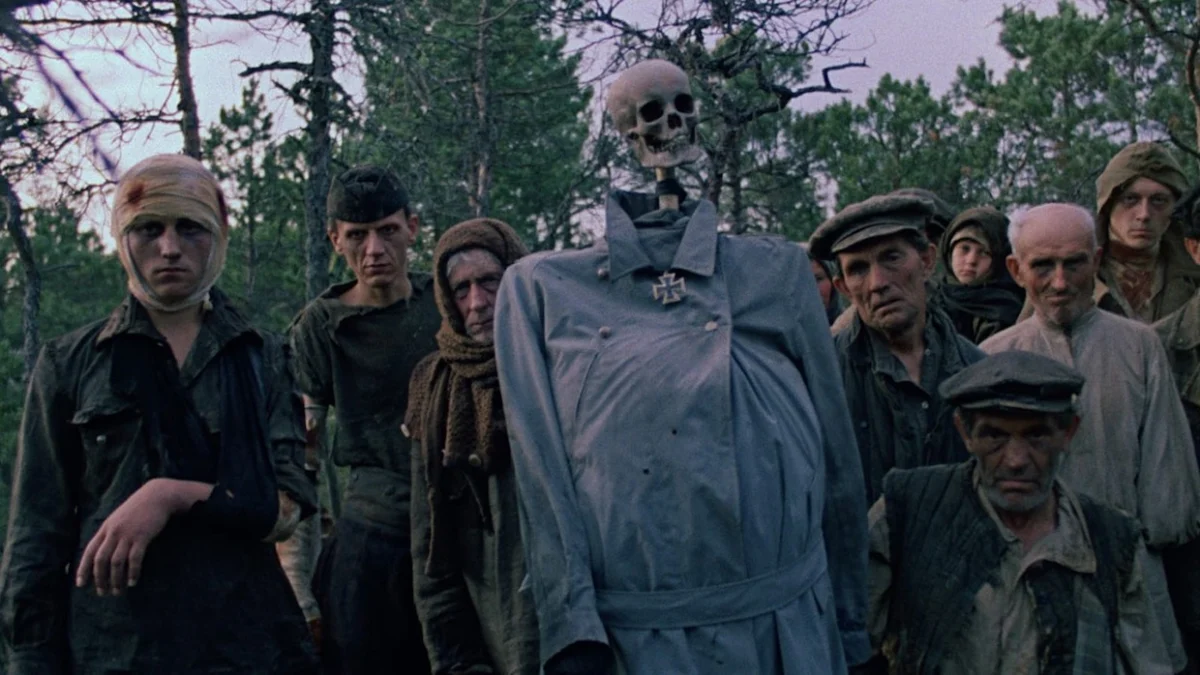
In its inaugural season, Bleak Week emerged from the American Cinematheque, a revered institution dedicated to showcasing classic and contemporary cinema, as a deliberate act of counter-programming against the conventional summer slate of blockbuster releases. The initial 33-film lineup was a powerful statement, featuring repertory classics known for their uncompromising visions, such as Pier Paolo Pasolini’s Salò, or the 120 Days of Sodom (1975), Elem Klimov’s harrowing Come and See (1985), Ingmar Bergman’s introspective Winter Light (1963), Michael Haneke’s provocative Funny Games (1997), Lars von Trier’s emotionally charged Breaking the Waves (1996), and Béla Tarr’s epic Sátántangó (1994). While these films spanned various genres, eras, and national cinemas, they were unified by their visceral quality and a shared commitment to exploring the darker, more challenging aspects of existence.
Chris LeMaire, Director of Programming at the American Cinematheque, has been a driving force behind this vision. Known for his embrace of films often labeled as heavy or depressing, LeMaire’s previous programming efforts include spotlighting rare Andrei Tarkovsky prints and orchestrating Lav Diaz’s first-ever visit to the United States. These filmmakers, though distinct in their aesthetic approaches, share an investment in existential concerns, crafting austere and often durational narratives about national history and political atrocity. This spirit informs Bleak Week’s core philosophy: to encourage audiences to engage with fundamental human qualities, even when the subject matter might seem intimidatingly heavy. This dedication to patience and humanism—the willingness to confront difficult realities—is the very heart of the festival.
Grant Moninger, Artistic Director of the American Cinematheque, revealed that the initial idea for Bleak Week stemmed from a desire to "take Chris’s brilliant programming and present it in a way to really bring some recognition to art house films and great auteurs throughout the history of cinema." To achieve this, LeMaire and Moninger intentionally deviated from one of the Cinematheque’s unwritten programming rules. Instead of offering Bleak Week as one thematic program among many, they dedicated the entire schedule across all three of their Los Angeles venues to "wall-to-wall despair." This bold move forced audiences to immerse themselves fully, prompting a deeper consideration of how different films embody "bleakness."
Evolution and Expanding Curatorial Horizons
The initial programming approach, while impactful, led LeMaire to ponder the multifaceted nature of cinematic bleakness. The first Bleak Week, while powerful, featured relatively few left-field choices beyond Arthur Penn’s black comedy Penn & Teller Get Killed (1989). However, as the festival matured, its curatorial scope broadened significantly. The current iteration seamlessly integrates arthouse and repertory staples—including works by Bleak Week favorite Béla Tarr, Jane Campion’s The Piano (1993), and Ingmar Bergman’s war apologia Shame (1968)—alongside diverse genre films. Examples include Richard Kelly’s divisive cult sci-fi Southland Tales (2006) and Mick Jackson’s harrowing post-apocalyptic drama Threads (1984), films not typically programmed together. This expanded definition of bleakness aims to offer something for every type of audience member, challenging preconceived notions of what constitutes "difficult" cinema.
A key indicator of the festival’s rising prominence is its ability to attract renowned filmmakers and actors. Moninger highlighted a pivotal moment: "When Chris convinced Béla Tarr, who said he would never come back to the United States, to come back for Bleak Week, it suddenly changed the stature of the festival." Tarr’s endorsement and presence lent an undeniable gravitas to the series. In subsequent years, other celebrated cinematic voices joined the fold, with Jon Jost attending a rare retrospective in 2025, and tributes to Kenneth Lonergan, Lynne Ramsay, and Charlie Kaufman featured in 2024. This year’s lineup includes retrospective strands and Q&As with luminaries such as Isabelle Huppert, Warwick Thornton, and Ari Aster, further solidifying Bleak Week’s standing in the international film festival circuit.

Global Reach and Collaborative Programming Model
The most striking development for Bleak Week has been its meteoric expansion from a localized event to a worldwide phenomenon. After gradually extending its footprint from Los Angeles to other major cinematic hubs like New York City, Chicago, Dallas, and London, the current edition’s reach into 73 cities worldwide signifies a powerful collective desire among audiences to engage with films that offer a more nuanced, warts-and-all reflection of reality.
This global expansion is built on a collaborative model rather than a prescriptive one. Kerstin Larson, programming director at Milwaukee’s Oriental Theater, shared insights into this approach. LeMaire proactively reached out to potential participating theaters, providing resources like "a giant spreadsheet" of past programs and upcoming restorations from distributors. Crucially, LeMaire emphasized, "What’s extremely important to us is that we don’t impose a lineup. We don’t even say it has to be seven days. What is a ‘week’ to you? What would that look like in your programming?" This philosophy empowers local programmers to interpret the "bleakness" theme through their own cultural lens and screen availability.
The diversity of programming across the nationwide Bleak Week showcases this autonomy. For instance, the Oriental Theater, constrained by screen availability, curated a focused lineup of seven films, with only William Friedkin’s heist thriller Sorcerer (1977) overlapping with the American Cinematheque’s selection. Larson deliberately crafted a thematic strand around "how work and labor continues to be bleak," featuring films like Chris Smith’s American Job (1996) – a natural fit given the local reverence for his documentary American Movie (1999) – and Béla Tarr’s The Turin Horse (2011), scheduled provocatively on Father’s Day. This decentralized approach ensures that Bleak Week resonates authentically with local audiences while maintaining its overarching thematic integrity.
Audience Reception and Industry Validation
The initial apprehension from Moninger and LeMaire about public reception to such a specifically toned festival proved largely unfounded. Despite suggestions from publications like The Hollywood Reporter about a trending shift towards "Hopecore"—uncynical storytelling celebrating collaboration and the "indomitable human spirit," exemplified by films like Project Hail Mary—Bleak Week’s overwhelming success directly challenges this narrative. The sustained and expanding global appetite for challenging cinema suggests that audiences are not solely seeking escapism but also a deeper engagement with the complexities of life.
The festival’s popularity is evident in its rapid ticket sales; Ari Aster’s retrospective, for instance, sold out "in just a few minutes." LeMaire credits distributors like Janus Films and American Genre Film Archive, who are willing to "hold some restorations they have for the year for Bleak Week," playing a vital role in generating excitement. This year’s edition boasts world premiere restorations of the Coen Brothers’ The Man Who Wasn’t There (2001) and Daniel Petrie’s rarely seen Buster and Billie (1974), further enhancing the festival’s prestige and drawing power. The presence of major stars like Isabelle Huppert also acts as a "trickle-down" strategy, LeMaire notes: "If we can have someone that big, then we can ask audiences to take a chance on some of the rarer things in the lineup. If it’s in a festival with Isabelle Huppert and Ari Aster, it must be interesting."
Thematic Boundaries and Broader Cultural Significance
A notable aspect of Bleak Week’s programming is its deliberate omission of nonfiction filmmaking. While the festival champions films that explore difficult realities, Moninger clarified, "We don’t actually want to show the suffering. Bleak Week is really triumphant. It’s saying that no matter what people have been through, what they’re going through now, or who they are, you can make art about it." This distinction suggests a desire to engage with suffering through an artistic lens of narrative and metaphor, rather than the direct, often unmediated, presentation of real-world atrocities found in documentaries. While this approach allows for a certain interpretive distance, it also highlights a potential area for future thematic exploration, perhaps through a thoughtfully curated strand of unflinching but urgent documentaries.
Ultimately, the enduring importance of Bleak Week to cinema culture lies in its powerful communal potential. The "Hopecore" trend, while a contemporary media headline, reflects a perennial tension in human experience. As Moninger aptly states, "There’s never been a time on this earth that wasn’t bleak. It may not be bleak in your house, but I guarantee that next door it’s kind of bleak. And I guarantee you across the ocean it’s kind of bleak. So to say it’s really all about ‘now’ is limiting." By providing a shared space to collectively experience sorrow, grief, and the challenging facets of the human condition, Bleak Week offers a unique form of catharsis and connection. In an era increasingly dominated by individualized, at-home entertainment, the act of gathering in a theater to confront profound cinematic truths together becomes, paradoxically, a deeply hopeful endeavor. It reaffirms cinema’s role not just as entertainment, but as a vital medium for collective introspection and empathy, fostering a powerful sense of unity in shared understanding.