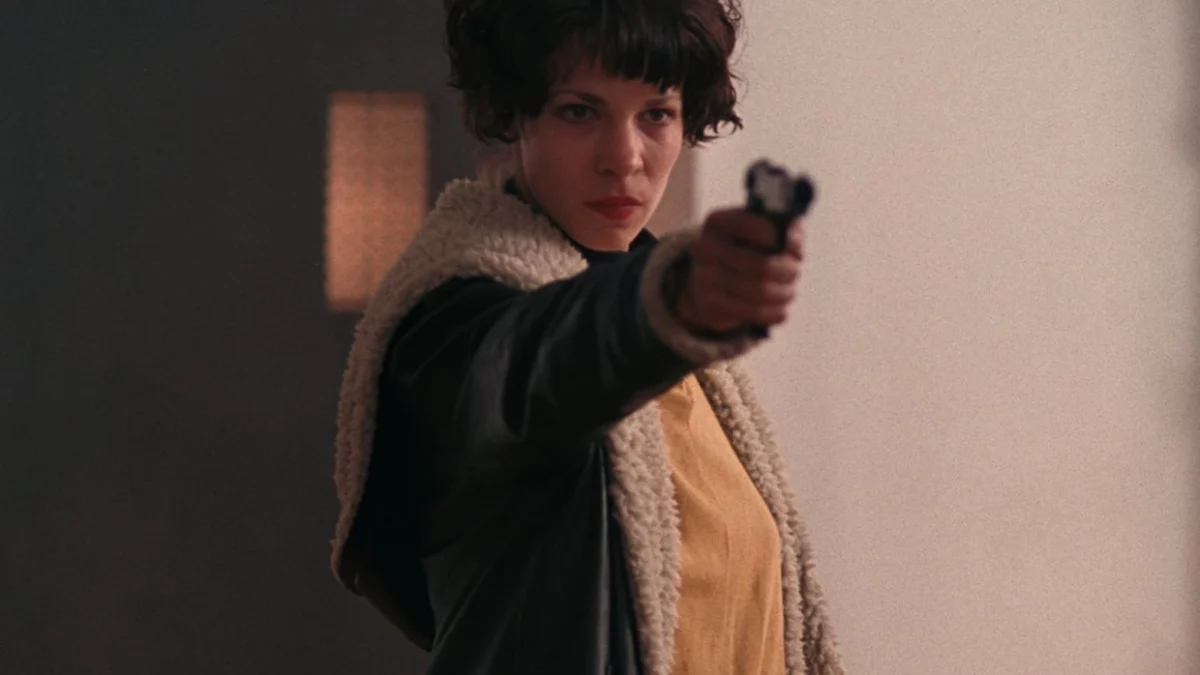
The cinematic landscape of the mid-1990s was profoundly shaped by independent voices, and among the most distinctive was Mary Harron’s debut feature, I Shot Andy Warhol (1996). Now, nearly three decades after its initial release, the film returns to screens in a meticulous 4K restoration, offering audiences a refreshed perspective on its provocative subject matter and prescient themes. This re-release, spearheaded by a new high-definition transfer supervised by cinematographer Ellen Kuras, not only celebrates the film’s enduring artistry but also reignites conversations surrounding radical feminism, artistic exploitation, and the complex figures at the fringes of cultural movements.
The Genesis of a Provocative Narrative
Before captivating audiences with the chilling portrait of Patrick Bateman in American Psycho (2000), Mary Harron immersed herself in a different kind of New York pathology. I Shot Andy Warhol delves into the life of Valerie Solanas, the radical feminist writer who, on June 3, 1968, shot pop art icon Andy Warhol, critically wounding him. The film offers a nuanced, often unsettling, look at Solanas’s journey through the downtown art scene of the 1960s, her struggles for recognition, and the underlying ideological fervor that culminated in the infamous attack.
Harron’s interest in Solanas and her story stemmed from a deep engagement with Warhol’s Factory and the Velvet Underground, initially encountering Solanas’s SCUM Manifesto as a "darkly comic" curiosity. However, a later discovery of the manifesto in a left-wing bookstore, while researching a Warhol documentary, profoundly shifted her perception. She was "completely stunned by how brilliant it was," particularly its elegant writing, sharp irony, and piercing dissection of societal injustices rooted in female inferiority. This intellectual awakening became the bedrock for a film that sought to understand, rather than merely judge, one of the 20th century’s most enigmatic and controversial figures.
Valerie Solanas: A Life on the Margins
Valerie Solanas (1936-1988) was a figure of profound contradictions, her life marked by early trauma, academic brilliance, and persistent struggles with poverty and mental illness. Born in New Jersey, she experienced a difficult childhood, eventually excelling academically and graduating from the University of Maryland with a degree in psychology. However, her life took a turn towards bohemianism and radical activism upon her arrival in New York City in the mid-1960s. It was there that she wrote the SCUM Manifesto, a scathing and satirical polemic advocating for the overthrow of patriarchal society and the eradication of men.
Solanas’s interactions with Andy Warhol began in 1967 when she approached him to produce her play, Up Your Ass. Warhol, known for his fascination with unconventional personalities, initially showed some interest, casting her in his film I, a Man (1967). However, he never produced her play, a perceived betrayal that fueled Solanas’s growing resentment. Coupled with unfulfilled promises regarding the publication of her SCUM Manifesto—which was eventually published by Maurice Girodias, but without royalties paid to Solanas—her frustrations mounted.
On June 3, 1968, Solanas entered Warhol’s studio, The Factory, and shot him three times, also wounding art critic Mario Amaya. Warhol survived but suffered lifelong health issues. Solanas surrendered to the police shortly after, famously stating, "He had too much control over my life." She was eventually diagnosed with paranoid schizophrenia and sentenced to three years in prison, marking a tragic end to her brief, explosive foray into the public eye. Her life post-release was largely one of destitution, culminating in her death in a welfare hotel in 1988.
The SCUM Manifesto: A Legacy of Debate
The SCUM Manifesto stands as a pivotal, albeit polarizing, document of radical feminist thought. Published in 1967, it argues that men are biologically inferior, emotionally stunted, and responsible for all the world’s ills. Solanas proposed the creation of the "Society for Cutting Up Men" (SCUM) to eliminate the male sex and establish an all-female utopia. Its extreme rhetoric and calls for violence have ensured its contentious status, yet its sharp critique of patriarchal structures and societal norms continues to resonate.
Mary Harron observed that in the late 1980s and early 1990s, the manifesto was known only to a "very small group of people, radical feminists," and considered a "weirdo outlier" compared to more mainstream feminist texts like Shulamith Firestone’s. However, subsequent republications and academic engagement, including a graphic novel adaptation, led to its wider circulation and a surge in its cultural life.
Today, the SCUM Manifesto is claimed and reclaimed by various groups. While often associated with radical feminists, its interpretations have broadened. Harron acknowledges the ongoing debate about its seriousness versus its satirical intent, opting in her film to keep this question "productively open." She believes categorizing it as pure satire "keeps it in a safe place it doesn’t really belong in," highlighting its complex nature—both brilliant and disturbing. Some contemporary critics have even reinterpreted it as a trans-affirming text, a view Harron finds a "stretch" but accepts as people deriving what they need from the text. This fluidity of interpretation underscores the manifesto’s enduring power to provoke and adapt to evolving social discourse.
Harron’s Directorial Approach: Poetic Realism and Nuance
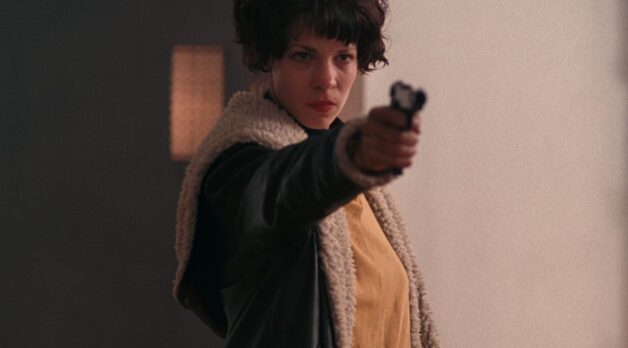
Harron’s I Shot Andy Warhol is celebrated for its unique aesthetic and its refusal to simplify complex characters into mere heroes or villains. Lili Taylor’s portrayal of Valerie Solanas is particularly lauded, capturing her "deadpan swagger" and her essence as an outsider who could be "neither contained nor ignored." Jared Harris, as Andy Warhol, offered a depiction that Harron found captured his "incredible fragility and elusiveness," a vulnerability that she had personally observed in her own brief encounters with the artist.
The film’s visual style, overseen by cinematographer Ellen Kuras, blends gritty naturalism with a subtle, dreamlike quality. Harron cites influences like Larry Clark’s Kids (1995) for its "poetic realism" and available light, as well as the photographic works of Diane Arbus and Magnum Photos for capturing the authentic texture of the era. The result is a New York that feels both palpably real and slightly ethereal, a fitting backdrop for the surreal world of The Factory. Harron’s choice to enlist John Cale to compose the score, after Lou Reed denied permission for Velvet Underground songs, further imbues the film with an authentic, period-appropriate atmosphere that avoids direct reconstruction in favor of a "living document" feel.
As a woman filmmaker in the 1990s, especially one tackling an explicitly feminist subject, Harron faced challenges. She recalls being "very lucky" to secure initial funding and later to connect with Christine Vachon and Tom Kalin, key figures in the nascent New York independent film scene. Her experience as a researcher on documentaries and directing short films for the BBC honed her aesthetic and taught her to "trust my instincts against opposition," a crucial lesson for any director navigating a demanding industry.
The 4K Restoration: Illuminating the Original Vision
The new 4K restoration, supervised by the original cinematographer Ellen Kuras, has brought a renewed vibrancy to I Shot Andy Warhol. Harron described watching the playback without sound, a method that allowed her to appreciate Kuras’s "beautiful lighting and the colors." The restoration accentuates the film’s naturalistic palette, making the Factory appear as a "kind of dream world" while retaining its essential grunginess. Harron notes that it looks "both gritty and beautiful—but not too beautiful," a testament to the meticulous work that preserved the film’s original artistic integrity while enhancing its visual clarity for contemporary screens. This process not only makes the film accessible to new generations in its best possible form but also allows long-time admirers to rediscover its visual subtleties.
Enduring Resonance in a Modern Age
I Shot Andy Warhol premiered at a time when feminism was undergoing a conservative "backlash," as documented by Susan Faludi. Harron notes that "nobody wanted to hear about angry women." Yet, the film found its audience, becoming a touchstone for independent cinema and sparking conversations about its complex themes.
Today, the film’s return feels particularly timely amidst renewed debates about feminist rage, gender politics, and the volatile nature of internet culture. Harron muses that Valerie Solanas "might have thrived" in the digital age, where individuals can "make your own fame" and find an audience for radical ideas in ways impossible in the 1960s. This observation highlights the profound shift in media consumption and self-expression, where figures like Solanas could potentially command significant online followings, for better or worse.
The film also engages with the "gendered economy" of The Factory. While Warhol was ruthless in discarding "superstars" like Edie Sedgwick when they became too difficult, he also provided a platform for marginalized individuals—drag queens, trans women—who were otherwise "completely shut out." Harron suggests Warhol "changed America in that way," subtly introducing a gay sensibility into the mainstream. This duality, where opportunity coexisted with exploitation, forms a crucial backdrop to Solanas’s rage, especially given her essentialist views on gender. Harron, however, cautions against imposing contemporary ideological frameworks onto historical figures, emphasizing the need to understand Solanas within the context of 1968.
The film’s conclusion, which emphasizes the SCUM Manifesto‘s status as a "classic radical feminist text" rather than Solanas’s bleak end in a welfare hotel, was a point of some contention for Harron initially. However, she now finds it "makes more sense," given the manifesto’s expanded influence and discussion over the past three decades. This narrative choice underscores the film’s focus on Solanas’s ideas and their enduring impact, rather than a purely biographical account of her personal decline.
Conclusion
I Shot Andy Warhol remains a powerful and thought-provoking cinematic achievement. Mary Harron’s nuanced direction, Lili Taylor’s unforgettable performance, and the film’s willingness to explore uncomfortable truths about art, feminism, and mental illness solidify its place as a cult classic. The 4K restoration not only preserves its aesthetic brilliance but also ensures its continued relevance for new generations grappling with similar questions of identity, power, and societal rebellion. Harron’s ability to craft a film that refuses easy answers, instead inviting viewers to "make you think" and allow their sympathies to "ping-pong around," is precisely what gives I Shot Andy Warhol its timeless and captivating quality.