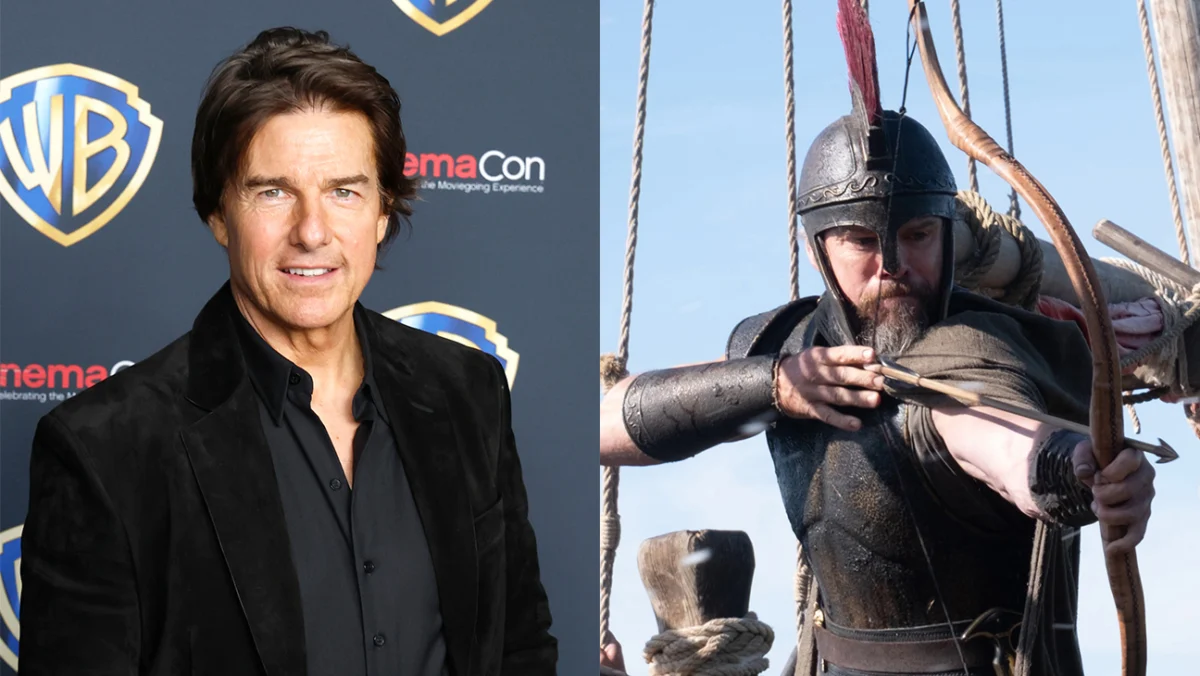
Hollywood icon Tom Cruise has delivered a resounding commendation for Christopher Nolan’s latest cinematic achievement, The Odyssey, following an exclusive early screening. Cruise, a steadfast champion of the theatrical experience, took to social media on Thursday to express his profound admiration for Nolan’s ambitious adaptation of Homer’s ancient Greek epic, signaling a powerful endorsement from one of the industry’s most influential figures as the film prepares for its official wide release.
A Star’s Seal of Approval for a Cinematic Vision
The effusive praise from Cruise arrived via a social media post, featuring a photograph of the actor holding a movie ticket in front of a prominent IMAX 70mm theater marquee displaying The Odyssey. His accompanying caption read, "Wow! To Chris, Emma, and ALL of your brilliant cast and crew. Thank you for an amazing night in a movie theater. I can’t wait to see it again!" This statement, directed at director Christopher Nolan, his wife and producing partner Emma Thomas, and the film’s extensive cast and crew, underscores the profound impact the film had on the veteran performer. Such a public and enthusiastic endorsement from Cruise is widely interpreted as a significant boost for The Odyssey, particularly given his unparalleled influence and credibility within the global film community.
The early screening event and Cruise’s subsequent reaction highlight a shared philosophy between two of contemporary cinema’s most prominent figures: an unwavering commitment to the immersive, communal experience of watching films on the big screen. Their mutual advocacy for theatrical distribution, especially in an era increasingly dominated by streaming platforms, forms a unique bond, making Cruise’s approval of Nolan’s latest work particularly resonant.
"The Odyssey": An Epic Reimagined for the Modern Screen
Christopher Nolan’s The Odyssey is an ambitious cinematic undertaking, translating Homer’s foundational epic poem into a grand-scale feature film. The narrative follows Matt Damon in the titular role of Odysseus, the cunning Greek king of Ithaca, as he embarks on his arduous and perilous decade-long journey home after the fall of Troy. His quest is driven by the desire to reunite with his steadfast wife, Penelope, portrayed by Anne Hathaway, and their son, Telemachus, played by Tom Holland, both of whom await his return amidst growing political intrigue and suitors vying for Penelope’s hand.
The film boasts an extraordinary ensemble cast that reads like a who’s who of contemporary Hollywood talent. Beyond Damon, Hathaway, and Holland, the cast includes Zendaya, Robert Pattinson, Lupita Nyong’o, Jon Bernthal, Elliot Page, Travis Scott, and Charlize Theron, among others. This stellar lineup brings a fresh interpretation to the iconic characters and mythical creatures that populate Odysseus’s epic voyage, from the enchanting Sirens to the formidable Cyclops and the sorceress Circe.
Ahead of its official release, The Odyssey has already garnered widespread critical acclaim. At the time of publication, the film holds an impressive 96 percent critics score on Rotten Tomatoes, signaling an overwhelmingly positive reception from reviewers worldwide. Critics have lauded Nolan’s visionary direction, the powerful performances, the screenplay’s faithful yet innovative adaptation of the source material, and the film’s breathtaking visual scope. This high critical consensus positions The Odyssey as a strong contender in the upcoming awards season and further solidifies Nolan’s reputation as a master storyteller capable of blending intellectual depth with spectacular entertainment.
Technical Innovation and the Theatrical Imperative
A cornerstone of The Odyssey‘s cinematic identity, and a point of particular resonance for advocates like Cruise, is its groundbreaking technical execution. The film marks a historic achievement as the first feature film ever to be shot entirely with IMAX 70mm film cameras. This choice reflects Nolan’s long-standing dedication to the highest standards of cinematic presentation, offering unparalleled clarity, resolution, and immersion.
IMAX 70mm film provides a much larger negative area compared to standard 35mm film or digital formats, resulting in images with extraordinary detail and depth. When projected in purpose-built IMAX theaters, these films fill the audience’s peripheral vision, creating a profoundly enveloping experience that digital projection often struggles to replicate. Nolan has consistently utilized IMAX cameras for pivotal sequences in his previous works, including The Dark Knight trilogy, Inception, Interstellar, Dunkirk, and most recently, the Oscar-winning Oppenheimer. However, shooting an entire feature film in this demanding format presents significant logistical and technical challenges, from the sheer size and weight of the cameras to the complex processing of the film stock. The Odyssey‘s commitment to this format is a powerful statement about Nolan’s artistic vision and his belief in the unique power of the theatrical medium.
For film purists and cinephiles, the IMAX 70mm experience is considered the zenith of cinematic presentation, offering a level of visual and auditory fidelity unmatched by home viewing setups. This technological commitment aligns perfectly with Cruise’s own philosophy that films are designed to be experienced collectively on the largest possible screen, making his endorsement of The Odyssey a natural extension of his long-held beliefs.
The Shared Crusade: Cruise and Nolan as Guardians of the Big Screen
The mutual respect and admiration between Tom Cruise and Christopher Nolan extend beyond a singular film; it represents a shared ideology regarding the sanctity of the theatrical moviegoing experience. In an era where the traditional film distribution model has faced unprecedented challenges from the rise of streaming services and global events like the COVID-19 pandemic, both Cruise and Nolan have emerged as vocal and influential advocates for cinema as an art form best consumed in a dedicated public setting.
Tom Cruise, in particular, has become synonymous with this advocacy. His steadfast commitment to theatrical releases was most dramatically demonstrated during the pandemic with Top Gun: Maverick. While many studios opted to release major blockbusters on streaming platforms or with hybrid strategies, Cruise famously insisted on delaying the sequel’s release until audiences could safely return to cinemas. This decision, initially met with some industry skepticism, proved to be a masterstroke. Upon its release in 2022, Top Gun: Maverick soared to unprecedented box office heights, gross grossing nearly $1.5 billion worldwide, making it the highest-grossing film of Cruise’s career and one of the highest-grossing films of all time. The film’s success was widely credited with reinvigorating the post-pandemic box office and reminding audiences of the irreplaceable thrill of communal moviegoing.
The impact of Maverick was so profound that legendary director Steven Spielberg personally acknowledged Cruise’s pivotal role. In a widely reported exchange in 2023, Spielberg told Cruise, "You saved Hollywood’s ass, and you might have saved theatrical distribution. Seriously, Maverick might have saved the entire theatrical industry." This statement encapsulated the industry’s collective relief and gratitude for Cruise’s unwavering faith in the theatrical model.
Cruise’s advocacy isn’t limited to his own projects. He has a well-documented history of publicly promoting the films of other directors he admires, especially those that champion the big-screen experience. He was a visible supporter of Nolan’s previous films, Tenet and Oppenheimer, urging audiences to see them in theaters. His promotional efforts have also extended to a diverse range of other features, including Sinners, Indiana Jones and the Dial of Destiny, Twisters, F1: The Movie, The Running Man, and Disclosure Day, among others, demonstrating a broader commitment to the health and vibrancy of the entire film industry.
Nolan, on his part, has consistently pushed the boundaries of cinematic presentation, eschewing digital intermediate processes for analog film, employing practical effects whenever possible, and demanding the highest fidelity exhibition for his work. His films are often designed specifically for the largest screens and most robust sound systems, making The Odyssey‘s full IMAX 70mm commitment a natural progression of his artistic philosophy.
Implications for the Film Industry and Beyond
The convergence of two such influential figures in this manner carries significant implications for the film industry. Tom Cruise’s endorsement of The Odyssey is more than just a celebrity shout-out; it’s a powerful statement that resonates with both audiences and industry stakeholders.
Firstly, it provides an immediate and invaluable marketing boost for The Odyssey. A personal recommendation from a star of Cruise’s caliber can translate directly into increased box office revenue, especially for a film that champions the theatrical experience. Audiences, particularly those who trust Cruise’s judgment and appreciate his commitment to quality cinema, may be more inclined to seek out the film in premium large formats like IMAX 70mm.
Secondly, it reinforces the ongoing narrative that the theatrical experience remains vital and irreplaceable. In an age where streaming services often overshadow traditional cinema, the combined weight of Cruise and Nolan’s commitment serves as a powerful counter-narrative, reminding audiences and studios alike of the unique magic of the big screen. This could encourage other filmmakers and studios to invest more in premium formats and theatrical windows, confident that a dedicated audience exists for such experiences.
Thirdly, it validates Christopher Nolan’s uncompromising artistic vision. For years, Nolan has championed film over digital, practical effects over CGI, and theatrical exhibition over streaming. Cruise’s enthusiastic praise from a fellow practitioner reinforces Nolan’s standing as a filmmaker whose artistic integrity is matched by his commercial success.
The broader impact extends to the discourse surrounding the future of cinema. As the industry continues to navigate evolving consumption habits, the actions and statements of figures like Cruise and Nolan provide crucial guidance. They demonstrate that cinematic spectacle, combined with compelling storytelling, still holds immense power to draw audiences into theaters, proving that the big screen is far from obsolete.
Looking Ahead: Cruise’s Next Cinematic Venture
While actively championing other filmmakers’ works, Tom Cruise is also preparing for his own highly anticipated return to the screen. His next film, Digger, is slated for release on October 2. The first trailer for the Warner Bros. production debuted earlier this week, creating significant buzz by revealing an almost unrecognizable Cruise beneath heavy prosthetic makeup.
Directed by the acclaimed Alejandro G. Iñárritu, known for his visually stunning and emotionally profound works such as Birdman and The Revenant, Digger promises to be a departure from Cruise’s recent action-heavy roles. The film’s premise, combined with Iñárritu’s distinct directorial style and Cruise’s transformative performance, suggests a project that could challenge audience expectations and showcase a different facet of the actor’s enduring talent. The collaboration between Cruise and Iñárritu, two artists known for their meticulous craftsmanship and boundary-pushing ambition, further underscores Cruise’s continued commitment to diverse and impactful cinematic projects.
In conclusion, Tom Cruise’s unequivocal endorsement of Christopher Nolan’s The Odyssey is a significant moment for Hollywood. It highlights a mutual appreciation for cinematic excellence and a shared dedication to preserving and elevating the theatrical experience. As The Odyssey prepares to captivate audiences worldwide, Cruise’s seal of approval stands as a testament to the enduring power of the big screen and the visionary filmmakers and actors who continue to champion it.