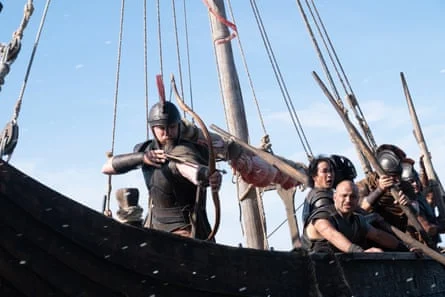
The cinematic adaptation of Homer’s epic, "The Odyssey," directed by Christopher Nolan, has ignited a fervent debate, not only regarding its artistic merits but also its engagement with gender representation and the subsequent reception from both critics and audiences. The film, a highly anticipated project from the acclaimed director known for his complex narratives and grand-scale productions, has garnered a predominantly positive critical consensus, with many hailing it as a masterful reimagining of the ancient Greek saga. However, a closer examination of the discourse surrounding the film reveals a persistent undercurrent of concern regarding the portrayal of its female characters and the demographic makeup of its most vocal supporters.
Historical Context of Film Criticism and Gender
The landscape of film criticism has historically been a domain heavily dominated by men. Anecdotal evidence from industry veterans and historical data consistently point to a significant gender imbalance among prominent critics, particularly in earlier decades. For instance, during the mid-2000s, a period often recalled by critics as the "mid-noughties," the ratio of male to female film critics in major publications was frequently cited as being as high as eight to one. While this era is sometimes perceived as having been free of overt sexism within critical circles, particularly in urban hubs like London’s Soho, the reality for female critics often involved facing disproportionate scrutiny and, at times, outright hostility from certain segments of the readership.
This hostility was often triggered by reviews that challenged the perceived genius of specific directors whose work resonated strongly with a predominantly male audience. Directors such as Quentin Tarantino, Ken Loach, and notably, Christopher Nolan, frequently found themselves at the center of such intense fan defense. Any critical assessment that deviated from the adulatory norm could elicit a strong backlash, characterized by personal attacks and gendered insults. A stark reminder of this phenomenon occurred in 2020 when a review of Nolan’s "Tenet" by a female critic, who temporarily filled in for a regular reviewer, was met with a torrent of misogynistic comments on social media platforms and online forums. The feedback included terms like "silly cow," "bitter," and accusations of being "probably a feminist," alongside deeply offensive generalizations about women’s decision-making processes being driven by emotion rather than logic. Such incidents highlight a persistent pattern where dissenting opinions, particularly from women, are often dismissed and personalized, rather than engaged with on the merits of the critique itself.
The Odyssey: A Critical and Commercial Phenomenon
The release of Nolan’s "The Odyssey" has seen a near-universal outpouring of praise, with numerous reviews highlighting its technical prowess, ambitious storytelling, and compelling performances. Data from aggregators such as Rotten Tomatoes and Metacritic indicate an exceptionally high percentage of positive reviews, with the film consistently scoring in the high 80s and 90s. This critical acclaim has translated into robust box office performance, with early projections suggesting a significant opening weekend and sustained audience interest.
However, the nature of the critical reception has also drawn attention. While the majority of reviews have been overwhelmingly positive, a notable number of these have come from male critics. This observation has led to a renewed discussion about the demographic composition of those championing the film. The initial anecdotal eight-to-one ratio of male to female critics, while potentially a conservative estimate for some periods, underscores a long-standing trend. In the current media landscape, it is plausible that this ratio remains a significant factor in the discourse surrounding blockbuster films, particularly those helmed by directors with a strong, established fanbase.
Examining the Representation of Female Characters
A central point of contention and discussion surrounding "The Odyssey" lies in its portrayal of its female characters. While the film has been lauded for its epic scope and narrative ambition, a significant portion of critical analysis, including some from established classicists and prominent film reviewers, has pointed to a perceived underdevelopment or alteration of key female roles from Homer’s original epic.
For instance, the character of Athena, portrayed by Zendaya, is described by some critics as being relegated to a largely passive, supportive role. Her presence is often characterized as a shadowy, almost ethereal guide to Odysseus, offering little substantive action or agency beyond subtle nods and expressions of disappointment. This interpretation contrasts sharply with the more active and authoritative depictions of Athena in classical literature, where she is a goddess of wisdom, warfare, and strategic guidance.

Similarly, Charlize Theron’s portrayal of Calypso has been noted for its deviation from the source material. While Homer’s Calypso is a powerful nymph who detains Odysseus for seven years, offering him immortality in exchange for his companionship, the film’s adaptation reportedly reduces her to a more superficial role, functioning primarily as a sounding board for Odysseus’s journey. The film’s narrative, as described, omits the significant aspect of Calypso holding Odysseus captive as a "sex slave," a detail present in the epic poem that adds considerable complexity to her character and her relationship with Odysseus. Instead, she is presented as a more contemporary figure, akin to a beach bar proprietor contemplating a career pivot to psychotherapy, a characterization that critics argue strips away her mythological power and narrative weight.
The portrayal of Circe, played by Samantha Morton, has also been a subject of critical discussion. While her initial scenes depict her as a powerful sorceress who transforms Odysseus’s men into pigs, the resolution of her storyline with Odysseus reportedly involves a simplified negotiation. Unlike Homer’s depiction, which involves a prolonged period of seduction and complex rhetoric, Nolan’s version is said to hinge on a brief exchange where Odysseus concedes that men can be flawed but not entirely irredeemable. These alterations, critics argue, consistently render the female characters less complex, more passive, or "more boring or more bonkers" than their Homeric counterparts.
These narrative choices, according to some analyses, serve not to elevate the female characters but to reframe and enhance the heroism of Matt Damon’s Odysseus. The character’s evolution from a "tricksy shagger" to a "gentle feminist" and an unequivocally capable warrior, as suggested by the inclusion of action sequences, appears to be a primary objective of the adaptation. This focus on a feminized heroism for the male protagonist, while potentially intended to broaden the film’s appeal, has been viewed by some as coming at the expense of robust female character development.
Audience Reception and the Question of Alienation
The question of whether women will engage with and enjoy "The Odyssey" as much as their male counterparts is a pertinent one, particularly in light of these observations. The very act of engaging with art that is not a direct reflection of one’s own experiences or target demographic is, as noted by some cultural commentators, a fundamental aspect of appreciating diverse forms of storytelling. Films like "Bridget Jones," "The Football Factory," or "The Zone of Interest" demonstrate the power of cinema to offer insights into lives and perspectives beyond one’s immediate reality.
However, the potential for alienation exists when core female characters are perceived as diminished or significantly altered in ways that reduce their agency or complexity. This is particularly true when the critical discourse and perceived audience base appear heavily skewed towards a demographic that may not share the same critical lens on gender representation.
The immersive nature of modern cinema, especially IMAX presentations, can further amplify these perceptions. The hyper-realistic detail visible in high-resolution formats, such as the magnified pores of actors in close-up shots, can create an unsettling or even off-putting viewing experience for some audience members. This, coupled with narrative elements that may not resonate with female viewers’ expectations for character depth and representation, could contribute to a sense of disconnect.
Broader Implications and Future Discourse
The discourse surrounding "The Odyssey" serves as a microcosm of ongoing debates within the film industry and broader society concerning gender representation in media. The film’s success underscores the enduring appeal of epic narratives and Christopher Nolan’s directorial prowess. However, the critical discussions about its portrayal of women highlight the persistent challenges in achieving equitable and nuanced representation on screen.
The potential for a significant portion of the audience to feel "alienated" or "nervous of saying so," as suggested by some observers, points to a broader societal issue where dissenting opinions, particularly those challenging dominant narratives or cultural touchstones, can be met with resistance. As "The Odyssey" continues its box office run, the conversation around its artistic achievements, its engagement with classical mythology, and its impact on discussions of gender in cinema will undoubtedly persist, offering valuable insights into the evolving dynamics of filmmaking and audience reception. The film’s success, while celebrated, also serves as a prompt for continued critical examination of how stories are told and who they are told for, ensuring that the richness of human experience, in all its diversity, is reflected on the silver screen.