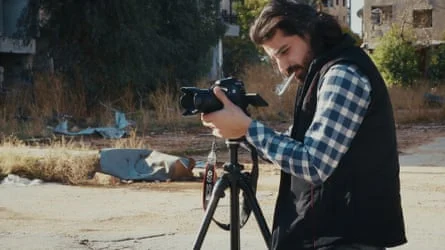
The acrid scent of smoke and the pervasive haze of dust are stark visual cues, painting a grim tableau where the mangled wreckage of vehicles lies scattered across the scarred earth. Amidst the cacophony of screaming children and blaring sirens, activist and videographer Abd Alkader Habak races against time, his sole focus on the injured following a devastating bombing of an evacuee convoy in Aleppo. This harrowing scene, unfolding at the peak of Syria’s brutal civil war in 2017, is punctuated by a digital lifeline: a voice note bubble materializes on Habak’s phone. "My bird, are you okay?" asks BBC journalist Janay Boulos, her voice laced with palpable concern. "Get away from there, run."
For over a year, Habak and Boulos had forged a professional connection, meticulously documenting the alleged atrocities committed by Syrian dictator Bashar al-Assad against his own people. Their bond, forged across vast physical distances, deepened with each shared endeavor. Yet, this particular exchange marks a profound shift, transcending collegiality to blossom into something far more intimate. "I don’t want footage," Boulos implores, her voice trembling as she attempts to grasp the unfolding tragedy from her desk in London. "I don’t want anything, just please take care. I am here whenever you want to talk."
"Birds of War," a poignant and critically acclaimed documentary released this week in the UK, chronicles the extraordinary journey of Lebanese journalist Boulos and Syrian activist Habak as they find each other amidst a maelstrom of revolution, war, and perilous borders. The film masterfully weaves together thirteen years of archival footage, personal voice notes, intimate selfies, candid video calls, and text messages, offering an unvarnished and deeply human perspective on their shared experiences and burgeoning relationship.
"Originally, I wanted to make a documentary about Lebanon and the war and everything that is happening there now," explains Boulos, who co-directed the film with Habak. "But the more we thought about it, taking in a lot of very complicated history and politics and current events, to make it understandable, we should tell the story how we saw it." This approach, rooted in personal narrative, allows for a more accessible and emotionally resonant exploration of complex geopolitical realities.
The advent of smartphones and widespread internet access has undeniably reshaped the landscape of war journalism, making first-person narratives a cornerstone of 21st-century documentary filmmaking. The siege of Aleppo and the broader Syrian conflict have been the subject of numerous impactful documentaries, shedding light on the immense suffering and the far-reaching repercussions of the war. However, "Birds of War," despite its title, extends beyond a singular focus on conflict. It emerges as a broader portrait of what it means to be Syrian or Lebanese during a period of profound instability in the Middle East. The film delves into the fundamental human need for belonging – to one another, to a shared cause, to an ethnic group, to a city, to a nation – and the intricate tapestry of hopes and fears that bind individuals together.
The unfolding love story between Habak and Boulos, and their tenacious pursuit of togetherness against formidable odds, forms the emotional core of the film. The documentary’s profound impact was recognized with a Special Jury Award for Journalistic Impact at its premiere at the Sundance Film Festival, further garnering accolades at the Thessaloniki, Seattle, and Visions du Réel film festivals.
A Journey Forged in Crisis

In the aftermath of the convoy bombing, Habak embarked on a perilous clandestine journey out of Syria, utilizing the services of smugglers to cross the Turkish border. Boulos, driven by her deepening concern, flew to meet him. Within months, they made the life-altering decision to marry, a union Boulos kept from her disapproving parents until the film’s premiere.
"It was unbelievable for me," Habak recounts, reflecting on Boulos’s commitment. "That this person would come from London to see me, a man from a war zone with nothing to offer." He had departed Syria with little more than his camera, essential hard drives, and the clothes on his back. Habak, now living with Boulos in London, initially harbored a desire to return to his homeland. "I don’t know who I’ll be, without Aleppo to fight for," he expressed to her at the time, highlighting the profound sense of identity intrinsically linked to his activism and his city.
For Boulos, the decision to travel to meet Habak in Turkey was a clear imperative. "It was harmless chatting online – but it shifted to something real," she explains. "I really cared about him and his safety and felt a lot of guilt. I thought, ‘I am here in London. These people are on the ground risking their lives so I can report the news.’ I spent a lot of nights when he had no internet thinking, ‘Where is he? Is he fine?’ We had started to chat for longer and I realised I really cared for this man when we met in Turkey."
The Evolving Nature of Conflict Journalism
"Birds of War" masterfully captures a disquieting yet increasingly common facet of modern conflict journalism. Their initial exchange encapsulates the nascent stages of their professional relationship: "Who are you?" Habak queried, his trust in Boulos, who claimed to be from the BBC, initially based solely on her word. Boulos, in turn, had acquired Habak’s contact information through a convoluted, second or even third-hand referral, driven by her pursuit of critical footage from the besieged city. The organic growth of trust and familiarity, built over weeks and months of shared experiences and communication, forms a crucial narrative arc.
"She talks to me like she sees me. Not as news, not as a story," Habak reflects in the film. Boulos’s heartfelt response, captured in a voice note, reinforces this sentiment: "You are more than a story to me." The couple’s use of affectionate pet names – "bird," "my bird," "little bird" – further underscores their deepening connection, symbolizing a sanctuary of personal warmth amidst the dehumanizing realities of war, a space where they could escape the frontlines and militarized borders.
As a journalist who also covered the siege of Aleppo from afar, the reviewer resonates deeply with the film’s portrayal of the powerlessness and guilt experienced by those observing conflict remotely. The daily monitoring of frontlines and bomb impacts via real-time maps, coupled with exchanges with civilians and activists, fosters an intimate, albeit mediated, connection to a place and its people. "Birds of War" offers a powerful depiction of this emotional burden carried by those on the other side of a precarious internet connection, witnessing loved ones endure unimaginable hardship.
Beyond the Headlines: A Story of Belonging and Resilience
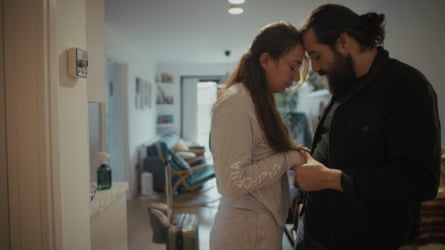
Shortly after Habak joined her in London, Boulos made the significant decision to leave the BBC. Together, they established Habak Films, an independent production company dedicated to amplifying narratives from Lebanon, Syria, and the broader Middle East region. "It is a struggle when people back home are being killed daily," Boulos shares, referencing the ongoing Israel-Hezbollah war. "You want to go back, you want to help, but you realize there’s not enough help you could give in the world. It made me see what my role is. I have the privilege of [being in] London, so let’s be this company that bridges the local voices in Lebanon and Syria to western audiences and news organizations." This commitment underscores a strategic shift towards empowering local storytellers and providing a platform for their perspectives on a global stage.
"Birds of War" demonstrates a deliberate and sensitive approach to depicting the violence and suffering Habak witnessed and documented. The filmmakers consciously chose to avoid overly graphic imagery and to temper the amplification of explosions and bombing sounds. This editorial decision was significantly informed by the input of psychotherapist Rebecca Day, who possesses a background in documentary work.
The Ethical Imperative of Witnessing
Day, who collaborated on the film’s editing process, highlights the crucial role of psychological support in such endeavors. "For a long time, I didn’t want to look at my hard drives from Syria," Habak admits. Through a collaborative "traffic light system" devised with Day, Habak categorized his footage: green for usable material, orange for potentially distressing content, and red for graphic content deemed unnecessary for inclusion. This methodical approach to processing traumatic material proved to be a vital step in the healing process for Habak. "Making this film has been healing," he states.
The film intersperses harrowing footage of doctors grappling with the overwhelming influx of casualties in Aleppo with scenes of quiet resilience: a man tending to his rooftop garden, or friends sharing moments of levity in their apartment. The stark, arid landscapes of Syria are juxtaposed with the vibrant cerulean of the Mediterranean Sea, a backdrop to Habak and Boulos’s paragliding adventure in Turkey – a symbolic return to the freedom evoked by the film’s title.
Day emphasizes the ethical considerations inherent in documentary filmmaking, extending beyond the responsibility to subjects to encompass the well-being of the filmmakers themselves. "We talk a lot about the responsibilities film-makers have towards their sources and characters," she observes, "but it’s also important to keep in mind the film-maker’s perspective: what are your needs as a film-maker and as a person? It’s now normal for productions to employ intimacy coordinators. I’d like it to be industry standard for there to be some sort of reflective practice for dealing with traumatic material. It can be a huge burden for film-makers, but they don’t have to carry that all alone."
The film concludes with a moment of profound significance: Habak’s unexpected return to his homeland following the Syrian opposition’s surprise offensive that dislodged Assad from power in late 2024. However, the overarching narrative acknowledges the enduring uncertainty that shrouds the future of Syria and Lebanon. The film powerfully illustrates that living with uncertainty has become an intrinsic aspect of life for the people in the filmmakers’ homelands, who continue to navigate seemingly unending cycles of unrest and violence.
In a poignant exchange from Beirut, Boulos asks Habak, "How long can we keep doing this?" His simple, yet profound, reply encapsulates their unwavering commitment: "Just until the wars finish." This sentiment underscores the enduring spirit of those who bear witness and the persistent hope for a future free from conflict.