The cinematic landscape of horror has long been shaped by the formative experiences of its enthusiasts, a phenomenon keenly captured by Jane Schoenbrun’s latest directorial endeavor, Teenage Sex and Death at Camp Miasma. This film delves into the profound impact of early, often illicit, exposure to the genre, resonating with the thrill of discovering oneself through both fear and fascination. Schoenbrun, known for the introspective explorations in We’re All Going to the World’s Fair and the resonant themes of I Saw the TV Glow, solidifies her position with what is arguably the most personal and jubilant entry in her "screen trilogy." The film, a bold and joyful slasher satire, artfully blends the dreamy experimentation of her previous works with a newfound confidence, offering a deeply engaging narrative that speaks to the core of how many fans first connected with horror.
A "Woke" Reboot and a Legendary Final Girl
At the heart of Teenage Sex and Death at Camp Miasma is Kris, portrayed by Hannah Einbinder, a burgeoning queer filmmaker whose unique vision has catapulted her to Sundance stardom. Her breakout success stems from a daringly unconventional film – a reimagining of Alfred Hitchcock’s Psycho from the perspective of the shower curtain. This audacious concept has earned her the opportunity to helm a "woke" reboot of the once-popular, now defunct, "Camp Miasma" franchise. Driven by a desire to recapture the magic of the original, Kris embarks on a journey to convince Billy Presley, the iconic final girl of the inaugural Camp Miasma film, to reprise her role.
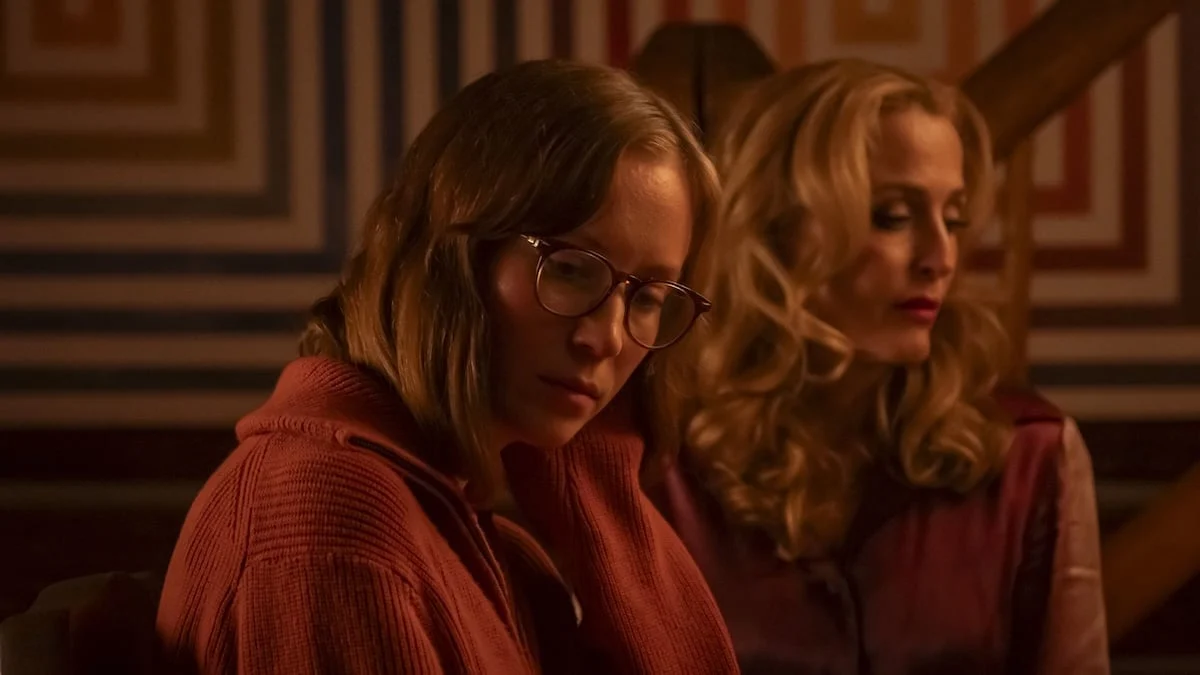
The quest leads Kris from the bustling streets of New York City to the serene, yet stark, landscape of the frozen Pacific Northwest. There, she seeks out Billy, who has largely retreated from the industry that once defined her. Billy, played by a captivating Gillian Anderson in a performance that masterfully blends the glamour of Norma Desmond with the earthy charisma of Dolly Parton, resides at Camp Tivoli, the very location where the original film was shot. While she achieved legendary status as the original film’s survivor, Billy has deliberately distanced herself from the franchise, rejecting subsequent sequels that she perceived as progressively diminishing in quality.
An Artist’s Retreat and a Rekindled Connection
Billy’s life now revolves around a quiet artistic pursuit: creating paintings that evoke the spirit of Mark Rothko, each canvas a tribute to the original film’s enigmatic killer, "Little Death," portrayed by Jack Haven. This artistic sanctuary is the backdrop against which Kris’s professional overtures unfold. Inviting Kris to stay the night at her secluded cabin, Billy’s initial hospitality takes on a different tone when Kris reminds her of the business at hand. Billy’s whispered response, "We’re already working," hints at a deeper, more intertwined dynamic that will soon emerge.
As Kris and Billy revisit the original Camp Miasma film, a profound realization dawns on Kris. She begins to understand the deep personal connection she felt to Billy’s character, recognizing a familiar spark in the actress’s eyes that has not dimmed with time. This shared introspection highlights Kris’s own internal struggles. She identifies herself primarily through her creative output, often at the expense of fully inhabiting her lived experiences, particularly concerning her hesitations around sexuality. The film subtly suggests that Kris’s apprehension might be a barrier to fully experiencing what Billy once embodied in the "Camp Miasma" narrative. The franchise’s gender-fluid, spear-wielding killer, "Little Death," whose name itself carries a suggestive French colloquialism, becomes a symbolic figure in this exploration of desire and self-discovery.
![‘Teenage Sex and Death at Camp Miasma’ – A New Masterpiece from Jane Schoenbrun [Fantasia Review]](https://www.dreadcentral.com/wp-content/uploads/2026/06/Teenage-Sex-and-Death-at-Camp-Miasma.jpg)
Exploring Themes of Identity and Pop Culture Influence
While Teenage Sex and Death at Camp Miasma certainly engages with potent themes of gender identity and transness, Schoenbrun’s primary focus appears to be the transformative power of pop culture, particularly within the horror genre. The film posits that embracing one’s desires, often amplified by the visceral reactions evoked by frightening narratives, is a crucial aspect of self-understanding. The inextricable link between desire and fear is a central tenet explored throughout the film. For audiences who identify with Kris’s journey, her gradual acceptance of her unique desires and the potential for others to see themselves reflected in her arc suggests that Teenage Sex and Death at Camp Miasma, despite its layered conceptual framework and playful subversion of genre tropes, possesses a surprising degree of accessibility.
The inclusion of terms like "joy" and "playful" in a review of Schoenbrun’s work might come as a surprise to those familiar with their oeuvre. However, these descriptors are essential for capturing the essence of Teenage Sex and Death at Camp Miasma. While unequivocally a Schoenbrun film, it is also their warmest and most humorous exploration to date of the ideas they have consistently investigated. The film is punctuated by memorable sequences, including an outrageous Zoom call that escalates into a terrifying freefall, reminiscent of a particularly iconic moment from We’re All Going to the World’s Fair. A sensually charged KFC dinner scene offers a novel perspective on the simple act of enjoying dipping sauces. The notorious "Little Death" is depicted in chilling fashion, beheading and skewering campers to an unexpected and impactful needle-drop. Indeed, the film is replete with carefully curated musical selections that consistently catch the audience off guard, enhancing the narrative’s emotional and visceral impact. A particularly suspenseful moment involves Anderson’s character singing along to an undisclosed song as Einbinder’s character flees through the woods in her undergarments, a scene brimming with terror and unexpected levity.
Hannah Einbinder’s Career-Defining Performance
Hannah Einbinder’s portrayal of Kris is a standout achievement, marking what is arguably her career-best work. As the awkward yet undeniably endearing 29-year-old protagonist, she embodies a character with a Bound-inspired tattoo, who professes a nonchalant acceptance of polyamorous relationships, provided her partner’s needs are met. Kris’s preference for gas station confections – she opines that "we are living in the golden age of gummies" – and her comfort in juvenile pink silk pajamas and bunny slippers while watching the "Camp Miasma" franchise, suggests a deliberate avoidance of sexual intimacy, or so she believes. Einbinder’s performance transcends mere acting; it is a deeply felt embodiment of a character navigating the complex terrain of desire, identity, and the allure of cinematic escapism. Her portrayal solidifies her status as one of the most compelling performers to emerge in recent years.
A Legacy of Discovery and Subversion
Much like those pivotal late-night viewings that first introduced many to the enthralling world of horror, Jane Schoenbrun’s latest offering is poised to leave a lasting impression. Teenage Sex and Death at Camp Miasma is a film that is simultaneously funny, seductive, and profoundly subversive, brilliantly dissecting the enduring appeal of the slasher subgenre. It captures the very essence of why audiences continue to be drawn to these narratives. The film’s audacious and joyful approach to familiar horror tropes, coupled with its deeply personal exploration of identity and desire, positions it as a significant contribution to contemporary cinema. The imaginative world-building and thematic resonance are so potent that one can easily envision the film’s iconic imagery extending beyond the screen, perhaps even inspiring a "Little Death" pinball machine in local dive bars, a testament to its immediate cultural impact and the indelible mark it leaves on the viewer. The film’s boldest statements resonate with a generation seeking to understand themselves through the lens of popular culture, proving that sometimes, the most frightening discoveries are also the most exhilarating.