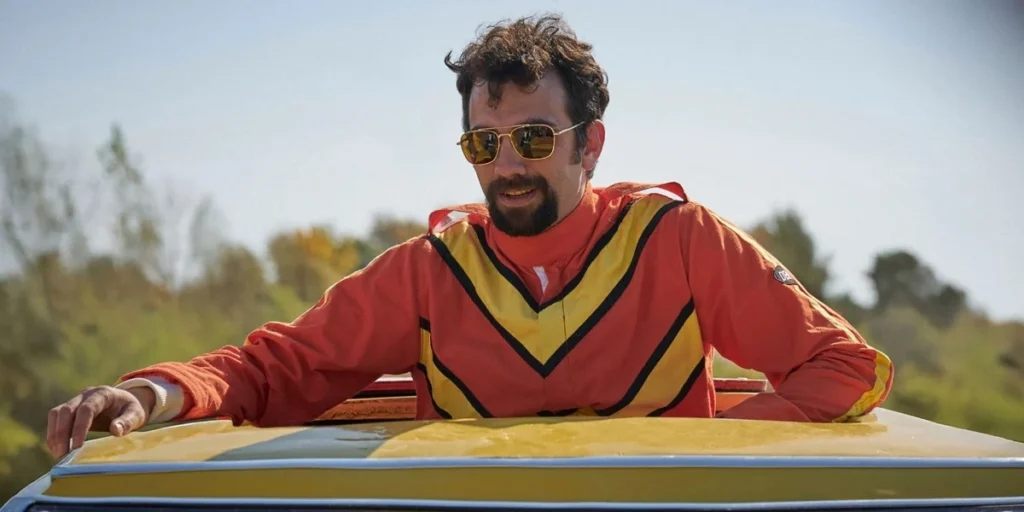
The 83rd Venice International Film Festival has officially designated the highly anticipated drama Ink as its opening film, marking the world premiere of the latest work from Academy Award-winning director Danny Boyle. Scheduled to run from September 2 to September 12, 2026, the festival will host the film’s first public screening on its opening night, Wednesday, September 2, in the prestigious Sala Grande at the Palazzo del Cinema on the Lido di Venezia. The selection of Ink, which is featured in the main competition, underscores the festival’s ongoing commitment to showcasing high-caliber British cinema and narratives that explore the intersection of history, media, and cultural transformation.
Directed by Boyle and written by the multi-Olivier Award-winning playwright and screenwriter James Graham, Ink is a cinematic adaptation of Graham’s Tony-nominated play of the same name. The production features a formidable ensemble cast led by BAFTA winner Jack O’Connell, Academy Award nominee Guy Pearce, and BAFTA winner Claire Foy. The film is produced by StudioCanal, Media Res, and House Productions, with StudioCanal also providing full financing for the project.
The Genesis of Ink: From Stage to Screen
The transition of Ink from a celebrated stage play to a major motion picture represents a significant milestone in contemporary British storytelling. James Graham’s original play debuted at the Almeida Theatre in London in 2017 before transferring to the West End and eventually Broadway, where it received critical acclaim for its frenetic energy and incisive look at the birth of modern tabloid journalism.
The narrative is set in 1969, a pivotal year in global history characterized by the Apollo 11 moon landing and a radical shift in the cultural zeitgeist. However, the film focuses on a different kind of revolution: the acquisition of the struggling broadsheet The Sun by a young, ambitious Rupert Murdoch. To lead this transformation, Murdoch recruited the unscrupulous and visionary editor Larry Lamb. Together, they bypassed traditional journalistic norms to create a populist, "cheeky," and irreverent tabloid that would eventually become the biggest-selling newspaper in the world.
In his official statement, Danny Boyle highlighted the historical weight of the year 1969, noting that while the world looked toward the stars, Murdoch and Lamb were remaking the world on the ground. Boyle observed that the strategies employed by The Sun in the late 1960s—prioritizing sensationalism, reader engagement, and "giving the people what they want"—laid the foundational DNA for the modern media landscape, pre-dating the rise of Fox News, social media algorithms, and the current era of clickbait.
A Powerhouse Creative Collaboration
The selection of Ink as the opening film is a testament to the collective pedigree of its creative team. Danny Boyle, whose filmography includes seminal works such as Trainspotting, 28 Days Later, and the multi-Oscar-winning Slumdog Millionaire, brings his signature kinetic visual style to the project. This film marks Boyle’s first time opening the Venice International Film Festival, an experience he described as a "baptism" and a profound honor.
The screenplay, penned by James Graham, ensures that the thematic depth of the original play is preserved while expanding the scope for the cinematic medium. Graham has established himself as one of the UK’s most vital political dramatists, with recent successes including the television series Sherwood and the play Dear England. His ability to humanize complex political and historical shifts is a central component of the film’s appeal.
The casting of Jack O’Connell as Larry Lamb and Guy Pearce as Rupert Murdoch has generated significant industry buzz. O’Connell, known for his raw and intense performances in Starred Up and ’71, portrays the editor whose drive for success knows no bounds. Guy Pearce, an actor with a diverse portfolio ranging from Memento to The Brutalist, takes on the role of the media tycoon in the early stages of his global ascent. Claire Foy, widely acclaimed for her portrayal of Queen Elizabeth II in The Crown, joins the cast as Jules Davies, adding further dramatic weight to the production.
Historical Context and the 1969 Media Revolution
To understand the stakes of Ink, one must look at the state of the British press in the late 1960s. Before Murdoch’s intervention, the newspaper industry was largely dominated by established interests and a sense of "proper" journalistic conduct. The Sun was a failing broadsheet owned by IPC (International Publishing Corporation) when Murdoch purchased it in 1969.
Murdoch and Lamb’s strategy was to pivot away from the high-mindedness of their rivals, particularly The Mirror, which was then the dominant daily. By introducing more photography, sports coverage, gossip, and the infamous Page 3, they tapped into a working-class demographic that felt ignored by the traditional press. The film explores the moral and ethical compromises made during this ascent, framing the rise of The Sun as a "cinematic rollercoaster" that forever altered how news is consumed and produced.
Alberto Barbera, the Director of the Venice International Film Festival, emphasized that the film is not merely a historical biopic but a sharp account of how power is seized and maintained through the control of information. Barbera praised the "unscrupulous" nature of the characters as depicted by Graham and Boyle, noting that the performances of O’Connell, Pearce, and Foy elevate the film into a must-watch event for the 2026 festival season.
Production Pedigree and Technical Excellence
The production of Ink reunites Danny Boyle with several longtime collaborators, ensuring a high level of technical and artistic cohesion. Most notably, the film marks a reunion between Boyle and producer Tessa Ross. Ross, the former head of Film4, played a crucial role in the development of Slumdog Millionaire. Her recent production credits include the critically acclaimed The Zone of Interest and The Iron Claw, signaling her continued eye for prestige projects.
The technical crew further reinforces the film’s credentials:
- Cinematography: Alwin H. Küchler, who previously collaborated with Boyle on Steve Jobs, serves as the Director of Photography. His work is expected to capture the gritty, high-contrast atmosphere of a 1960s newsroom.
- Production and Costume Design: Gareth Pugh and Carson McColl, who also worked on Boyle’s 28 Years Later, are tasked with recreating the specific aesthetic of London in 1969.
- Music: The score is composed by Daniel Pemberton, a frequent Boyle collaborator whose innovative work on Spider-Man: Into the Spider-Verse and Steve Jobs has made him one of the most sought-after composers in the industry.
- Editing: Fin Oates, known for the high-energy editing of How to Have Sex, will handle the film’s pacing.
The film is also produced by Michael Ellenberg of Media Res and Tracey Seaward, the latter of whom has a long history of producing acclaimed British dramas such as The Two Popes and Philomena.
Venice as a Strategic Launchpad
The choice of Venice as the world premiere location for Ink is a strategic move that places the film at the center of the upcoming awards season conversation. Over the past decade, the Venice International Film Festival has solidified its reputation as the premier launching pad for Academy Award contenders. Films such as Birdman, La La Land, The Shape of Water, and Nomadland all began their journeys to Best Picture wins with successful premieres on the Lido.
By securing the opening night slot, Ink gains maximum visibility among international critics, distributors, and jurors. The festival’s ability to generate early momentum is unparalleled, particularly for English-language dramas with strong historical and political themes. For StudioCanal, the Venice premiere serves as the cornerstone of their global distribution strategy.
Distribution and Global Reach
StudioCanal has outlined a comprehensive theatrical release plan for Ink. Following its debut at Venice, the film will be released in cinemas across StudioCanal’s core territories, including the United Kingdom, France, Germany, Poland, Benelux, Australia, and New Zealand. In Italy, the film will be distributed by Lucky Red, a partner known for handling high-profile independent and prestige titles.
The involvement of Media Res, a US-based production company responsible for The Morning Show, suggests that the film will also have a significant presence in the North American market, though specific domestic distribution details for the United States are typically finalized following the initial festival buzz.
Broader Implications for the Film Industry
The production and selection of Ink reflect broader trends in the film industry, specifically the continued interest in "IP" (intellectual property) derived from successful stage plays and the enduring fascination with media moguls. The success of series like Succession has demonstrated a massive audience appetite for stories about the internal dynamics of media empires and the personalities who lead them.
Furthermore, Ink represents a significant investment in mid-to-high-budget adult dramas, a genre that has faced challenges in the era of superhero franchises and streaming dominance. By bringing together a world-class director, a celebrated playwright, and a cast of established stars, the producers of Ink are betting on the enduring power of theatrical storytelling.
As the 83rd Venice International Film Festival approaches, the industry will be watching closely to see if Boyle’s "baptism" on the Lido results in a cinematic triumph that resonates beyond the festival circuit. With its exploration of a transformative moment in history, Ink promises to be a timely reflection on the power of the press and the architects of our modern information age.