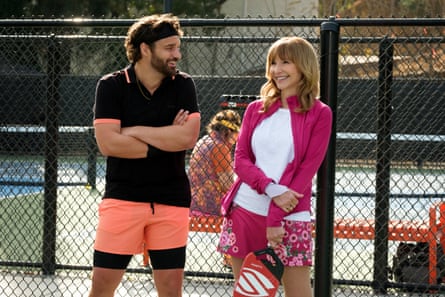
Jake Johnson, the actor best known for his endearing portrayal of Nick Miller in the hit sitcom New Girl, finds himself at the center of a new comedic endeavor, The Dink. While one might assume his starring role as a former tennis pro turned pickleball upstart, Dusty Boyd, stems from a personal passion for the rapidly growing sport, Johnson admits to having had "no experience of it whatsoever" prior to taking the gig. This revelation underscores the film’s premise as a charming underdog story, where even its lead actor had to learn the ropes from scratch.
From Tennis Courts to the Pickleball Arena: An Actor’s Unlikely Training Regimen
The journey into the world of pickleball for Johnson was, by his own admission, a significant undertaking. The film’s narrative demands that his character, Dusty Boyd, faces a formidable opponent in a climactic match. To convincingly portray this, Johnson embarked on months of intensive real-life training in both pickleball and tennis. He likens the process to professional wrestling, stating, "It was like WWE. They call it fake wrestling. The outcome is there, but you still have to wrestle. That was probably the most stressful part of the film to me." This dedication to authenticity, even in a comedic context, highlights Johnson’s commitment to his craft and the demands of portraying an athlete, regardless of the sport’s perceived casual nature.
The genesis of The Dink can be traced back to its writer, Sean Clements, who discovered the sport and its vibrant community. Clements’ initial fascination stemmed from observing the intense competitiveness and colorful personalities he encountered, particularly a group of older women in Beverly Hills. He described their interactions as, "they talk so much shit, and get so competitive, it’s just so funny." This observation struck a chord with Johnson, who was actively seeking a particular brand of comedy.
"I was looking to do something really fun and light, with big comedic set pieces," Johnson explained. "I wanted to make a movie that feels a little old school, there’s no messaging, it’s not trying to teach people anything." This desire for pure entertainment emerged in the lead-up to the 2024 US presidential election, a period Johnson anticipated would be fraught with national division and online acrimony. "I knew, however that goes, it’s going to get crazy for our country, and it’s going to be very divisive, and the internet is going to get all mad at each other about everything, and we’re all going to be fighting," he remarked.

A Cinematic Escape: The Dink as a Counterpoint to Modern Intensity
In this context, The Dink was conceived as a deliberate antidote to the prevailing tone of contemporary media. Johnson articulated this vision: "I thought, if I’m going to make something, I don’t want to throw more wood on to that fire. You could say the world is burning, and you have so much great evidence. But can we just talk about this, for an hour and a half? Because while this is going on, there’s also life." This sentiment resonates with a broader cultural trend where audiences often seek escapism and levity amidst an increasingly intense and often stressful news cycle.
The current landscape of film and television has indeed seen a rise in heightened, often anxiety-inducing narratives. From critically acclaimed dramas like Marty Supreme to helter-skelter counter-culture capers like One Battle After Another, many productions lean into an amplified emotional and thematic intensity. Johnson observes this, stating, "You go: man, I know everybody is loving this, and it’s winning all the awards, but I can’t watch it. I’m already fucking stressed. Give me a break!" The Dink, in this light, positions itself as a much-needed respite, offering a lighter, more accessible form of entertainment.
Character Dynamics and Intergenerational Bonds: The Heart of The Dink
At its core, The Dink centers on Dusty Boyd, a character Johnson describes as "a goober." Dusty is depicted as a man grappling with the remnants of a promising tennis career cut short by injury, a setback he attributes to tennis icon Andy Roddick. His foray into pickleball leads him to an unlikely alliance with a group of formidable older women, spearheaded by Mary Steenburgen’s character, Candace. This ensemble provides Dusty with both athletic tutelage and life lessons, forging a compelling intergenerational friendship.
Johnson’s enthusiasm for this dynamic is palpable. "I don’t agree with this idea that men and women can’t be friends, and that no matter what, it’s going to be screwed up with sex," he stated, challenging what he perceives as outdated notions. "That feels so crazy old school and puritan to me." His admiration for Steenburgen, a celebrated figure in comedy, is equally evident. "Parenthood meant a ton to me when I first saw it. So did Step Brothers," he shared, drawing a parallel between his own feelings and Dusty’s admiration for Candace. "I feel about her the way that Dusty feels about Candace. I don’t view her as my older friend. Mary’s my friend. I would hang out with Mary whenever." This personal connection and respect for his co-star undoubtedly translate into the chemistry on screen.
The film’s playful nod to other recent sports-related cinematic successes, like Luca Guadagnino’s Challengers, is met with a lighthearted response from Johnson. When asked if he had seen the Zendaya-starrer, he admitted he hadn’t but deferred to his co-star Aaron Chen’s witty assessment: "Chen refers to our movie as the sexier Challengers." This self-aware humor is indicative of the film’s overall tone.
A Career Trajectory: From Early Struggles to Stardom
Johnson’s path to Hollywood success was not an overnight phenomenon. He began acting in high school in Chicago, a period he describes as one of searching. After dropping out at 15, he returned to acting as a last-ditch effort. "I couldn’t crack the code. I just knew that nothing was working. And then I did a play, and I was like, oh, this is great," he recalled. This formative experience proved pivotal, marking a turning point in his life and earning him recognition from adults who had previously held a less favorable view of him. "I got credit for the first time from stuffy adults who did not like me," he confessed, humorously attributing his early reputation to a penchant for mischief. "I don’t know. Like, if there was a party at someone’s house and somebody found matches, all the parents assumed I brought the matches… And a lot of the time, I had brought the matches."
This restless energy found a constructive outlet in acting, transforming a potentially problematic disposition into a viable career. Johnson discovered that acting could be a profession, a realization that profoundly impacted his outlook. "I didn’t even realise it could be a real job. I didn’t realise that Cheers, which was my favourite show, was just a bunch of working actors who had a job. Once I started doing the math on it, I thought, I’ve got to go all in. That’s everything for me."
Moving to Los Angeles, Johnson navigated the often-challenging landscape of a jobbing actor, taking on any role that came his way. He referred to this period as "grinding," taking commercial work and supporting roles to stay afloat and gain experience. His early career included appearances in Curb Your Enthusiasm as "Man on Cell Phone" and Get Him to the Greek as "Jazz Man." He characterized Hollywood at the time as a competitive environment, where staying relevant meant constantly vying for a place. "I call it grinding," he recalls. "If a commercial came, I’m taking it. If a co-star [role] comes, I’m taking it." He describes Hollywood as “a really long dinner table with a bunch of seats, and the seats keep getting taken out, and then a new phase will come. You just want to stay at the table. At that point, I was just trying to get to the table.”
The "New Girl" Phenomenon and Unexpected Stardom
The trajectory of Johnson’s career shifted dramatically with the arrival of New Girl when he was 33. For seven seasons, he played the beloved character of Nick Miller, a romantic lead opposite Zooey Deschanel’s Jess. This role marked a significant leap in his career, propelling him into mainstream recognition. "New Girl was a very scary job, because all of them were really prepared," he admitted. "I had to stop smoking pot, because I was like, oh, these fools know their lines! I got to make some changes and do it fast, or else I’m going to lose this job," he laughingly confessed.
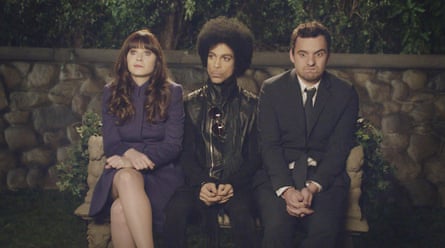
The success of New Girl was so profound that it even attracted the attention of music icon Prince, who requested a guest appearance. A devoted fan of the show, Prince watched it on his tour bus and appeared in a highly anticipated post-Super Bowl episode in 2014, which garnered a staggering 26.3 million viewers. During his time on set, Prince addressed Deschanel as Jess and Johnson as Nick, a gesture that deeply resonated with the actor. "I grew up loving Prince. We would take road trips from Chicago just to listen to his music in Minneapolis. So I thought, I’m going to show this man respect. I’m not going to be weird. And then I heard him say, ‘I’d like to meet Nick now.’ And he was so great." Their extensive conversation spanned sports and television, with Prince revealing his favorite shows to be Cheers, Roseanne, and New Girl.
The sudden fame that accompanied New Girl‘s success was a disorienting experience for Johnson. He described the initial months as a period of personal adjustment, where he "spiralled out, and I didn’t know what it all meant." He referenced a quote from Bill Murray about the transient nature of early fame, suggesting a limited window for behaving poorly before it becomes indicative of one’s true character. While he found adjusting to public recognition challenging, his age played a role in his ability to manage it. "Honestly, the dust just settled. I thought, this is the life that I wanted."
A Diverse and Enduring Career
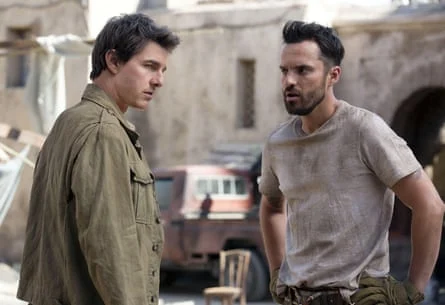
Since New Girl, Johnson has maintained a consistently busy and varied career. He has appeared in major blockbuster films such as Jurassic World and The Mummy, showcasing his versatility. He also expressed regret over the premature cancellation of the adult publishing comedy Minx, calling it "that one makes me sad." More recently, he has been involved in Apple’s sex-cam murder mystery Maximum Pleasure Guaranteed. Furthermore, he has reunited with director Joe Swanberg for The Sun Never Sets, a project co-starring Dakota Fanning, which is slated for a theatrical release later this year.
The Grounding Force of Family
Despite his professional achievements, Johnson emphasizes the profound impact of fatherhood in keeping him grounded. The birth of his twin daughters with his wife, artist Erin Payne, in 2014, fundamentally altered his perspective. "Kids changed everything," he stated. "I think if I didn’t have kids, I’d have a ponytail now, and I wouldn’t be wearing a shirt in this interview, because I wouldn’t believe in shirts," he quipped. "Kids humble you, fast. They are not fans of the old Jakester and his work."
Even his celebrated role as a version of Spider-Man in the animated Spider-Verse films has not garnered universal approval from his children. While they admired Hailee Steinfeld’s Spider-Gwen, they found his character, who primarily ate pizza, to be "the most embarrassing," questioning his casting choice. Johnson explained the realities of acting, particularly voice acting, noting, "I was like, I don’t get to say, ‘Can I be the coolest one in there?’" This humility and willingness to acknowledge his limitations underscore his enduring connection to his family and his down-to-earth persona. "Exactly right," he affirmed when asked if he had trouble staying humble. "Unfortunately!"