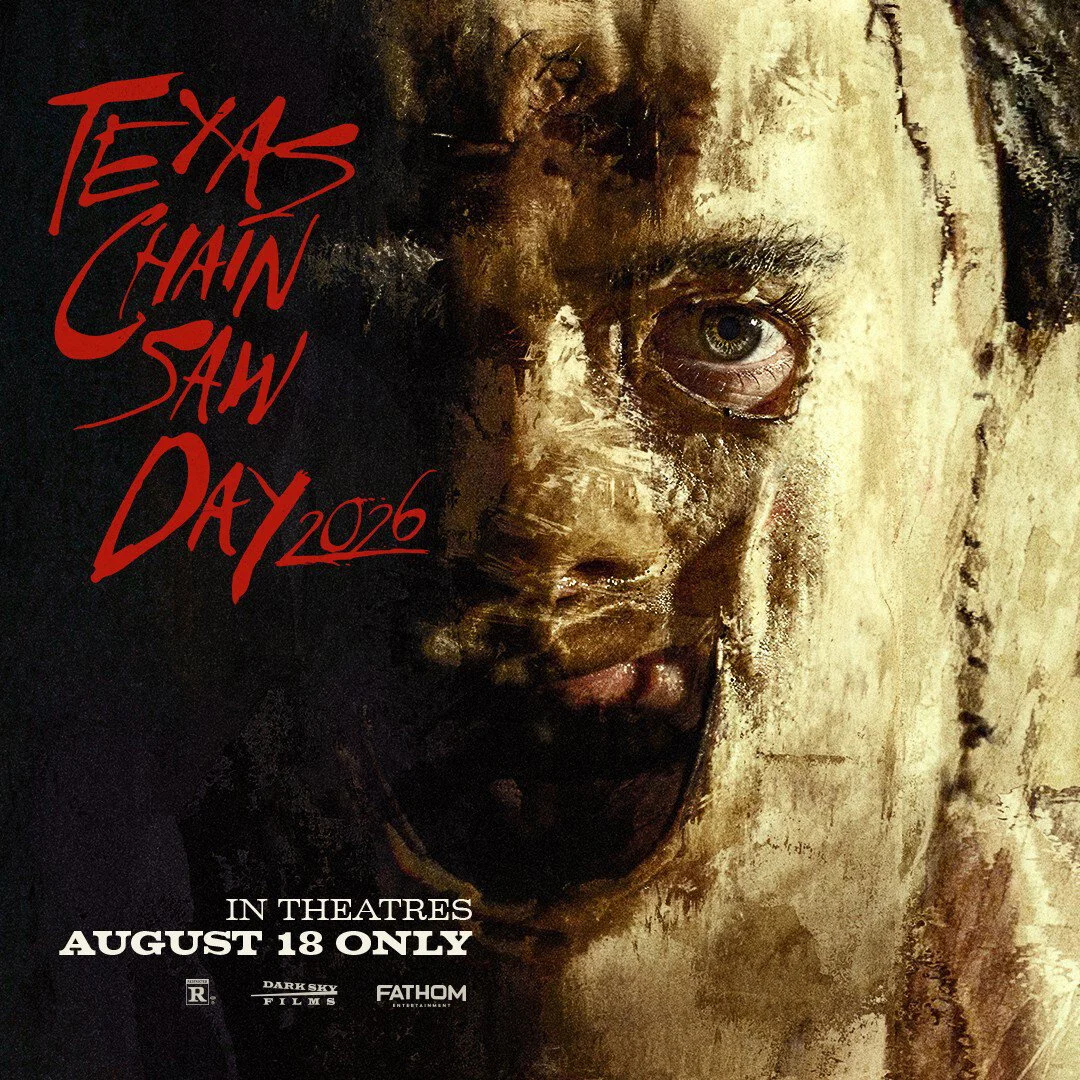
Dark Sky Films and Fathom Events have formally announced that August 18, 2026, will be designated as the official Texas Chain Saw Day, a nationwide event dedicated to celebrating the enduring legacy of Tobe Hooper’s 1974 horror masterpiece, The Texas Chain Saw Massacre. This commemorative event, scheduled for theaters across the United States, marks a significant milestone in the preservation and re-interpretation of independent cinema. The centerpiece of the 2026 celebration is a special screening that includes the premiere of a unique reimagining of the film, utilizing traditional rotoscoping animation techniques to offer a contemporary yet nostalgic perspective on the seminal work.
The 2026 event follows closely on the heels of the film’s 50th-anniversary celebrations in 2024, which saw a highly successful 4K restoration and theatrical re-release. While the original film debuted in October 1974, the August 18 date has been selected as a focal point for the 2026 campaign to align with summer theatrical windows and to distinguish the new animated project from previous retrospective screenings. This year’s presentation is particularly notable for its inclusion of an exclusive behind-the-scenes featurette detailing the production of the rotoscoped version, a project led by acclaimed director Paul Beck.
The Evolution of a Horror Masterpiece
The Texas Chain Saw Massacre remains one of the most influential films in the history of the horror genre. Directed by Tobe Hooper and co-written by Hooper and Kim Henkel, the film was produced on a meager budget of less than $140,000. Despite its financial constraints and initial difficulties in securing a distributor, the film became a massive commercial success upon its release on October 11, 1974, eventually grossing over $30 million at the domestic box office. Its raw, documentary-style cinematography and relentless tension set a new standard for the "slasher" subgenre, influencing generations of filmmakers including Ridley Scott, John Carpenter, and Wes Craven.
The narrative, which follows five young adults who encounter a family of cannibals in rural Texas, was marketed as being based on true events. While the character of Leatherface was partially inspired by the real-life crimes of Ed Gein, the plot was largely fictional. This marketing strategy, combined with the film’s visceral impact, cemented its place in American pop culture. Over the decades, the franchise has expanded to include sequels, prequels, remakes, and comic books, but the 1974 original continues to be the benchmark for psychological and environmental horror.
The Rotoscoping Reimagining by Paul Beck
A primary draw for the Texas Chain Saw Day 2026 event is the unveiling of a fully animated version of the film created through rotoscoping. This technique involves animators tracing over live-action film movement, frame by frame, to produce a stylized yet realistic aesthetic. The project is being helmed by Paul Beck, a director renowned for his mastery of the medium on high-profile projects such as Richard Linklater’s A Scanner Darkly and Apollo 10 ½: A Space Age Childhood.

In an era increasingly dominated by generative artificial intelligence in digital media, the producers have emphasized that this rotoscoped version of The Texas Chain Saw Massacre is being created entirely by hand. This "no AI" commitment is intended to preserve the grit and human touch that defined the original 1974 production. The animation is designed to enhance the atmospheric dread of the Texas landscape while providing a "fresh take" that honors the source material’s visual identity. The accompanying featurette will provide audiences with an in-depth look at this painstaking process, highlighting the artistic labor required to translate Hooper’s cinematography into a hand-drawn format.
Chronology of Major Franchise Milestones
To understand the significance of the 2026 event, it is essential to examine the timeline of the film’s development and its subsequent restorations:
- 1973: Principal photography takes place in the extreme heat of a Texas summer, with a cast of largely unknown actors including Marilyn Burns, Gunnar Hansen, and Edwin Neal.
- 1974: The film premieres in Austin, Texas, and faces immediate controversy, leading to bans in several international markets and multiple ratings battles with the MPAA.
- 1980s-1990s: The film transitions into a cult classic through home video releases, though its reputation remains polarized due to its intense subject matter.
- 2014: A 40th-anniversary 4K restoration is supervised by Tobe Hooper, premiering at the Directors’ Fortnight at the Cannes Film Festival.
- 2024: Dark Sky Films celebrates the 50th anniversary with a massive theatrical re-release and a definitive 4K UHD home media package.
- 2026: The establishment of "Texas Chain Saw Day" and the debut of the rotoscoped reimagining, marking a transition from simple restoration to artistic re-interpretation.
Technical Data and Production Background
The original production was a grueling 32-day shoot characterized by 100-degree temperatures and a lack of union oversight. The authenticity of the film’s "deserted house" setting was achieved through practical set design and the use of real animal remains, which added to the discomfort of the cast and crew. This low-budget, high-effort approach resulted in a film that felt disturbingly real to audiences in 1974, a feeling that modern restorations have sought to preserve.
The 2024 restoration utilized the original 16mm A/B rolls, which were scanned at 4K resolution. This process allowed for a level of detail and color accuracy that surpassed previous 35mm blow-ups. For the 2026 rotoscoped version, this high-fidelity source material serves as the foundation for Paul Beck’s team. By using the 4K restoration as a guide, the animators can capture the subtle performances of the original actors, such as Marilyn Burns’ iconic "final girl" performance and Gunnar Hansen’s physical presence as Leatherface, with unprecedented precision.
Industry Implications and Market Analysis
The collaboration between Dark Sky Films and Fathom Events reflects a broader trend in "event cinema." As streaming services continue to dominate daily media consumption, theatrical distributors have found success in offering "one-night-only" or limited-engagement events that provide an experience unavailable at home. Texas Chain Saw Day 2026 leverages this model by offering exclusive content—the rotoscoped film and the behind-the-scenes featurette—that creates a sense of urgency for fans.
Market analysts suggest that the horror genre is particularly well-suited for this model. Horror audiences are known for their loyalty and their preference for communal viewing experiences. By branding August 18 as a specific day of celebration, the distributors are effectively creating a recurring intellectual property event, similar to "Star Wars Day" (May 4) or "Alien Day" (April 26). This strategy not only drives ticket sales but also boosts the profile of the franchise for future licensing and merchandising opportunities.

Official Responses and Cultural Impact
While official statements from the estate of Tobe Hooper (who passed away in 2017) often emphasize the importance of maintaining the film’s artistic integrity, the 2026 project represents a bold step into new territory. Industry insiders note that the decision to use rotoscoping rather than traditional 3D animation or AI-assisted filters is a deliberate nod to the film’s "old-school" roots.
The announcement has garnered significant attention from horror-centric publications such as Bloody Disgusting and Fangoria. Critics have noted that The Texas Chain Saw Massacre is a rare example of a film that can withstand multiple reinterpretations without losing its core power. The rotoscoped version is viewed not as a replacement for the original, but as a companion piece that explores the film’s themes of isolation and industrial decay through a different artistic lens.
Broader Implications for the Future of Classic Cinema
The success of Texas Chain Saw Day 2026 could signal a new pathway for the preservation of classic cinema. As original film elements age, the industry must find creative ways to keep these stories relevant for younger generations. Integrating modern animation techniques with historic live-action footage provides a bridge between the past and the present.
Furthermore, the emphasis on hand-drawn animation serves as a protest against the homogenization of digital content. By highlighting the "painstaking art" of the animators, the creators of the 2026 event are making a statement about the value of human craftsmanship in the digital age. This focus on "no AI" production is likely to resonate with audiences who are increasingly skeptical of automated content creation.
As August 18, 2026, approaches, Fathom Events and Dark Sky Films are expected to release more details regarding participating theater locations and ticketing. For now, the horror community remains focused on how this rotoscoped experiment will alter the perception of a film that has already terrified the world for over half a century. The Texas Chain Saw Massacre continues to prove that its "chainsaw" is far from out of fuel, finding new ways to roar back to life in the modern cinematic landscape.