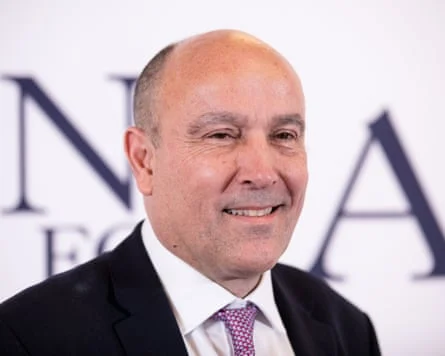
A significant number of film production companies associated with prolific producer Alan Latham, whose projects have featured notable actors such as Kelsey Grammer of "Frasier" fame and Anna Chancellor from "Four Weddings and a Funeral," have been forcibly dissolved from the UK’s official companies register. This mass deregistration has left numerous workers and suppliers unable to pursue outstanding payments, raising serious concerns about financial accountability within the independent film sector.
Data compiled by Bectu, the film and television union, reveals that 50 of Latham’s film-related businesses have undergone compulsory strike-off proceedings initiated by Companies House. This action, typically taken when a company fails to meet its legal obligations, such as filing annual accounts or shareholder information, effectively dissolves the entity, rendering it unable to be pursued for debts. The sheer volume of these dissolutions associated with a single producer has prompted scrutiny and highlighted a potential systemic issue affecting those working in film production.
A Pattern of Non-Compliance and Dissolution
Compulsory strike-offs are a statutory process undertaken by Companies House when a company is deemed to be defunct or in breach of its reporting duties. This includes failing to submit annual accounts or confirmation statements, which provide essential details about a company’s structure, directors, and shareholders. Such failures are not merely administrative oversights; they constitute a criminal offence under UK company law. Companies House issues warnings and notices, and persistent non-compliance can lead to the dissolution of the company.
However, the consequence of this legal process is that once a company is removed from the register, it ceases to exist as a legal entity. This means that creditors, including unpaid crew members, freelancers, and suppliers, lose the legal recourse to claim outstanding debts from the dissolved business. The Guardian has spoken with multiple film workers who have detailed their struggles in attempting to recover unpaid fees from Latham’s former production companies, many of which have now been struck off.
One such company, City Girls Productions, was established to produce the film "City Girls," a project that attracted the involvement of actress Elizabeth Hurley. Filming for "City Girls" commenced in Yorkshire in 2021 but was ultimately abandoned following a COVID-19 outbreak among the cast and crew. A crew member, speaking on condition of anonymity, described the devastating impact of non-payment on nascent careers.
"We were all young, desperate for work and to prove our worth," the individual stated. "We were overly excited – that comes with not understanding – and we were exploited. It felt like they were using young whippersnappers as their cashflow, without us consenting or having any way of knowing that this was the MO [modus operandi]." This sentiment underscores a common theme among those affected: a feeling of being taken advantage of due to inexperience and a desire to break into the competitive film industry.
A second supplier, who had worked on another unfinished Latham film, "Rufus Kane," revealed that his business was owed thousands of pounds by RK Film Productions. "We got every excuse under the sun [not to be paid]," he recounted. "It was really bad, and we just about managed to keep our heads above water. We had no choice but to write the debt off. Even just talking about it brings up the old scars." The emotional and financial toll on these individuals and their businesses highlights the significant repercussions of such payment defaults.
Timeline of Dissolutions and Historical Context
The mass deregistration of Latham’s companies is not an isolated incident but rather a culmination of repeated failures to adhere to filing requirements. Data compiled by Bectu and further analysed by business intelligence firm Tech City Labs indicates a concerning pattern. City Girls Productions and RK Film Productions, two specific entities mentioned, were compulsorily struck off by Companies House in 2024 and 2025, respectively.

In total, the 50 companies removed from the register while Latham was a director accumulated over 400 instances of late filings for either annual accounts or confirmation statements. This extensive history of non-compliance suggests a deliberate or at least consistently negligent approach to statutory obligations across a broad portfolio of businesses. The frequency of these strike-off actions raises the question of whether the dissolution of these companies was an intended outcome, allowing debts to disappear with the legal entities.
The practice of establishing "special purpose vehicles" (SPVs) for individual film projects is common in the industry. These discrete companies are designed to manage a single production, and ideally, they continue to operate for years after a film’s release to collect and distribute royalties. However, when such SPVs are dissolved due to non-compliance, the mechanisms for such long-term financial management and distribution are broken, leaving potential revenue streams inaccessible and debts unaddressed.
Broader Implications for the Film Industry
Alan Latham is a recognized figure within the UK film industry, with a production credit list spanning 81 releases dating back to 1996, and two further films reportedly in production, according to IMDb.com. His extensive career and involvement in numerous projects underscore the scale of the issue.
This situation also brings into sharper focus previous reporting on Latham’s production practices. In November, The Guardian published an investigation into the financing of some of Latham’s films, highlighting discrepancies where leaked internal budgets appeared to show significantly lower production costs than the published figures used to claim substantial tax credits. The UK’s tax credit system for film production is designed to incentivize investment and job creation, but such allegations suggest a potential for abuse if not rigorously overseen. The compulsory strike-off of numerous companies may also hinder further investigation into these financial practices.
The implications of this mass deregistration extend beyond the immediate financial losses for workers and suppliers. It raises questions about the regulatory oversight of film production companies, particularly those utilizing public funds through tax incentives. A system that allows for the dissolution of multiple entities without clear resolution for outstanding debts can erode trust and create an uneven playing field for legitimate businesses and diligent workers.
Industry observers suggest that the ease with which companies can be dissolved without addressing outstanding liabilities could embolden other less scrupulous producers. This creates a significant risk for the freelance workforce, who are often the most vulnerable in the event of production company insolvency or dissolution.
Lack of Official Comment and Future Outlook
Despite repeated attempts, Alan Latham was not available for comment regarding the compulsory strike-off of his companies or the allegations of unpaid fees. Companies House, as a registrar of companies, operates within a defined legal framework. While it enforces compliance with company law, it does not act as a debt recovery agency. Its role is to maintain an accurate public record of companies.
The Bectu union has expressed grave concern over the findings. A spokesperson for the union stated, "This is a deeply worrying pattern that leaves the industry’s workforce in a precarious position. We urge greater transparency and accountability from all production companies to ensure that those who contribute their skills and labour are paid fairly and on time. The current situation where companies can simply be dissolved, leaving debts unpaid, is unacceptable."
The ongoing situation highlights the need for robust mechanisms to protect film workers and suppliers. Potential solutions could include stricter enforcement of filing deadlines, more accessible avenues for debt recovery from dissolved companies in cases of proven malfeasance, or industry-wide codes of conduct with stronger enforcement powers. As the UK film industry continues to grow, ensuring fair payment practices and financial integrity across all levels of production is paramount to its long-term health and reputation. The current wave of company dissolutions linked to Alan Latham serves as a stark reminder of the challenges faced by many in the creative industries and the ongoing need for vigilance and reform.