Mike Flanagan, the acclaimed director known for his nuanced and often unsettling explorations of the horror genre, is embarking on a bold reimagining of Stephen King’s seminal work, Carrie, for a new series on Amazon’s Prime Video. While the decision to adapt such an iconic and frequently revisited story already signals a significant undertaking, it is Flanagan’s declared intention to “update and change” the narrative, particularly concerning the character of Carrie’s mother, Margaret White, that has generated considerable discussion within the fan and critical communities. The prospect of presenting Margaret White, one of horror’s most formidable and terrifying antagonists, in a more sympathetic light has raised eyebrows, prompting a deeper examination of Flanagan’s artistic vision for this upcoming adaptation.
The initial announcement of a new Carrie series, especially one helmed by Flanagan, sparked anticipation given his track record with properties like The Haunting of Hill House and Midnight Mass, where he demonstrated a capacity for delving into the psychological depths of his characters and weaving intricate thematic tapestries. However, the specific focus on softening Margaret White’s portrayal marks a departure from established interpretations and risks diluting the potent, visceral horror that has defined her character for decades. In King’s original novel and the celebrated 1976 film adaptation, Margaret White is depicted as a fanatically religious zealot, driven by a profound delusion that her daughter is a vessel for divine power and a target for a corrupt world. Her abuse and control over Carrie are central to the narrative’s tragic arc, fueling Carrie’s isolation and eventual catastrophic outburst.
A Shift in Perspective: Understanding Margaret White
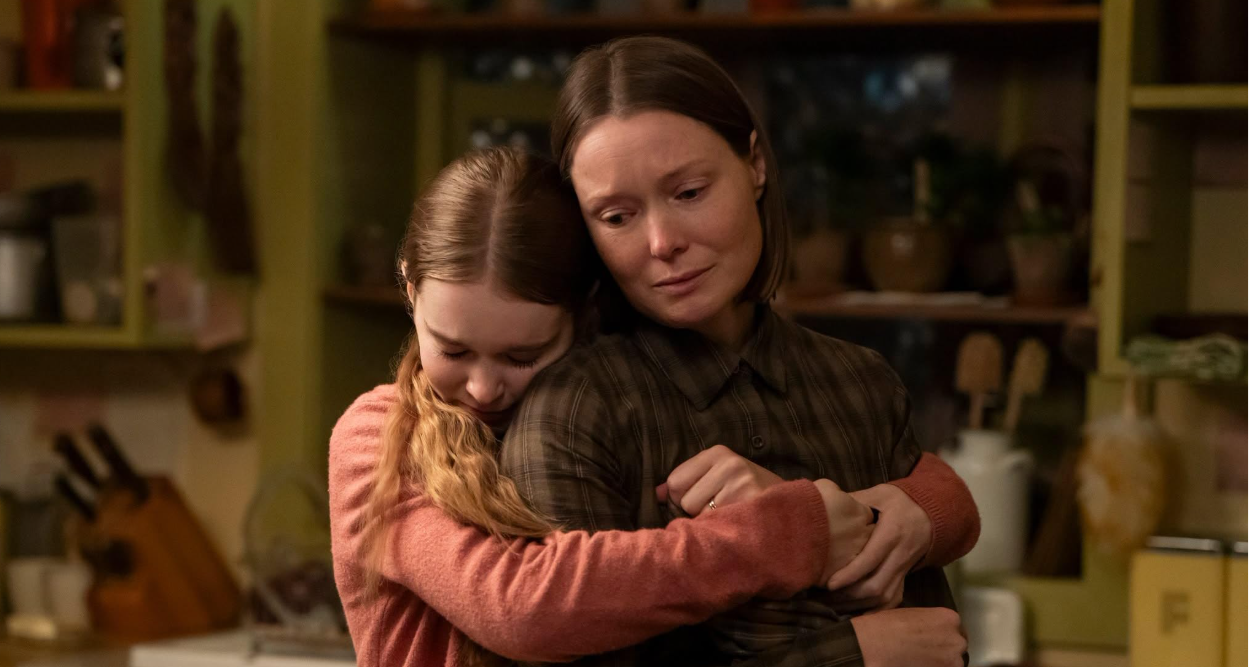
Flanagan and Samantha Sloyan, the actress cast to portray Margaret White in the Prime Video series, have recently elaborated on this directorial choice, aiming to contextualize and clarify their approach. In an exclusive interview with Entertainment Weekly, Sloyan provided insight into the character’s motivations, describing Margaret as a mother whose love for Carrie is paramount, yet is fundamentally at odds with her perception of reality.
"She loves Carrie more than anything in the world, but like many family members, we’re bound to each other, but we don’t exactly see the world the same way," Sloyan explained. "She loves Carrie, but she doesn’t understand Carrie."
This statement suggests a pivot from Margaret as a purely malevolent force to one driven by a warped sense of protection and an inability to comprehend her daughter’s burgeoning independence and the societal pressures she faces. Sloyan further detailed Margaret’s worldview as one steeped in deep religious conviction, intertwined with a paranoid belief in a global cultural war targeting her faith. This "militaristic mindset," as Sloyan described it, positions Margaret as seeing Carrie not as a monster to be controlled, but as a victim of a cruel and unsympathetic world.
The conflict, therefore, in this new iteration appears to be rooted in the dissonance between Carrie’s potential for optimism and Margaret’s pervasive paranoia. Margaret’s actions, while still potentially destructive, are framed through her desperate, albeit misguided, need to shield Carrie from perceived dangers. This interpretation implies that Margaret’s fierce protectiveness, born from her own deep-seated fears and beliefs, blinds her to Carrie’s true nature and desires.
"Margaret’s reaction to fear, instead of trying to learn or to understand, is to really go to war with the world," Sloyan elaborated. "Margaret’s really just all suspicion and fear and hatred." This candid admission by Sloyan highlights the internal turmoil and the destructive coping mechanisms Margaret employs, painting a picture of a character trapped by her own psychological and ideological framework.
Flanagan’s Vision: Seeking Nuance in a Classic Villain
Mike Flanagan himself has articulated his intention to move beyond a simple condemnation of Margaret White. His goal is to foster a greater understanding, and perhaps even a degree of sympathy, for a character often relegated to the annals of horror villainy.
"I went into this determined not to hate Margaret White," Flanagan stated in a recent interview. "I wanted to understand her. And part of the importance of that is Margaret’s not entirely wrong. There’s a lot she has to say in the show that I agree with, and that makes it even more complicated."
This statement is particularly significant. Flanagan suggests that Margaret’s pronouncements, while delivered through the lens of extreme religious fanaticism and paranoia, may contain kernels of truth or resonate with societal anxieties. This approach introduces a complex moral ambiguity, forcing viewers to confront uncomfortable parallels between Margaret’s fears and contemporary societal concerns, such as the erosion of traditional values, the perceived dangers of unchecked technological advancement, or the polarization of cultural discourse. By acknowledging the validity of some of Margaret’s observations, even within her distorted worldview, Flanagan aims to create a more compelling and challenging narrative.
The implications of this reinterpretation are far-reaching. Historically, Margaret White’s character has served as a potent symbol of abusive religious extremism and the devastating impact of a controlling parent on a child’s psyche. By attempting to elicit sympathy for her, Flanagan treads a delicate line. The effectiveness of this approach will hinge on his ability to humanize Margaret without excusing her harmful actions or undermining the fundamental tragedy of Carrie’s story.
Contextualizing the Carrie Legacy
Stephen King’s Carrie, first published in 1974, remains one of his most enduring and impactful works. The novel’s raw exploration of adolescent angst, bullying, telekinesis, and the terrifying consequences of abuse resonated deeply with readers and paved the way for its iconic 1976 film adaptation, directed by Brian De Palma. The film, starring Sissy Spacek as Carrie and Piper Laurie as Margaret, is celebrated for its stylistic flair, visceral horror, and unforgettable climax at the prom. Subsequent adaptations, including a 2002 television film and a 2013 feature film, have attempted to capture the essence of King’s story, with varying degrees of success.
The character of Margaret White has consistently been portrayed as a figure of immense psychological terror. Piper Laurie’s Academy Award-nominated performance in the 1976 film is particularly lauded for its chilling depiction of a mother consumed by her faith and her fear of her daughter’s sexuality and perceived sinfulness. Her pronouncements, often delivered with a feverish intensity, have become legendary in horror cinema.
Flanagan’s decision to revisit Carrie in a serial format on Prime Video suggests an ambition to expand upon the narrative, allowing for more detailed character development and thematic exploration than a single film could typically accommodate. The choice to focus on Margaret White’s internal world and motivations could offer a fresh perspective on the power dynamics within their relationship and the societal factors that contribute to their tragic circumstances.
The Broader Impact and Implications
The success of Flanagan’s Carrie series will likely be measured by its ability to offer a compelling new interpretation without sacrificing the core emotional and horrific impact of the original story. The challenge lies in balancing sympathy for Margaret with the recognition of her abusive behavior. If Flanagan can achieve this balance, the series could provide a profound commentary on themes of faith, paranoia, maternal love, and the societal pressures that can lead individuals to destructive extremes.
The current cultural climate, marked by increased polarization and anxieties surrounding social change, could indeed make Margaret White’s brand of villainy tragically en vogue. Her paranoia about a world actively hostile to her beliefs, while extreme, might resonate with some audiences who feel similarly marginalized or threatened. Flanagan’s approach, therefore, could tap into these contemporary anxieties, offering a character study that is both unsettlingly familiar and disturbingly relevant.
The series is slated to debut on Prime Video sometime in October, a timeframe that strategically places it within the popular Halloween season, a prime period for horror releases. Whether this ambitious reimagining of Margaret White will resonate with audiences and critics, or whether it risks diluting the terror of one of horror’s most iconic mothers, remains to be seen. However, the commitment to a complex and nuanced portrayal by a director of Flanagan’s caliber suggests that this Carrie series is poised to be more than just another remake; it aims to be a thoughtful, if potentially controversial, re-examination of a classic horror narrative. The success of this endeavor will depend on its ability to navigate the fine line between humanization and justification, offering a fresh, complex, and potentially chilling perspective on the enduring story of Carrie White and her formidable mother.