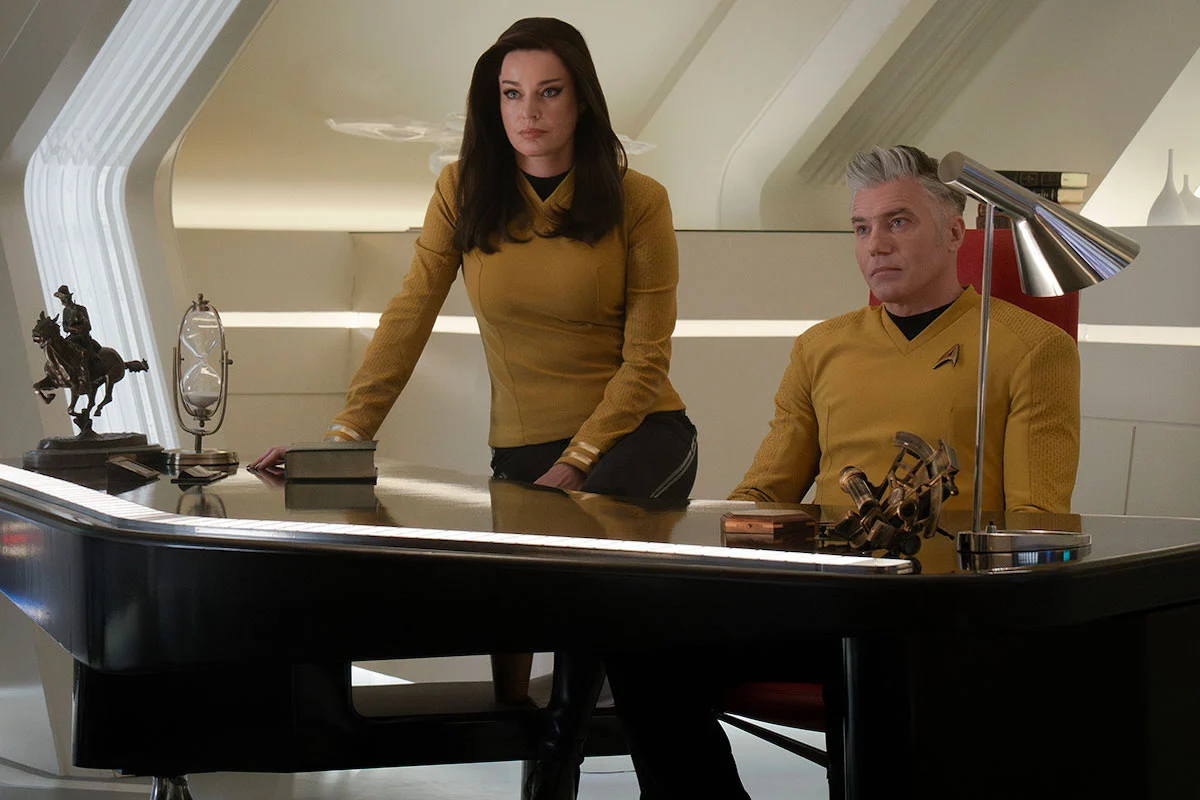
The eagerly anticipated episode titles for the fourth season of Star Trek: Strange New Worlds have officially been released, sparking immediate fan excitement and critical discussion. Among the ten revealed titles, one in particular, "Tomorrow’s Enterprise," stands out, drawing a direct and tantalizing parallel to a seminal episode from Star Trek: The Next Generation. This reveal, disseminated through various fan communities and news outlets specializing in Star Trek lore, suggests a potential narrative through-line that could significantly impact the series’ overarching story arc as it progresses towards its conclusion.
A Glimpse into Season 4: The Episode Lineup
The forthcoming season, set to continue the adventures of Captain Christopher Pike and the crew of the USS Enterprise NCC-1701, will feature the following episode titles in order of their presumed release:
- Valles Marineris
- The Griffin Incident
- Human Best Friend
- A Case of Chiaroscuro
- Level-Five Transporter Accident
- Off-Hour
- Like Chronitons Through the Hourglass
- Orders of Magnitude
- Once La’An a Time
- Tomorrow’s Enterprise
While several titles offer intriguing possibilities for standalone adventures – "Level-Five Transporter Accident" evokes the show’s penchant for high-concept sci-fi scenarios, and "Once La’An a Time" suggests a personal journey for the ship’s security chief, La’an Noonien Singh – it is the season finale, "Tomorrow’s Enterprise," that has captured the most attention.
The "Yesterday’s Enterprise" Connection: A Legacy of Alternate Timelines
The title "Tomorrow’s Enterprise" is an unmistakable echo of "Yesterday’s Enterprise," a critically acclaimed episode from the third season of Star Trek: The Next Generation (TNG). Originally aired in 1990, "Yesterday’s Enterprise" explored the profound narrative device of an alternate timeline. In that episode, a temporal anomaly created a drastically different reality where the Federation was embroiled in a devastating war with the Klingon Empire. The USS Enterprise-C, a ship presumed lost decades prior, reappeared from a temporal rift, triggering this grim timeline. Its existence in the "wrong" time paradoxically ensured the Federation’s survival, forcing Captain Jean-Luc Picard and his crew to confront the agonizing choice of sending the Enterprise-C back into a temporal storm to restore their original timeline, knowing it would likely lead to its destruction.
The resonance of this title in Strange New Worlds Season 4 finale is significant. Given Strange New Worlds‘ established pattern of weaving in callbacks and expanding upon established Star Trek lore, the direct reference to "Yesterday’s Enterprise" immediately prompts speculation about similar timeline-altering events.
Implications for Strange New Worlds: Narrative Trajectories and Fan Expectations
The placement of "Tomorrow’s Enterprise" as the season finale is particularly strategic. Season 4 is expected to continue charting the course of Captain Pike’s crew as they navigate the pre-Federation era, leading up to the events that will eventually see Captain James T. Kirk take command of the Enterprise. The series has been meticulously building towards the era depicted in Star Trek: The Original Series (TOS), with characters and events subtly referencing or foreshadowing the original timeline.
Potential Narrative Arcs:
- Direct Timeline Manipulation: The most straightforward interpretation is that "Tomorrow’s Enterprise" will feature a significant temporal anomaly, a "nexus event," or a deliberate timeline alteration that mirrors the core concept of its TNG namesake. This could involve the Enterprise itself being displaced, encountering a future or alternate version of itself, or grappling with a consequence of past temporal actions. Such an event would allow the show to explore the moral complexities and philosophical questions that "Yesterday’s Enterprise" so masterfully handled.
- Bridging to TOS: A more nuanced interpretation suggests the episode might serve as a pivotal moment in aligning the Strange New Worlds continuity with the established timeline of TOS. The "tomorrow" in the title could refer to the approaching era of the Federation’s formation or a critical event that directly sets the stage for Kirk’s command. This would allow the show to directly connect its narrative to the established canon in a way that feels earned and impactful.
- A Character-Centric Temporal Event: Given the increasing depth and complexity of the main cast’s individual storylines, "Tomorrow’s Enterprise" might also be a more personal temporal journey for one or more characters. Perhaps a character confronts a future version of themselves or revisits a critical moment in their past that has ripple effects on their present.
Contextualizing the Temporal Anomaly Trope in Star Trek
The concept of temporal anomalies and alternate timelines has been a recurring and potent narrative tool throughout the Star Trek franchise. From the "Mirror, Mirror" episode of TOS, which introduced the concept of a violent parallel universe, to the numerous time-travel episodes across TNG, Deep Space Nine, Voyager, Enterprise, and the Kelvin Timeline films, Star Trek has consistently used temporal paradoxes to explore character, ethics, and the nature of destiny.
"Yesterday’s Enterprise" is often cited as one of the most emotionally resonant and philosophically profound of these episodes. Its success lay in its ability to create a believable and high-stakes alternate reality, forcing characters to make impossible choices that underscored their core values. The episode is a testament to the power of speculative fiction to examine complex moral dilemmas.
The enduring appeal of such narratives lies in their ability to offer a fresh perspective on familiar characters and settings. By presenting an altered reality, writers can explore "what if" scenarios, highlight character growth, and underscore the importance of the choices characters make in their "prime" timeline. For Strange New Worlds, a show that has already demonstrated a remarkable ability to blend classic Star Trek sensibilities with modern storytelling, a temporal episode offers fertile ground for compelling drama and character development.
Expert and Fan Reactions: A Buzz of Anticipation
While official statements from the show’s creators, such as Akiva Goldsman and Alex Kurtzman, have been characteristically tight-lipped regarding specific plot details, the reveal of the episode titles has already ignited fervent discussion within the Star Trek fan community. Online forums, social media platforms, and dedicated Star Trek news sites are abuzz with theories and predictions.
Fans have lauded the creative team for their continued commitment to honoring the franchise’s rich history while forging its own path. The "Tomorrow’s Enterprise" title is widely seen as a masterstroke of fan service, a nod to legacy that also promises significant narrative weight. Early reactions suggest a high level of anticipation for how Strange New Worlds will interpret and execute a temporal storyline, a trope that has been both a hallmark and a potential pitfall for the franchise. The hope is that the show’s current track record of delivering engaging character arcs and thoughtful thematic explorations will translate into a truly memorable temporal adventure.
Broader Impact: Continuity and the Future of Star Trek
The implications of "Tomorrow’s Enterprise" extend beyond just the immediate enjoyment of a well-crafted episode. As Strange New Worlds continues its journey, its relationship with the established Star Trek canon becomes increasingly crucial. By directly referencing a beloved TNG episode, the series signals its intention to engage with the broader Star Trek universe in meaningful ways, potentially creating new connections or re-contextualizing existing lore.
The success of Strange New Worlds has been attributed, in part, to its ability to capture the optimistic spirit and episodic storytelling of classic Star Trek while embracing contemporary narrative structures. If "Tomorrow’s Enterprise" delivers on its promise, it could not only be a standout episode for the season but also a significant milestone in solidifying Strange New Worlds‘ place within the Star Trek pantheon. It could also serve as a bridge, not only to TOS but also to the future of Star Trek storytelling, demonstrating how the franchise can continue to evolve while remaining deeply rooted in its foundational principles. The anticipation for Season 4 is palpable, and the implications of its final episode are being debated with the keen eye of a fandom that understands the power of a well-executed temporal narrative.