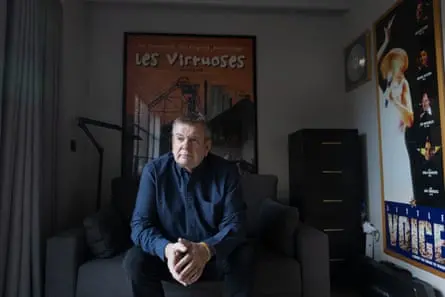
Thirty years after its theatrical debut in 1996, the beloved British tragicomedy Brassed Off remains a towering achievement in modern cinema, celebrated as much for its sharp, uncompromising political commentary as for its soaring brass band arrangements. Written and directed by Mark Herman, the film chronicled the struggles of a fictional South Yorkshire mining community on the brink of collapse, capturing the devastating human cost of industrial decline under the Conservative government of the 1980s and 1990s.
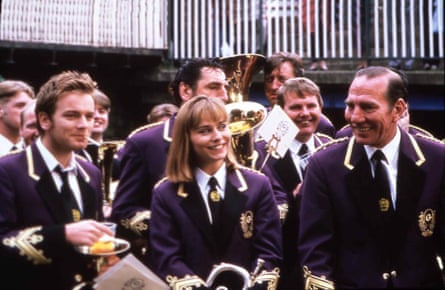
Featuring an ensemble cast that included Pete Postlethwaite, Tara Fitzgerald, and a young Ewan McGregor, the film balanced biting social critique with heart-wrenching emotional depth. As the Grimley Colliery Band strives to reach the national brass band finals at the Royal Albert Hall, the narrative confronts the harsh realities of pit closures, widespread unemployment, and the deliberate erosion of working-class livelihoods. Decades later, the film’s cultural footprint continues to expand, highlighted by high-profile admirers—including political figures like Andy Burnham—and an upcoming landmark anniversary screening where the real-world inspiration, the Grimethorpe Colliery Band, will perform live at the actual Royal Albert Hall.
The Genesis of a Cinematic Triumph: From Local Expectations to Global Resonance
When Mark Herman first conceptualized Brassed Off, his ambitions were modest. Set against the backdrop of Grimley—a fictionalized analogue to the real mining village of Grimethorpe—the story takes place a decade after the bitter 1984–1985 miners’ strike pushed working families toward destitution. Herman initially joked that he expected the film to resonate only within a ten-mile radius of Barnsley for roughly a fortnight.
Instead, the production struck a profound chord with audiences nationwide. Driven by organic word-of-mouth recommendations, the film enjoyed extended theatrical runs, transforming into a sleeper hit. Its blending of dark social realism with uplifting musical triumph earned it critical acclaim, eventually securing the 85th spot on the British Film Institute’s (BFI) prestigious list of the Top 100 British Films. It was subsequently adapted into a successful stage play, further embedding its characters and themes into the cultural consciousness.
Reflecting on the film’s unexpected longevity, Herman notes that the dual nature of the storytelling was key to its success. Audiences anticipating a lighthearted comedy walked away with a sobering political education, while those expecting a heavy drama were pleasantly surprised by the humor. Ultimately, Herman argues that the film’s enduring appeal stems from its universality. It transcends the specific geography of South Yorkshire to speak on the timeless human experience of being marginalized, downtrodden, and discarded by systemic economic shifts.
Chronology of an Era: The Historical Context of the Coal Industry
To fully understand the weight of Brassed Off, one must examine the turbulent chronology of the British coal mining industry during the late 20th century. For generations, the coal sector served as the economic and social backbone of industrial communities across Yorkshire, Nottinghamshire, South Wales, and beyond. These towns were self-sustaining ecosystems built around the pit, where trade unions provided not only employment security but also social infrastructure through working men’s clubs, youth sports teams, and, notably, brass bands.

The watershed moment arrived in the 1980s under Prime Minister Margaret Thatcher’s Conservative administration. The government’s privatization agenda and push to modernize the energy sector led to a confrontation with the National Union of Mineworkers (NUM). The year-long 1984–1985 strike ended in a decisive defeat for the union, paving the way for mass pit closures.
By the early 1990s, under John Major’s government, British Coal accelerated the privatization and closure program. Within a span of just a few years, scores of pits were shuttered, casting thousands of skilled workers onto the dole queue with few transferrable skills and minimal retraining support. This deliberate dismantling of heavy industry triggered long-term socioeconomic decay. Sociological and public health data compiled in the decades following the closures reveal persistent disparities in former mining regions, including elevated rates of long-term unemployment, chronic illness, and higher mortality linked to "deaths of despair"—namely suicide, alcoholism, and drug-related incidents. Brassed Off arrived precisely at the midpoint of this societal trauma, giving voice to a grieving population that felt ignored by Westminster.
Art Imitating Life: The Grimethorpe Connection and the Royal Albert Hall Paradox
The heartbeat of Brassed Off is inseparable from the musical tradition of brass banding, most notably represented by the real-world Grimethorpe Colliery Band. Founded in 1917 in a small village near Barnsley, the band became a symbol of working-class artistic excellence, winning numerous national championships. During the filming of Brassed Off, Grimethorpe provided the stirring musical performances heard on screen, cementing their status as cultural ambassadors for the mining communities.
In an ironic twist of filmmaking logistics, the production’s modest budget precluded renting the actual Royal Albert Hall for the dramatic climax of the film. Instead, the crew substituted Birmingham Town Hall to stand in for the prestigious London venue. Herman has frequently recounted the logistical hurdles of the shoot, noting that the Birmingham location bore little architectural resemblance to the Albert Hall.
Thirty years later, fiction and reality are set to merge in a dramatic fashion. To commemorate the anniversary, the Grimethorpe Colliery Band will perform the film’s score live at the real-life Royal Albert Hall during a special screening. For Herman, watching the sequence featuring the "fake" Albert Hall while sitting inside the genuine article will be a surreal and deeply emotional experience, underscoring the remarkable journey of a project that many studio executives initially viewed as a risky gamble.
Political Resonance and Enduring Cultural Legacy
The political potency of Brassed Off remains as sharp today as it was in 1996. The film features one of the most famous monologues in British cinema history, delivered by veteran actor Pete Postlethwaite, who portrays the ailing bandleader Danny. Facing the collapse of his community and the betrayal of his life’s work by bureaucratic indifference, Danny stands before his musicians and delivers a blistering rebuke: "I thought that music mattered. But does it bollocks. Not compared to how people matter."
This searing line was subsequently immortalized in popular culture, famously sampled by the anarchist pop band Chumbawamba in their hit protest anthem "Tubthumping." The sentiment resonates across generations, capturing a profound disillusionment with institutional power that continues to strike a chord with younger audiences today. Contemporary teenagers and twenty-somethings discovering the film often express surprise at its continued relevance, recognizing that the themes of economic precariousness and community abandonment mirror modern anxieties.
Furthermore, the film’s political champions have helped keep its legacy alive in contemporary discourse. High-profile politicians, including Greater Manchester Mayor Andy Burnham, have frequently cited Brassed Off among their all-time favourite films, pointing to its unflinching portrayal of industrial decline and regional inequality as a vital historical touchstone.
The State of the British Film Industry: A Director’s Critique
Despite the enduring cultural footprint of Brassed Off, its director views the current landscape of the British film industry with considerable pessimism. Herman points to a structural shift in financing over the past decade that has effectively choked off the pipeline for mid-budget, character-driven dramas with strong social messages.
In recent commentary, Herman lamented that the modern cinematic marketplace is polarized between high-risk, high-reward Hollywood blockbusters and ultra-low-budget independent productions. Studios, he argues, have grown increasingly risk-averse, preferring guaranteed intellectual property and commercial "dead certs" over original, thought-provoking scripts. Consequently, he has spent the last ten years attempting to secure funding for projects thematically similar to Brassed Off, only to encounter closed doors.
Reflecting on his own career trajectory—from studying graphic design in Yorkshire to attending the National Film and Television School—Herman believes the entry points for working-class youth remain theoretically possible, though immensely challenging. While he acknowledges that the traditional advice to relocate to London for networking purposes still holds true for career advancement, he questions whether the sacrifices required are worth it if they dilute an artist’s personal voice.
Looking Forward: Celebrating a Milestone
As preparations for the 30th-anniversary events gather momentum, the cultural conversation surrounding Brassed Off highlights a tension between celebration and lament. On one hand, the film is rightfully lauded as a classic of British cinema—a rare work that successfully combined high art, populist comedy, and rigorous social critique. On the other hand, its continued relevance serves as a reminder that the systemic issues it addressed—regional disparity, industrial abandonment, and the struggles of the working class—remain unresolved fixtures of the British socioeconomic landscape.
For Mark Herman, the enduring legacy of Grimley and its beleaguered brass band is a testament to the power of authentic storytelling. Whether viewed by nostalgic audiences who remember the 1990s political climate or by younger generations navigating contemporary economic uncertainty, Brassed Off endures because it speaks an unvarnished truth about human dignity in the face of adversity. As the brass instruments tune up for their historic return to the Royal Albert Hall, the film’s final message remains as resonant as ever: music matters, but people matter more.