The production brings together a diverse creative team, including writers Kevin Burrows and Matt Mider, known for their work on The Package, alongside the seasoned comedy duo of Hayden Schlossberg and Jon Hurwitz, the creators behind the Harold & Kumar franchise and the critically acclaimed Cobra Kai series. Despite this pedigree of comedic talent, the film arrives at a time when the "party gone wrong" formula faces increasing scrutiny from audiences and critics alike, who have noted a saturation of the market following the massive success of franchises like The Hangover and Project X.
Narrative Foundation and Plot Mechanics
The central conflict of 72 Hours is rooted in a contemporary technological error: the "wrong group chat." Joe Nixon, whose professional and personal life is at a crossroads, finds himself added to a digital thread intended for a bachelor party organized by a group of Gen Z men. Rather than correcting the mistake, Nixon perceives the invitation as an opportunity to gain insight into the younger demographic—a move he believes will save his struggling career in advertising.
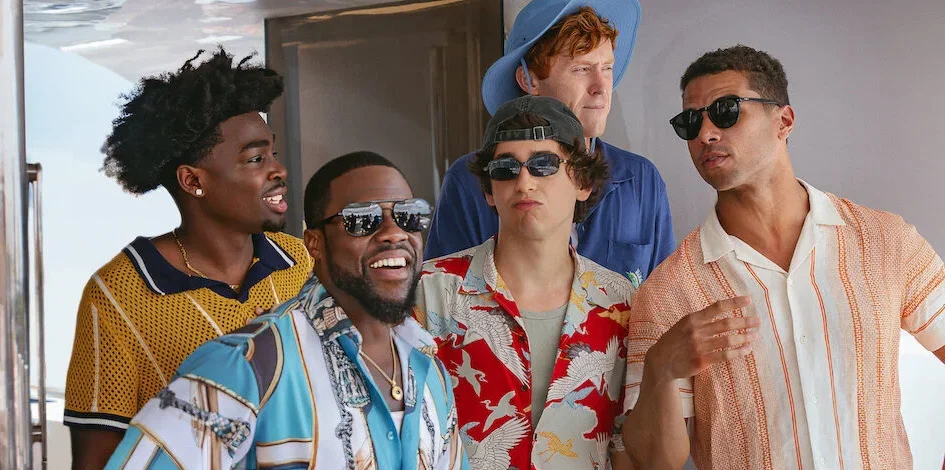
The plot accelerates as Nixon travels to Miami, where he meets the groom, played by Mason Gooding, and a cast of characters that include Marcello Hernandez, Kam Patterson, and Ben Marshall. The film’s structure follows a 72-hour countdown, a common trope used to heighten stakes in action-comedies. However, the narrative shifts from a simple fish-out-of-water story into a crime-caper hybrid when Nixon inadvertently offends a local criminal syndicate. This pivot introduces elements of physical peril, including high-speed chases and confrontations with Miami-based smugglers, which the creative team utilizes to ground the comedy in a more traditional action framework.
Production Background and Director’s Vision
Director Tim Story, who previously worked with Kevin Hart on the Ride Along franchise and the 2023 horror-comedy The Blackening, continues his exploration of high-energy ensemble pieces with this project. Story’s approach to 72 Hours emphasizes the generational gap, contrasting Nixon’s 1990s-influenced sensibilities with the "soft-hearted" and emotionally communicative nature of his Gen Z companions.
Industry data suggests that the film was developed as part of Hart’s multi-year deal with Netflix, which has consistently produced high-viewership numbers despite varying critical reception. The production utilized various locations across Miami to capture the city’s distinctive nightlife and architectural aesthetic, aiming for a visual vibrancy that matches the high-octane script. The technical team focused on large-scale set pieces, some of which have been compared to theme-park stunt shows in their scope and execution, particularly the sequences involving the criminal underworld’s pursuit of the protagonists.
The Ensemble Cast and Character Dynamics
The casting strategy for 72 Hours appears designed to bridge multiple audience demographics. Kevin Hart provides the veteran star power, utilizing his signature high-energy delivery and physical comedy. In contrast, the film serves as a significant feature-film vehicle for Marcello Hernandez, whose rising profile on Saturday Night Live (SNL) has made him a standout in recent seasons. Hernandez’s performance has been highlighted by analysts as a "scene-stealing" turn, providing a more grounded and dry wit that balances Hart’s manic energy.
The supporting cast includes several notable names from the contemporary comedy circuit:
- Teyana Taylor: Playing Nixon’s girlfriend, Taylor provides a restrained performance that serves as the film’s moral and emotional anchor. This role follows her critically acclaimed work in A Thousand and One, showcasing her versatility in shifting from heavy drama to mainstream comedy.
- Mason Gooding: As the groom, Gooding represents the bridge between the two generations, often caught between Nixon’s old-school antics and the modern sensitivities of his friends.
- Ben Marshall and Kam Patterson: Bringing their own comedic backgrounds—Marshall from the Please Don’t Destroy trio and Patterson from the stand-up circuit—these actors flesh out the bachelor party entourage with distinct, if sometimes archetypal, personas.
Analytical Context: The State of the R-Rated Comedy
72 Hours arrives during a period of transition for the Hollywood comedy. For much of the early 2000s, the R-rated "bro-comedy" was a staple of the theatrical box office. However, in recent years, these mid-budget projects have largely migrated to streaming platforms. Netflix has become a primary hub for this content, leveraging data-driven insights to pair established stars like Hart with trending talent like Hernandez.
Fact-based analysis of the genre’s evolution suggests that while the "outrageous misadventure" remains popular, the tropes are being updated to reflect changing social norms. 72 Hours attempts this by incorporating "emotional check-ins" and discussions of mental health among the younger characters—elements that would have been absent in a film like Animal House. Critics and industry observers have noted, however, that the success of these updates depends heavily on the script’s ability to transcend cliché. In the case of 72 Hours, the reliance on "dick jokes" and "elder" quips indicates a tension between the old formula and the new cultural landscape.
Chronology of Events Within the Film
The film’s 105-minute runtime is meticulously partitioned into the titular 72-hour window:
- Hours 1–12: The setup involves Nixon’s domestic life crumbling, his professional desperation, and the accidental text that sets the plot in motion.
- Hours 13–36: The arrival in Miami and the initial culture clash. This segment focuses on the "party" aspect, featuring nightclub sequences and the introduction of the Gen Z supporting cast.
- Hours 37–60: The escalation of the conflict. Nixon’s interactions with the criminal element lead to the first major action set piece, involving a botched drug deal and a chase through the city.
- Hours 61–72: The resolution. The group must set aside their generational differences to navigate a life-threatening situation, culminating in a high-stakes finale that tests Nixon’s growth as a character.
Industry and Official Responses
While Netflix does not typically release traditional box office data, the platform’s "Top 10" metrics provide a window into the film’s performance. Early data indicates that 72 Hours performed strongly in domestic markets, particularly among younger viewers and fans of Hart’s previous work.
In promotional interviews, Tim Story emphasized the chemistry of the cast as the film’s primary strength. "When you put someone with Kevin’s experience in a room with the new wave of comedy talent like Marcello and Ben, you get a friction that is naturally funny," Story noted during the press tour. Marcello Hernandez also commented on the experience, stating that the film allowed him to explore a broader range of physical comedy than is typically possible in the sketch-comedy format of SNL.
Broader Impact and Implications for Streaming Strategy
The release of 72 Hours underscores several key trends in the modern entertainment industry. First, it highlights the continued dominance of the "star-vehicle" model in streaming. For Netflix, a Kevin Hart film is a low-risk, high-reward investment with a guaranteed global audience. Second, the film serves as a litmus test for how legacy comedy directors like Tim Story adapt to the shifting tastes of the "TikTok generation."
The film also raises questions about the longevity of the "party comedy" trope. As digital communication becomes more integrated into daily life, the "wrong group chat" premise may become as common a plot device as the "mistaken identity" was in 20th-century farce. However, the critical response to 72 Hours suggests that for these films to achieve lasting impact, they must offer more than just a recycled version of 2009’s The Hangover.
In conclusion, 72 Hours is a production that exemplifies the current state of the studio comedy: a high-gloss, star-studded affair that prioritizes accessibility and streaming "watchability" over narrative innovation. While it provides a platform for rising stars like Marcello Hernandez and maintains the brand of Kevin Hart, it also serves as a reminder of the challenges inherent in modernizing a genre that is deeply rooted in the cinematic traditions of the past. As the industry continues to move toward a streaming-first model for comedy, the performance of films like 72 Hours will likely dictate the creative direction of the genre for the remainder of the decade.