The theatrical release of director Paul Greengrass’s historical epic The Uprising has finally arrived in cinemas, bringing with it a resolution to one of the most bizarre and heavily debated marketing mysteries in recent cinematic history. Featuring a star-studded cast including Andrew Garfield, Thomasin McKenzie, and Jamie Bell, the modest-budget production distributed by Focus Features initially flew under the radar. However, weeks prior to its premiere, the film became an internet phenomenon when eagle-eyed fans and specialized media outlets began tracking persistent rumors that the historical drama—ostensibly focused on the 1381 Peasants’ Revolt—was secretly a disguised Robin Hood origin film.
This unexpected controversy placed studio marketing executives, filmmakers, and audiences at the center of a debate concerning promotional transparency, historical accuracy, and artistic interpretation. Now that the film is widely available for public viewing, the exact nature of its connection to the legendary Sherwood Forest outlaw has been clarified, revealing a complex web of thematic allusions, studio miscommunication, and historical juxtaposition.
Plot Overview and Historical Framework
To understand the core narrative of The Uprising, one must first examine the official synopses provided by production companies and film databases prior to its release. Promotional materials distributed by Focus Features described the feature as a historical epic starring Andrew Garfield as the leader of a ferocious rebellion against the tyranny of King Richard II. Set against the true historical events of the 1381 Peasants’ Revolt, the plot follows Garfield’s character—known in the film simply as "Ploughman"—as he forms an army of common citizens to challenge the military might of the crown in pursuit of socioeconomic justice.
Independent film databases such as IMDb provided parallel summaries, consistently emphasizing the historical backdrop of late-14th-century England and the populist rebellion against royal overreach. Within the internal chronology of the film, these historical parameters remain accurate for the vast majority of the runtime. The narrative faithfully dramatizes the grievances of the English peasantry, who faced oppressive taxation through the poll taxes of 1381, leading to a massive insurrection that briefly captured London and threatened the stability of King Richard II’s administration.
Yet, despite this grounded historical foundation, confusion regarding the inclusion of Robin Hood persisted due to specific imagery utilized in promotional trailers and official social media channels, setting off months of speculation across digital platforms.
Chronology of the Marketing Controversy
The public debate surrounding The Uprising accelerated significantly on August 20, when Focus Features released the official theatrical trailer. The promotional footage featured Andrew Garfield’s character wearing dark, rustic green garments and utilizing a recurve bow and arrow during combat sequences. While these visual cues prompted immediate online discussion, the speculation transformed into an outright investigation when the studio’s official social media accounts published promotional materials bearing the explicit subtitle, “Witness the Rise of Robin Hood.”
As film historians and journalists investigated the project’s production history, additional layers of complexity emerged. Industry reporting revealed that the project had undergone several iterations and title changes over the years. Originally conceived under the working title The Hood with Benedict Cumberbatch attached to star, the production later shifted to the title The Rage, with Matthew McConaughey reportedly linked to the lead role. By the time Paul Greengrass took the helm with Andrew Garfield, the project had settled on The Uprising, though the earlier conceptual roots remained a subject of industry intrigue.
The situation escalated internationally when Focus Features UK issued a formal public statement contradicting the marketing strategies deployed in North America:
The Uprising is a historical epic about the Peasants’ Revolt of 1381, not Robin Hood. The UK marketing campaign does not make any reference to Robin Hood. Marketing materials posted by other countries that may appear in the UK online and on social media referencing Robin Hood are not issued or approved by us.
This transatlantic discrepancy created a substantial communications crisis for the studio. Observers were left to question whether domestic marketing teams were promoting a literal plot twist, fabricating a narrative connection to boost box office returns, or attempting to capitalize on audience familiarity with folk hero archetypes.
Narrative Resolution: The Final Ten Minutes
Upon viewing the completed feature film, the source of the marketing controversy becomes apparent within the narrative’s closing sequence. The bulk of The Uprising adheres strictly to the tragic trajectory of the 1381 revolt. Following King Richard II’s duplicitous negotiations at Mile End and Smithfield, government forces systematically suppress the uprising, resulting in the assassination and execution of several key rebel leaders.
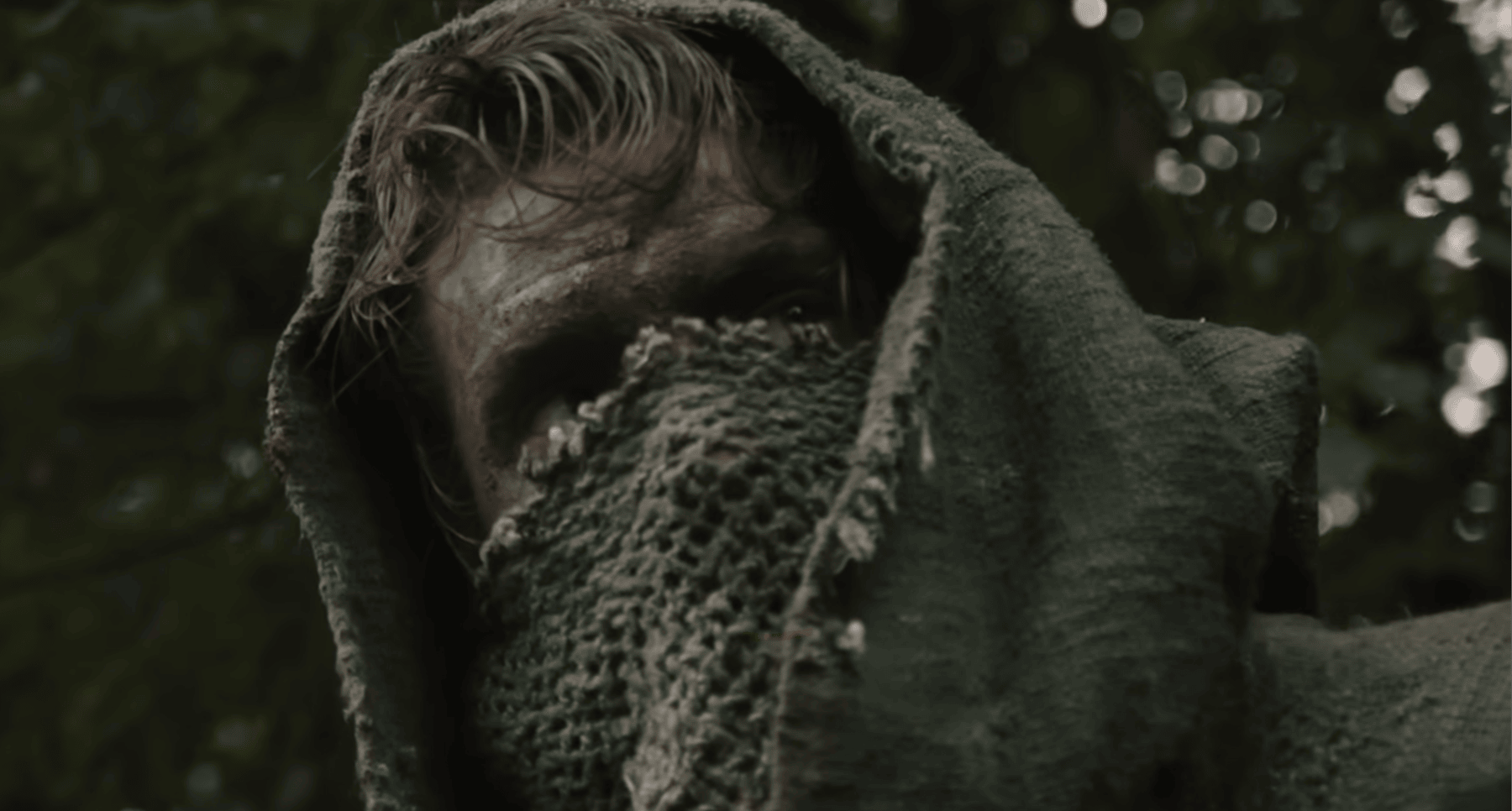
Ploughman and a small cadre of survivors manage to evade capture and slip into the countryside. The narrative then executes a temporal jump of one year. The final scenes depict a royal entourage ambushed while traveling through a heavily wooded royal forest. The leader of this insurgent band is revealed to be Ploughman, now operating entirely outside the law. Clad in green forest garb, he confronts the monarch, spares his life, and delivers a stark warning that he and his followers will wage an ongoing campaign of psychological terror and asymmetric warfare to secure justice for the dispossessed.
This concluding sequence provides the exact footage utilized in the North American trailers, confirming that the film culminates in an explicit origin myth for the Robin Hood legend, framing the outlaw not as a 12th-century crusader, but as a direct product of the 14th-century class struggles.
Historical Context and Literary Precedents
Paul Greengrass and his collaborators have defended the film’s structural choices by pointing to historical literature predating the Robin Hood legend’s popularization. The character designation "Ploughman" serves as a direct literary allusion to Piers Plowman, a Middle English allegorical poem attributed to William Langland, which is widely believed to have been composed around 1377—just four years prior to the Peasants’ Revolt.
Scholarly analysis of Piers Plowman reveals that it contains one of the earliest surviving literary references to the legend of Robin Hood. In the text, a character remarks on knowing the "rhymes of Robin Hood" rather than traditional ecclesiastical prayers, indicating that stories of an outlaw named Robin were already circulating among the English peasantry during the exact decade of the revolt.
However, historians have noted chronological discrepancies in applying this framework to a strict origin story. Traditional Robin Hood folklore has historically been set during the reign of King Richard I (the Lionheart) in the late 12th century, whereas Richard II ruled nearly two hundred years later at the end of the 14th century. Furthermore, the cinematic version of Ploughman lacks classic narrative markers associated with the fully formed mythos, such as specific "Merry Men" companions or a primary focus on the redistribution of wealth.
Statements from Filmmakers and Cast
In subsequent press interviews, director Paul Greengrass and star Andrew Garfield have clarified their artistic intentions, explaining that the film utilizes Robin Hood as a cultural archetype rather than a strict biographical recreation.
Andrew Garfield addressed the thematic integration of the character in a recent press statement:
The Robin Hood aspect is more of an emergent energy and archetype within our story. It’s an archetype and a folk hero that predates the Peasants’ Revolt, but it’s a figure that starts to emerge from the unconscious and the ground during periods of time when common folk are feeling disempowered, abused, violated and separated from the dignity of living their own lives. There is this archetypal energy that starts to rise up, and I love that arc.
Paul Greengrass expanded upon the marketing rationale in an interview with trade publications, defending the studio’s decision to hint at the film’s conclusion:
You can’t lay out everything at the start. You want a campaign that builds. So it was Focus Features’ idea to entice people with the idea that there’s something more than they think, and there is. It’s the ending, but it’s not a trite ending. The last ten minutes are incredibly well-earned and incredibly entertaining. So I think we’ve been a bit unfairly criticized for the marketing. You’ve got to somehow hint, ‘This is where this film’s going to go. Come and see it.’
Greengrass further elaborated on his historical inspiration, noting that names like "Rob the Hood" functioned historically as generic monikers for outlaws and criminal elements before solidifying into a singular legendary figure. He suggested that the explosion of outlaw folklore following the Peasants’ Revolt represented a psychological mechanism through which the peasantry maintained their hope for justice and resistance against oppressive feudal structures.
Industry Implications and Box Office Analysis
The marketing campaign for The Uprising offers a unique case study in modern film distribution. In an era dominated by intellectual property recognition and cinematic universes, independent historical epics face significant challenges in securing audience attention against high-budget franchise films. By subtly positioning The Uprising as an unconventional entry into the Robin Hood mythos, studio executives capitalized on audience curiosity, transforming an otherwise standard historical drama into a viral internet discussion.
While the divergence between the North American and UK marketing strategies highlighted internal studio miscommunication, the overall strategy succeeded in generating widespread public discourse. Film analysts suggest that as theatrical markets continue to evolve, studios may increasingly utilize ambiguous promotional tactics to drive opening-weekend engagement, though care must be taken to manage audience expectations regarding narrative structure.
Ultimately, The Uprising stands as a technically accomplished historical drama that uses its final moments to reflect on the power of folklore and popular mythology. Whether viewed as a legitimate reimagining of cinematic history or a clever promotional pivot, the film has firmly cemented its place in contemporary pop culture conversation as the subject of one of the most thoroughly analyzed distribution strategies of the decade.