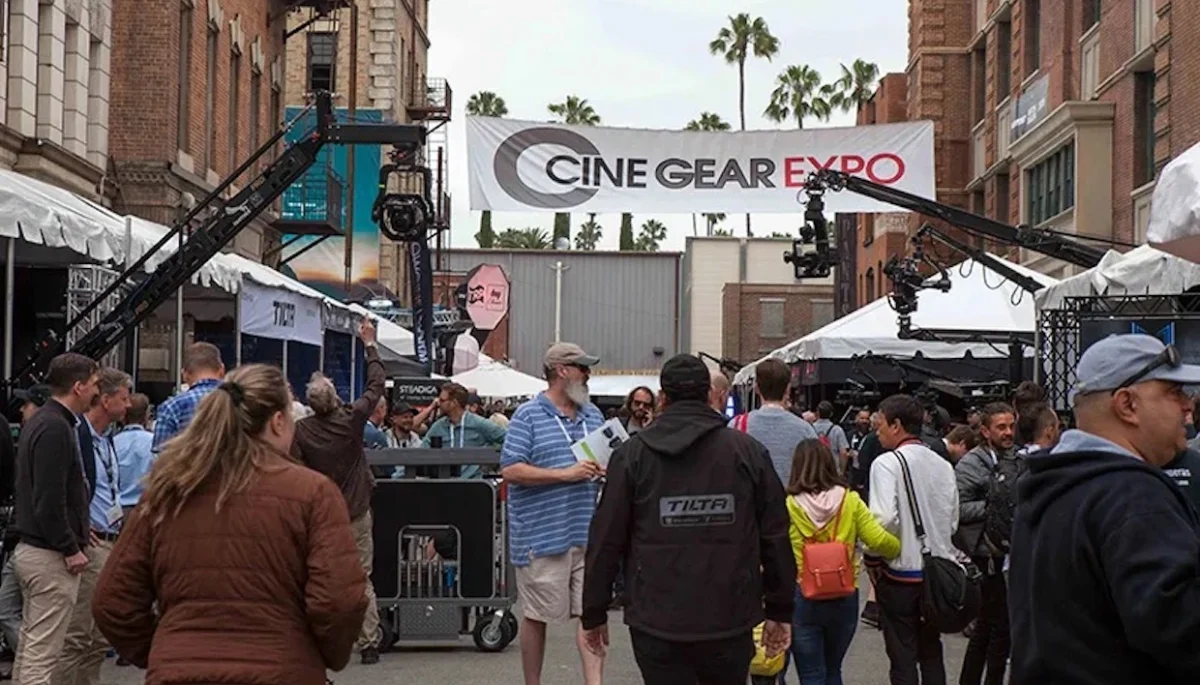
The annual Cine Gear Expo made its highly anticipated return to the historic Universal Studios Lot for a dynamic two-day gathering of cinematographers, gaffers, lighting technicians, and industry manufacturers. While major trade shows like the NAB Show in Las Vegas frequently spotlight the broader expansion of corporate video, streaming technology, and digital signage, Cine Gear remains uniquely tailored to the art and craft of traditional filmmaking. Set against the backdrop of an iconic Hollywood backlot, the 2026 edition provided an essential forum for industry professionals to evaluate cutting-edge equipment, debate the rapid evolution of hybrid digital-analog workflows, and reconnect with peers amid ongoing shifts in entertainment production.
Main Facts and Event Overview
Cine Gear Expo serves as West Coast filmmaking’s premier networking and exhibition hub, drawing thousands of attendees ranging from union-card-carrying studio veterans to film school undergraduates and independent artists. The 2026 convention spanned two distinct days, offering a contrasting demographic experience: Friday heavily attracted aspiring filmmakers and independent creators energized by recent independent film successes, while Saturday brought out working professionals, members of the International Alliance of Theatrical Stage Employees (IATSE), and established American Society of Cinematographers (ASC) members.
The relocation to the Universal Studios Lot presented both aesthetic charm and logistical hurdles. Attendees navigated a sprawling layout that separated indoor panel venues from outdoor vendor tents housed across the backlot. Despite the physical separation and the Southern California heat, the event successfully fostered robust dialogue regarding the future of image capture, lighting design, and lens engineering.
Chronology and Key Presentations
The expo’s programming kicked off with highly attended masterclasses and panels, most notably the annual American Society of Cinematographers (ASC) panel. Featuring a robust lineup of 15 distinguished ASC members—including Jeff Cronenweth, Rachel Morrison, Karl Walter Lindenlaub, and Natasha Braier—the session opened with a retrospective montage highlighting a century of ASC cinematography, notably featuring John Toll’s Oscar-nominated work on The Thin Red Line (1998).
Due to the sheer number of panelists, individual speaking times were brief, but the insights offered a window into the psychological underpinnings of cinematography. Steven Fierberg emphasized physical intuition on set, stating that camera placement often relies on subconscious physical impulses. Meanwhile, Natasha Braier reflected on how her upbringing under an Argentine military dictatorship informed her sensitivity to subtext and atmospheric concealment.
Subsequent days focused on technical advancements on the exhibition floor, specifically within lighting and camera mechanics. Drew Moe and Jeffrey Taylor, Local 728 gaffers and founders of the boutique rental house Canary Yellow, toured Stage 17 alongside industry colleagues to evaluate hardware updates designed to keep rental fleets competitive amid accelerated product life cycles.
Supporting Data and Technological Innovations
The 2026 exhibition highlighted a stark acceleration in equipment iteration cycles, particularly in LED lighting and hybrid capture systems. Historically, Hollywood’s illumination standards evolved slowly across tungsten, HMI, and fluorescent technologies over many decades. Today, manufacturers update LED chipsets and color engines annually.
Aputure continued to draw significant attention for its proprietary Blair CG color engine, building upon momentum generated earlier in the year at the NAB Show. Concurrently, lighting control systems saw a major leap forward with the debut of V3 for the Blackout Lighting Console, presented by Ian Peterson. The upcoming software update introduces visual control interfaces to traditionally numerical-value-based systems, offering fluid iPad control that could reshape professional lighting management upon its commercial release.
In camera technology, the highlight of the expo was the public display of the third prototype of the Cinelux Sixteen, developed by Cinelux Cinema Tools and exhibited at the CSLA rental house booth. The camera represents a major milestone as the first newly engineered film camera developed in years, uniquely capable of shooting 16mm film and digital footage simultaneously. Recording to an SD card at 3.2K resolution while exposing physical film stock, the device generates simultaneous proxies embedded with film-emulation LUTs.
Cinelux chief engineer Caz Voorhees noted that while sensor integration using Sony components proved straightforward, engineering the mechanical film magazine within a tight, friction-free clearance of one to two inches presented a formidable challenge. The team plans an open-source initiative, allowing users to 3D-print replacement magazines in the field. Production estimates project a commercial release by mid-2027.
Optics and Lens Rehousing Developments
Lens manufacturers and rehousing specialists also dominated the exhibition floor, reflecting a sustained market demand for vintage aesthetics paired with modern mechanical reliability.
Zero Optik, renowned for converting vintage photographic glass into cinema-grade lenses, showcased its expanding catalog. Operations manager Alex Baxter discussed the company’s work restoring historic Bausch & Lomb Ultra Baltar lenses from the late 1930s and early 1940s—lenses famously utilized by cinematographer Ed Lachman on El Conde (2023) and Maria (2024). Zero Optik also highlighted its exclusive collaboration with the ASC to restore a set of 1950s Todd-AO 65mm prime lenses used on classics like Oklahoma! (1955) and The Sound of Music (1965), which are now available for exclusive rental through Keslow Camera following standardization with cinematographer Greig Fraser.
Atlas Lens Co., co-founded by Dan Kanes, presented its latest developments in anamorphic cinematography. Following the success of its Orion and Mercury series—utilized on major Hollywood productions including Dune: Part Three (2026) and Babylon (2022)—Atlas showcased its newly shipping Kaizen Series Anamorphic lenses. Engineered for large-format sensors such as the Fujifilm GFX Eterna 55, ARRI Alexa 65, and Blackmagic Design URSA Cine 17K, the Kaizen series minimizes vintage field curvature to maintain edge-to-edge focus across wide multi-actor compositions.
Broader Industry Impact and Implications
The convergence of legacy optical restoration, hybrid film-digital prototyping, and advanced lighting control at Cine Gear Expo 2026 underscores a bifurcated industry: one half aggressively pursuing automation and efficiency through software and LED integration, and the other fiercely preserving tactile, analog traditions.
Despite economic headwinds and shifting studio expenditure patterns over recent years, the high turnout and palpable enthusiasm at Universal Studios demonstrate the enduring vitality of the cinematography community. The event concluded with technical seminars led by veteran practitioners such as M. David Mullen, followed by traditional networking events including the annual ASC Clubhouse barbecue. These gatherings reinforced the human network underpinning technical innovation, ensuring that Cine Gear remains an indispensable fixture on the global filmmaking calendar.