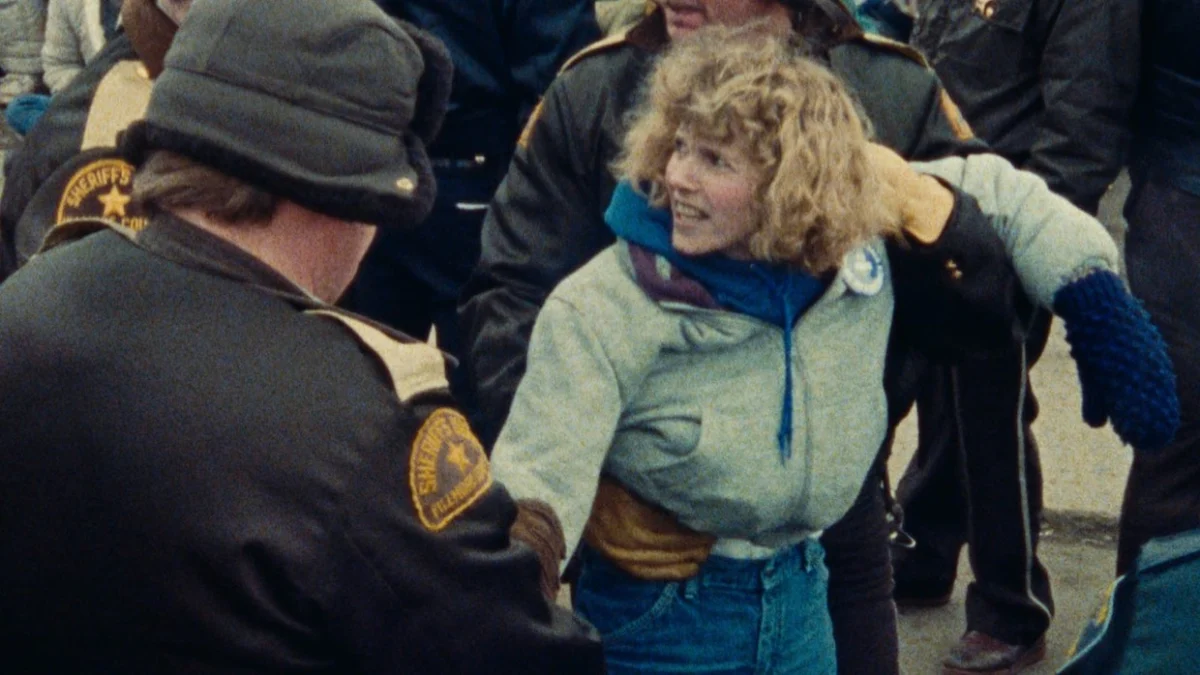
Barbara Kopple’s seminal 1990 documentary, American Dream, stands as a stark and unflinching examination of a pivotal moment in American labor history: the 1985-1986 strike by unionized meatpackers against Hormel Foods in Austin, Minnesota. The film, which recently received a 4K digital restoration and theatrical rerelease by Janus Films, meticulously chronicles the year-long industrial action, initiated in response to a drastic 23 percent hourly wage cut proposed by Hormel amidst record corporate profits. Kopple and her collaborators immersed themselves for over a year within the United Food and Commercial Workers Union (UFCW) Local P-9, capturing the escalating tensions, tactical disagreements, and profound community splintering that characterized this deeply consequential dispute. Far from a simple narrative of good versus evil, American Dream offers a multivalent portrait of a town grappling with economic precarity and the eroding power of organized labor during the aggressive union-busting climate of the Reagan era.
The Hormel Strike: A Battle for the Soul of Austin
Austin, Minnesota, in the mid-1980s, was quintessential Americana, a quintessential "company town" where the lives of nearly every resident were inextricably linked to Hormel Foods. The meatpacking giant was not just an employer but the economic bedrock, shaping generations of families and the very identity of the community. Workers, many of whom had followed their fathers and grandfathers into the plants, viewed their jobs not merely as employment but as a pathway to a stable, middle-class existence – the "American Dream" itself. Their union, UFCW Local P-9, was a powerful force, having historically secured competitive wages and benefits.
However, the economic landscape of the 1980s was rapidly shifting. Following a period of industry-wide concessions and bankruptcies among other meatpackers, Hormel announced a unilateral wage reduction from $10.69 per hour to $8.00 per hour. This proposed cut, justified by the company as necessary to remain competitive, came at a time when Hormel was reporting substantial profits, including a reported $20 million in earnings. For Local P-9 members, this was not merely a wage dispute; it was an existential threat to their livelihoods and a profound betrayal by a company they had dedicated their lives to.
The documentary meticulously traces the chronology of the conflict:
- August 1985: After months of fruitless negotiations, Local P-9 initiates a strike following the expiration of their contract and the implementation of the wage cut. The local union, led by President Jim Guyette and advised by labor activist Ray Rogers of Corporate Campaign, Inc., adopted an aggressive strategy, including a "corporate campaign" aimed at leveraging public and shareholder pressure against Hormel.
- Early Stages: The local union garners initial public support, portraying their fight as a stand against corporate greed. Kopple’s camera captures the fervent energy of workers chanting, "We’re not gonna take it anymore!"
- Strategic Divergence: A significant internal conflict emerges between Local P-9 and the national UFCW leadership, particularly International Vice President Lewie Anderson. The International Union, overseeing contracts for numerous plants across the country, advocated for a more cautious approach, fearing that an aggressive, unsanctioned strike could jeopardize broader union interests and lead to permanent job losses. Anderson famously accused Local P-9 of internalizing the "individualist ethos of the time," likening their stance to "Reagan’s philosophy: ‘I’ll get mine and to hell with everyone else.’" This ideological clash becomes a central tension in the film, highlighting the complexities of labor solidarity.
- Escalation and Division: As the strike wore on, Hormel began hiring replacement workers, known locally as "P-10ers" (a reference to a new local created by the International Union after P-9 was put into trusteeship), many of whom were former P-9 members desperate for work. This act fractured the community, turning neighbor against neighbor, and even family members against each other. Picket lines became sites of intense emotional and physical confrontation.
- The State Patrol’s Intervention: The Minnesota National Guard and State Patrol were deployed to maintain order and ensure access to the plant for replacement workers, a move that further polarized the community and underscored the high stakes of the dispute.
- The Strike’s Demise: The national UFCW eventually placed Local P-9 under trusteeship, effectively stripping its local leadership of authority and eventually decertifying the local. By September 1986, after more than a year, the strike formally ended, largely in defeat for the original P-9 workers. Many lost their jobs permanently, their livelihoods shattered, and the social fabric of Austin was irrevocably altered.
The Broader Economic and Political Landscape of the 1980s
The Hormel strike was not an isolated incident but a microcosm of the profound shifts occurring within American labor relations during the 1980s. The decade ushered in an era of economic policies often termed "Reaganomics," characterized by deregulation, tax cuts for corporations and the wealthy, and a strong anti-union stance. This period significantly weakened the bargaining power of unions, which had been a cornerstone of the American middle class for decades.
A critical turning point was the 1981 Professional Air Traffic Controllers Organization (PATCO) strike. When PATCO members walked off the job, President Ronald Reagan famously fired over 11,000 striking controllers and banned them from federal service for life. This decisive action sent an unequivocal message to both corporations and unions: the federal government would not tolerate illegal strikes and would side with management. This emboldened employers to take a harder line in labor negotiations, leading to a precipitous decline in strike activity and union membership throughout the decade. According to the Bureau of Labor Statistics, union membership in the private sector, which stood at over 35% in the mid-1950s, fell to approximately 16% by 1983 and continued its downward trend. The number of major work stoppages involving 1,000 or more workers dropped from 145 in 1981 to just 46 in 1985, the year the Hormel strike began.
The meatpacking industry itself was undergoing a dramatic transformation. Driven by fierce competition and the emergence of non-unionized plants, particularly in the Southern states, companies aggressively sought to cut labor costs. Many established meatpacking plants in the Midwest either closed or imposed significant wage and benefit concessions, often with the tacit approval of the national unions, who prioritized preserving jobs over maintaining high wage standards across the board. Hormel’s demand for wage cuts, therefore, reflected broader industry pressures, even if their record profits suggested an alternative path. The strike became a bitter fight over who would bear the burden of these economic shifts: the workers or the shareholders.
Barbara Kopple’s Unflinching Lens: The Art of Immersive Documentary

Barbara Kopple arrived in Austin, Minnesota, with a formidable reputation forged by her 1976 Academy Award-winning documentary, Harlan County, USA, which chronicled a violent coal miners’ strike in Kentucky. While Harlan County often ended with a sense of hard-won triumph, American Dream delves into a more ambiguous, even tragic, outcome. Kopple notes the shift, describing American Dream as an "uneasy film" that effectively charges each scene with "imminent threat."
The genesis of American Dream stemmed from Kopple’s earlier work documenting the closure of an Armour meatpacking plant in Worthington, Minnesota. She recounted a deeply moving scene where a worker learned all Armour plants were closing, leaving him with no options. Depressed by the widespread job losses, she heard a radio report about Austin workers "fighting Hormel" and cheering, "We’re not gonna take it anymore." This spark of defiance drew her to Austin. Initially, she attempted to weave the Worthington story into American Dream, but ultimately decided the Austin narrative, with its complex internal and external conflicts, needed to stand on its own.
Kopple’s filmmaking approach is characterized by deep immersion and a commitment to portraying multiple perspectives. She and her then-husband, Hart Perry (a cameraperson), along with their young son Nicholas, rented a house in Austin and lived there for over a year. This long-term presence was crucial for building trust with all parties involved. "Well, yeah, that was the answer," Kopple affirmed regarding access. "Jim and Ray would let me into different meetings and things that were happening behind closed doors. And the International Union would let me in because they felt that it was important to see what negotiations were all about. And the company wanted their side to be heard." This unparalleled access allowed her to film inside sensitive negotiations, private union deliberations, and company statements – a remarkable feat for any documentary filmmaker.
The production was not without its challenges. Kopple described the harsh Minnesota winters, filming in "60 below with the wind chill factor," and the constant financial struggle. She famously recounted a moment of despair when her office called to report only $275 left in the bank, only to call back minutes later with the miraculous news of a $25,000 grant from Bruce Springsteen, a long-time admirer of her work and a prominent advocate for working-class issues. Additional support came from DuArt Film Labs and its owner, Irwin Young, who processed the film without upfront payment, recognizing the importance of telling stories of underfunded documentaries.
Kopple’s dedication to presenting a nuanced, non-judgmental view is evident in her refusal to paint easy villains. She expressed empathy for Lewie Anderson, burdened with managing contracts for dozens of plants, and for Jim Guyette and Ray Rogers, who felt a deep responsibility to fight for their community’s standard of living against corporate profits. "I mean, I really cared about all of them," she stated, underscoring her belief in the human motivations behind each side’s actions. This commitment to complexity, allowing viewers to grapple with conflicting viewpoints, distinguishes American Dream as a work of profound journalistic integrity and artistic courage. Her collaborative spirit is also highlighted by her decision to give co-director credits to her editors, acknowledging their indispensable role in shaping the narrative from vast amounts of footage.
Legacy and Contemporary Relevance
Upon its release, American Dream garnered widespread critical acclaim, winning the Academy Award for Best Documentary Feature in 1991. Studs Terkel, the celebrated chronicler of American working life, was a profound admirer, describing the film as having "Greek tragic aspects to it, only it’s not the gods that did it: here, it’s a company. And a union-busting climate…" This observation speaks to the film’s enduring power as a cautionary tale of economic forces colliding with human dignity.
More than three decades later, American Dream remains remarkably timely. Kopple herself noted during a recent interview that "It didn’t read to me as if there was a gap of time. It was as if it happened a week ago. And it also seems very timely with what’s happening today—people having to fight and struggle for basic human rights." Indeed, the film’s themes of wage stagnation, corporate power, the challenges of organizing, and the divisions within communities continue to resonate deeply in contemporary America.
The 4K digital restoration and theatrical rerelease by Janus Films ensure that new generations of viewers can engage with this critical piece of labor history. In an era marked by renewed interest in unionization, particularly among younger workers and in sectors like tech and service industries, American Dream serves as a vital historical document. It offers invaluable lessons on the complexities of collective action, the sacrifices demanded by labor disputes, and the long-term impact of economic policy on working families. It reminds us that the struggle for fair wages and decent working conditions is a continuous one, often fraught with internal dissent and external pressure.
Barbara Kopple’s dedication to long-form, immersive documentary filmmaking continues to this day. She is currently working on a new film about modern-day unionism, tracing three distinct but interconnected stories: the long-established UPS and Teamsters union, the nascent efforts to unionize Amazon workers, and the struggles of Los Deliveristas Unidos, a group of independent delivery workers fighting for basic rights. This ongoing commitment underscores the enduring relevance of the themes explored in American Dream and Kopple’s unwavering belief in the power of film to illuminate the human cost of economic inequality and the enduring fight for justice in the American workplace. Her films are not just historical records; they are urgent calls to understand the past to inform the present and shape the future of labor in America.