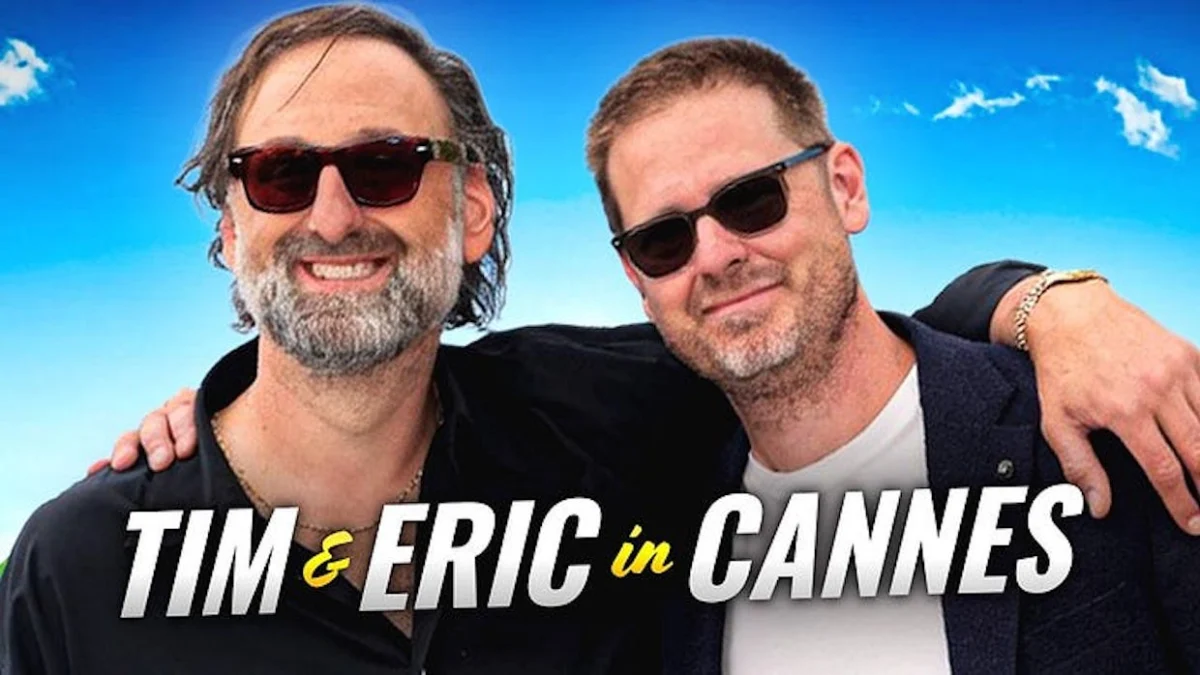
The French Riviera’s prestigious Cannes Film Festival, a global epicenter for cinematic artistry and industry dealings, recently played host to an unexpected yet fitting presence: the iconic American comedy duo, Tim Heidecker and Eric Wareheim. Known collectively as Tim & Eric, their appearance marked a notable intersection of their distinctive brand of surrealist humor with the high-brow international film circuit, particularly through their roles in Quentin Dupieux’s latest feature, Full Phil. The duo’s journey from public-access television-inspired sketches to the red carpet of Cannes underscores a unique trajectory in modern comedy and independent media production.
The Enduring Legacy of Tim & Eric
Tim Heidecker and Eric Wareheim first forged their creative partnership during their student days at Temple University in Philadelphia. Their collaboration would eventually culminate in Tim and Eric Awesome Show, Great Job!, a groundbreaking sketch comedy series that aired on Adult Swim from 2007 to 2010. This program, characterized by its lo-fi aesthetic, jarring editing, non-sequitur humor, and often unsettling performances, rapidly achieved cult status. It was a chaotic-good, surrealist experiment that many credit with significantly influencing internet culture and reshaping the landscape of American humor, often feeling like a "psychoactive" initiation rite for its burgeoning audience. The show’s innovative approach, blending absurdist comedy with public-access television tropes, garnered critical acclaim for its originality and boldness, establishing Tim & Eric as pioneers in a new wave of alternative comedy. During its run, Awesome Show consistently drew a dedicated audience for Adult Swim, a network known for fostering experimental and adult-oriented animation and live-action content.
Following this foundational period, both Heidecker and Wareheim embarked on a diverse array of solo ventures, yet their creative synergy has periodically brought them back together for projects that resonate with their shared artistic sensibility. Their return to a collaborative cinematic project at Cannes is a testament to their enduring appeal and the continued relevance of their unique comedic voice.
Quentin Dupieux: A Shared Vision of the Absurd
Their latest joint appearance on the big screen is in Quentin Dupieux’s Full Phil, one of two films by the prolific French director to debut at the 2026 Cannes Film Festival, alongside Vertiginous. Dupieux, a filmmaker and musician (operating under the moniker Mr. Oizo), shares a distinct artistic kinship with Tim & Eric. His cinematic work is often described as vulgar surrealism, characterized by offbeat existential meta-comedy and narratives that delight in the absurd. This thematic alignment explains the natural crossover with Tim & Eric’s style, making their collaboration a logical and highly anticipated pairing.
Eric Wareheim, in particular, has a history of working with Dupieux, having previously appeared in his films Wrong Cops (2013) and Reality (2014). This established connection laid the groundwork for Heidecker’s involvement in Full Phil. Wareheim notes their working methods are similar: "very fast, he did everything, shot, edited," mirroring the independent, hands-on approach that defined much of Tim & Eric’s early work. This brotherhood, as Wareheim describes it, extends beyond professional collaboration, with shared holiday trips to places like Corsica, highlighting a deeper appreciation for French culture and art that Dupieux introduced him to.
"Full Phil": A Parisian Odyssey into the Bizarre
Full Phil has been provocatively described by Dupieux himself as "Emily in Paris in hell," immediately signaling its departure from conventional romantic comedies. The film centers on a wealthy man, played by Woody Harrelson, who endeavors to reconnect with his estranged daughter, portrayed by Kristen Stewart, through a lavish trip to the French capital. However, Stewart’s character, rather than indulging her father, opts for self-indulgence, consuming vast quantities of "tender meats and cream-piled sweets" while engrossed in a black-and-white horror film on a portable DVD player.
It is within this "film-within-the-film" that Tim Heidecker and Eric Wareheim make their memorable appearance. They star as a pair of "screwy scientists" reminiscent of the classic Victor Frankenstein archetype. Their performances are described as expertly "chewing the scenery" as they pursue a reptilian creature, evocative of the Creature from the Black Lagoon (1954), which in turn grotesquely devours the heads of its "cartoonishly terrified victims." Heidecker confirmed their intentional approach to the roles, stating they were "intentionally bad in the movie, doing some big, ridiculous theatrical acting."
For their roles, Dupieux provided specific references, including the works of James Whale, director of Universal horror classics like Frankenstein (1931) and Bride of Frankenstein (1935). Heidecker adopted a "big mid-Atlantic accent" to embody the theatricality of the characters, a choice that pleased the director. While Tim & Eric are known for improvisation in their own projects, Dupieux’s set required a more structured approach. "Can you guys just please learn your lines?" was the director’s request, a directive Heidecker welcomed for its clarity. The shoot itself was remarkably efficient, taking place over just four days in Paris, characterized by "long lunches, short days," and Dupieux’s hands-on involvement in every aspect, including cinematography with old-fashioned camera moves. A unique challenge for Wareheim, who had worked with Dupieux before, was the script translation process, where Dupieux would write in French and then use a translator, creating a distinctly "odd" linguistic universe that added to the film’s surreal charm.
Cannes Impressions: Glamour, Absurdity, and Independence
Ahead of Full Phil’s midnight premiere, Heidecker and Wareheim shared their initial impressions of the Cannes Film Festival. Their reactions encapsulated a blend of awe, amusement, and a characteristic skepticism towards the event’s opulent trappings. Wareheim expressed an initial thrill, highlighting a personal aspiration: "We grew up wanting to do this festival." He adopted a new technique of having "zero plans," hoping for just "20 minutes to walk around."
Heidecker’s experience began surrealistically on the plane, encountering legendary producer Lawrence Bender (known for early Quentin Tarantino films) who recounted his own first Cannes experience with Tarantino after Reservoir Dogs. This cemented the festival’s legendary status for Heidecker. However, the reality of Cannes soon revealed a different facet: "this place is like The Grove if it was the size of Disney World." He observed the "absurd" attire, particularly the evening gowns and tuxedos for movie screenings, and questioned the intentions of many attendees, labeling it "really silly." Wareheim, surprisingly, found a liking for the formality, contrasting it with their usual home viewing habits "in night clothes." The prospect of screening Full Phil in a 2,300-seater theater was a monumental thought, with Dupieux promising a "fun; it’s raucous" atmosphere. Heidecker, ever the provocateur, hoped for boos.
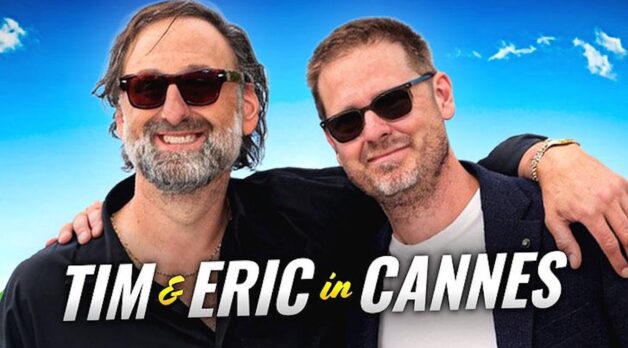
Earlier that day, Heidecker delivered an IndieWire keynote at the American Pavilion on the "Future of Filmmaking," where both he and Wareheim were lauded as "progenitors of the creator economy." This acknowledgment speaks volumes about their foresight, tracing back to the 2007 founding of their production company, Abso Lutely, a venture rooted in a mutual commitment to independence. The "creator economy," broadly defined as an ecosystem where independent content creators can monetize their skills and content directly to their audience, finds its roots in the DIY ethos that Tim & Eric embodied long before the term became mainstream. Their presence at Cannes, therefore, served not just as a promotion for a film, but as a symbolic representation of independent artistry navigating and influencing the global film landscape, even if, as Heidecker humorously noted, "nobody knows who we are," contrasting their profound influence on American comedy with the festival’s celebrity-driven focus.
Divergent Paths, Shared Ethos
In the fifteen years since Tim and Eric Awesome Show, Great Job! concluded, both artists have carved out distinctive individual careers, yet their underlying commitment to creative autonomy remains a powerful through-line.
Tim Heidecker’s Ventures:
Heidecker has cultivated another "gonzo comedy universe" through the multimedia psychodrama On Cinema at the Cinema, an ongoing project since 2011, co-created with Gregg Turkington. This intricate web of interconnected web series, podcasts, and live events offers a satirical, often uncomfortable, look at film criticism, right-wing media, and personal failings. Beyond comedy, Heidecker has also toured behind "six very fine rock albums," showcasing his musical talents.
A significant recent development in April 2026 saw Heidecker announced as the new creative director of InfoWars, following The Onion’s efforts to "wrestle Alex Jones’s propaganda empire from his supplement-enhanced grip." This move, deeply steeped in satire, positions InfoWars as an incubator for independent content, echoing the original spirit of Abso Lutely. Heidecker explicitly stated his pitch to The Onion was based on the "direct-to-consumer" model, utilizing existing audience and website infrastructure, much like his HEI Network, which hosts On Cinema. He explained, "We’re not going to parody the Infowars universe for very long. We have an arc that we’re going to extend for a little while and then we’ll kill it, but we’re going to continue to make stuff. It’s a proof-of-concept sort of thing." This audacious project highlights Heidecker’s ongoing exploration of media, satire, and the potential for independent platforms to foster unique content, even leveraging controversial brands for artistic ends. The ensuing reaction from Alex Jones himself, who reportedly called Tim & Eric "demonic pedophiles, killing children," only amplified the meta-commentary, with Heidecker finding humor in their inability to "wrap their heads around what this is."
Eric Wareheim’s Renaissance:
Wareheim has embraced the persona of a "bon vivant," channeling his creative energy into diverse fields. He has authored cookbooks, becoming a celebrated winemaker, and most recently, has "turned over a new leaf as a garden-plant guru." This latest passion involves "taking really interesting plants and putting them in really interesting vessels," a process he describes as an art form. His pivot was partly driven by a desire for more fulfillment than the restaurant scene offered, leading him to the "beautiful art of studying bonsai" after personal experiences. Wareheim applies the same intense dedication that characterized his early comedic collaborations: "we will work 24-7, anything to make the thing funny or beautiful or whatever." His new life includes importing shipping containers of exotic plants, such as Australian grasstrees, which he passionately describes as "stunning," a testament to his "post-food world" existence and a healthy, albeit unusual, switch.
Concurrently, Wareheim is set to appear in Onslaught, a film by Adam Wingard, known for his early indie horror work like You’re Next (2011) and later blockbuster success with Godzilla x Kong: The New Empire (2024). Onslaught marks Wingard’s return to his indie horror roots, though not a "cheap movie." Wareheim admitted initial nervousness about working with "all real actors" but found liberation in Wingard’s advice: "Just let go. You’re not the director." This experience taught him the value of not constantly monitoring his performance, fostering a deeper immersion in the acting process, despite a memorable instance of flubbing lines during a high-production value shot involving explosions.
The Evolution of Abso Lutely and Independent Production
The duo’s shared commitment to independent creation is deeply rooted in the history of Abso Lutely Productions, the company they co-founded in 2007. Initially established as a vehicle for producing their own innovative content, Abso Lutely expanded to support other creators, a move that proved successful in fostering a community of like-minded artists. However, the media landscape shifted significantly, particularly with the onset of COVID-19. "The way these networks made deals with production companies really changed," Heidecker explained, noting a trend towards "stuff started happening in-house." This, coupled with the "pretty big monthly nut to keep an office, keep people staffed," led them to seek a new path for Abso Lutely.
They ultimately sold the company to Jimmy Miller’s Hollywood-based entity, which also acquired the UCB Theatre brand. While they retain "some kind of ownership," the operational focus of Abso Lutely under new management has shifted towards stand-up specials. Heidecker lamented the current difficulty in getting "the good stuff made right now, the weird stuff," reflecting a broader industry challenge for unique, independent voices.
The Future of Content Creation: Autonomy vs. Industry
Their experiences with traditional studio systems, particularly during "development hell" for a show at FX, have reinforced their commitment to creative autonomy. Heidecker described it as a "grad student program," bogged down by excessive questions and second-guessing about narrative arcs. This frustration, according to Wareheim, has propelled both of them into their current independent endeavors – Heidecker building his own TV networks (HEI Network, InfoWars) and Wareheim fully immersing himself in alternative careers.
Their philosophy is clear: "I’m only gonna do my own thing because it’s the only way that we can survive in this landscape and know that the amount of work we put into it will be represented on the screen." They acknowledge the privilege of being allowed to create anything but emphasize a stage in their careers where they refuse to invest time in projects that might never see the light of day or be creatively compromised. The direct-to-consumer model, as exemplified by the HEI Network and the InfoWars initiative, represents a strategic response to these industry constraints, offering a path to "make the pure stuff" with adequate funding, bypassing the often restrictive traditional studio deals.
Conclusion
Tim Heidecker and Eric Wareheim’s presence at the 2026 Cannes Film Festival, starring in Quentin Dupieux’s Full Phil, is more than just a promotional tour. It is a powerful symbol of their enduring influence, their adaptability, and their unwavering commitment to independent, boundary-pushing artistry. From the chaotic-good surrealism that defined their early work to their individual ventures into music, satirical media, winemaking, and horticulture, the duo continues to navigate and redefine the landscape of comedy and content creation. Their candid reflections on Cannes’ glitz, the challenges of traditional production, and the liberating potential of the creator economy offer valuable insights into the evolving dynamics between artistic vision and industry realities. As they continue to forge their unique paths, Tim & Eric remain a vital force, proving that even in the most gilded of cinematic arenas, the spirit of gleefully psychoactive humor and fierce independence can find a prominent stage.