The Genesis of a Genre Classic
The late 1980s and early 1990s represented a formative era for portal fantasy within the Japanese manga industry. During this time, the "isekai" trope was not a monolithic category but a versatile storytelling device used to examine themes of identity and gender. While Chie Shinohara’s Red River (1995–2002) and Yuu Watase’s Fushigi Yūgi (1992–1996) shared the market space with Hikawa’s work, From Far Away distinguished itself through its meticulous attention to the limitations of its protagonist, Noriko.
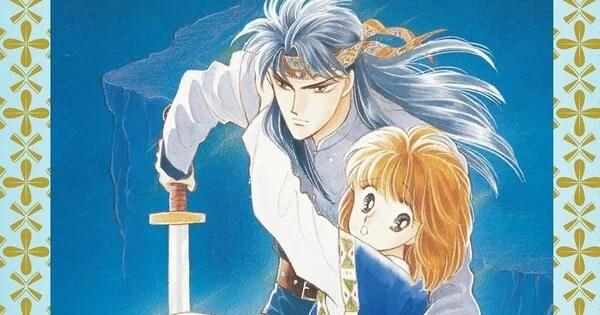
In the narrative, Noriko is transported to a fantasy realm with no supernatural advantages, no pre-existing knowledge of the world’s geography, and, crucially, no ability to communicate. This lack of "cheat abilities"—a staple of modern isekai—forces the narrative to slow down, centering the plot on the fundamental human struggle of learning a new language and navigating foreign social customs. This choice serves as a narrative anchor, ensuring that Noriko’s journey is defined by her perseverance rather than a trajectory of inevitable dominance.
Chronology of the Narrative Arc
The story follows a structured progression over the course of its 14-volume run. The early chapters focus on the immediate aftermath of Noriko’s arrival in the "Sea of Trees." Her introduction to this world is marked by the discovery of "The Awakening," a prophecy that has haunted the local population for generations. The prophecy suggests that the arrival of a foreign individual will trigger the return of a catastrophic entity known as "The Sky Demon."
- 1991: Commencement of serialization in LaLa.
- 1991–1995: Early arcs focusing on Noriko’s survival and her initial, strained encounters with Izark, a young man who is initially tasked with eliminating her.
- 1996–1999: A shift in the narrative as the bond between Noriko and Izark deepens, challenging the socio-political expectations of the world they inhabit.
- 2002: Conclusion of the series, marking a decade of influence on the shoujo demographic.
Analysis of Thematic Underpinnings
The core conflict of the series rests on the tension between deterministic prophecy and individual agency. The local inhabitants of the fantasy realm view Noriko as a weapon of destruction—an object to be discarded or controlled to prevent the emergence of The Sky Demon. However, Hikawa subverts this by suggesting that the prophecy itself is a byproduct of fear-based misinterpretation.
The character of Izark is central to this analysis. Initially, his motivation to kill Noriko is rooted in his own traumatic history and the social pressure to conform to the prophecy. As the story progresses, the narrative moves away from the trope of "destructive love" and toward a model of mutual healing. Hikawa posits that the true catalyst for destruction is not the presence of The Awakening, but rather the attempt to isolate and "Other" her. This sociological commentary—the idea that fear of the unknown creates the very monsters society claims to be fighting—provides a layer of depth that remains relevant in contemporary discussions regarding xenophobia and the marginalization of immigrants.
Linguistic and Cultural Realism
A distinguishing feature of From Far Away is the rigorous depiction of Noriko’s language acquisition. For the first several volumes, Noriko struggles to convey even basic needs. This linguistic barrier acts as a narrative filter, forcing readers to experience the isolation of the protagonist. Even when she achieves conversational fluency, her speech retains an element of uncertainty.
This grounded approach contrasts sharply with current isekai trends, where protagonists are frequently granted automatic fluency or "translation" magic. By stripping away these shortcuts, Hikawa emphasizes the human cost of being displaced. The series suggests that the most significant barrier to survival in a new world is not physical prowess or magical potential, but the ability to build interpersonal relationships through communication.
Artistic Style and Worldbuilding
Hikawa’s artistic choices reinforce the "otherworldly" atmosphere of the setting. Her character designs, particularly the emphasis on elaborate, multilayered eyelashes and distinctive facial structures for male characters, are hallmarks of the early 90s aesthetic. While these elements are occasionally cited by modern critics as "dated," they function as a visual shorthand for the fantasy genre’s roots.
Furthermore, the worldbuilding extends to the fauna and material culture of the realm. Animals that resemble horses but possess distinct, non-terrestrial anatomy, and clothing styles that deviate from standard historical European fantasy tropes, demonstrate a commitment to creating an immersive environment. These visual details prevent the world from feeling like a mere imitation of a video game, grounding the reader in a setting that feels organic and distinct.
The Problem of Accessibility
Despite its status as a foundational text in the genre, From Far Away currently faces significant accessibility challenges. With the print editions largely out-of-print, new readers are often forced to rely on secondary markets or digital archives. This scarcity has led to a call from literary critics and manga historians for a definitive reissue. The series represents a crucial link in the chain of Japanese pop culture, bridging the gap between the character-focused dramas of the late 20th century and the high-concept, high-action isekai of the 21st century.
Broader Implications and Legacy
The legacy of From Far Away lies in its rejection of the "hero’s journey" as a path to omnipotence. By forcing the protagonist to exist as a vulnerable, learning entity, Hikawa creates a template for empathetic storytelling that remains superior to many modern power fantasies.
Industry analysis suggests that the current isekai boom is reaching a point of saturation, where readers are increasingly seeking "subversive" takes on the genre. In this context, From Far Away serves as a "gold standard" for what isekai can achieve when it focuses on the internal world of the protagonist rather than the external statistics of their power. The series effectively demonstrates that a compelling fantasy narrative does not require a "chosen one" to save the world through strength; rather, it requires a person to find their place in a world that insists they do not belong.
In summary, the narrative arc of Noriko and Izark is more than a relic of the early 90s; it is a sophisticated study of how fear, prophecy, and communication define our social interactions. Whether analyzed for its artistic merit or its thematic contributions to the shoujo genre, the series remains an essential read. It challenges the reader to look beyond the surface-level tropes of the "trapped in another world" premise and consider the profound difficulties of human connection in the face of insurmountable, systemic prejudice. As the industry continues to evolve, the influence of From Far Away serves as a reminder that the most compelling stories are often those that prioritize the slow, difficult process of understanding over the instant gratification of power.