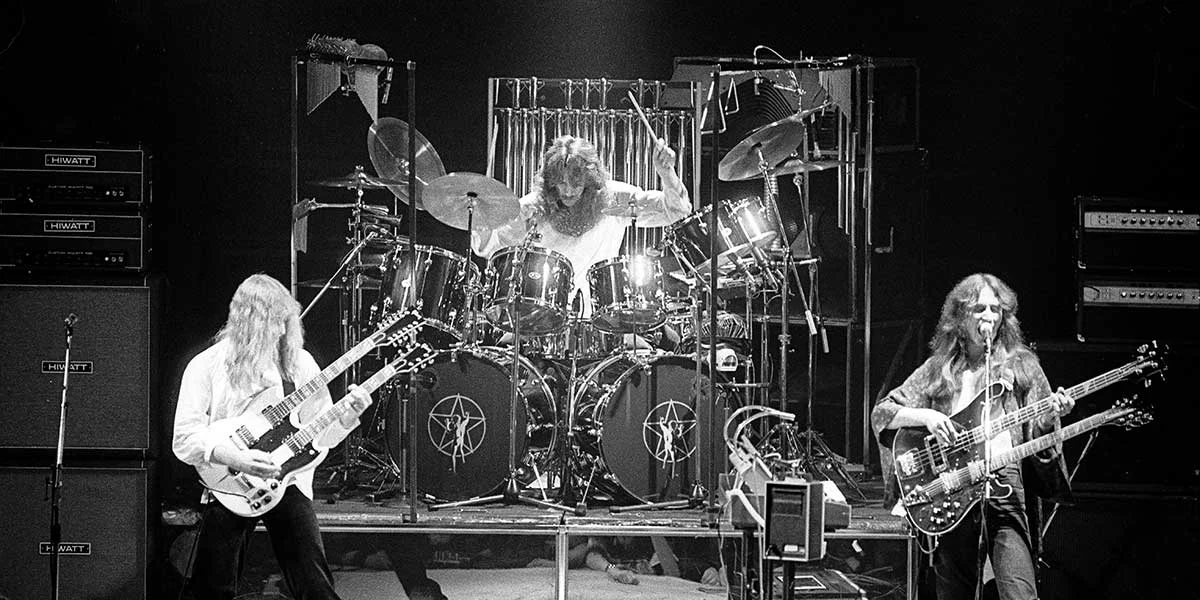
The enduring legacy of Neil Peart, the legendary percussionist and lyricist for the Canadian progressive rock band Rush, is the focal point of a compelling new documentary feature titled Neil Peart: No Ones Disciple. Directed and written by acclaimed filmmakers Scot McFadyen and Sam Dunn—renowned for their definitive cinematic explorations of heavy metal and rock history—alongside co-writers Mike Munn and John Semley, the 106-minute film offers a meticulous, multi-dimensional examination of a musician who redefined the boundaries of rock drumming. Rather than relying solely on archival footage and standard talking-head interviews, McFadyen and Dunn orchestrate a profound musical gathering. Surviving Rush members Geddy Lee and Alex Lifeson unite with four of the world’s most revered drummers—Stewart Copeland, Danny Carey, Chad Smith, and Gavin Harrison—to deconstruct, perform, and honor Peart’s monumental contributions to modern music.
Main Facts and Documentary Structure
Clocking in at 106 minutes, Neil Peart: No Ones Disciple moves deliberately beyond the traditional conventions of the rockumentary genre. The core premise centers on an intimate studio summit where Lee and Lifeson collaborate with contemporary masters of the drum kit. The participating percussionists—The Police’s Stewart Copeland, Tool’s Danny Carey, Red Hot Chili Peppers’ Chad Smith, and Porcupine Tree’s Gavin Harrison—are not brought together merely for a display of technical virtuosity. Instead, each musician shares a deep personal and professional history with Peart.
The documentary utilizes these rehearsal-space performances as a narrative vehicle. As the drummers tackle complex Rush arrangements, the music acts as a catalyst for candid discussions regarding Peart’s methodology, his evolution as an instrumentalist, and his complex personality. The film successfully balances reverence with psychological realism, portraying Peart not as a flawless icon, but as a dedicated, fiercely private artisan who continuously pushed the limits of his own capabilities well into his decades-long career.
Chronology of Events and Background Context
Neil Peart passed away in January 2020 at the age of 67 following a private three-year battle with glioblastoma, an aggressive form of brain cancer. His death occurred mere weeks before the onset of the global COVID-19 pandemic, a timing that profoundly impacted the global music community. The mandatory public health lockdowns and restrictions immediately following his passing effectively stripped his bandmates, Geddy Lee and Alex Lifeson, alongside millions of fans worldwide, of the opportunity to gather in traditional arenas to mourn, celebrate, and pay public tribute to a foundational pillar of modern rock.
For Lee and Lifeson, the loss signaled the definitive end of Rush as a touring entity, a status the band had maintained since Peart officially announced his retirement from touring in 2015 due to chronic tendonitis and physical ailments. Having spent nearly four decades together creating genre-defining music—beginning with Peart’s debut on the band’s 1975 sophomore album, Fly by Night—Lee and Lifeson experienced a profound creative and personal hiatus.
Recognizing the need to process their grief and honor their late bandmate, Lee and Lifeson reconnected with directors McFadyen and Dunn. The filmmakers have built a lasting collaborative relationship with Rush, having previously directed the acclaimed 2010 documentary Rush: Beyond the Lighted Stage. The decision to establish a drummer’s summit served a dual purpose: it provided a therapeutic outlet for the surviving members to play their catalog again, and it created a structured environment to analyze Peart’s immense rhythmic footprint.
Deconstructing the Performances and the Drummers
The documentary’s central performances highlight the distinct stylistic approaches of the four participating drummers, each bringing a unique interpretive lens to Peart’s notoriously intricate compositions.
Chad Smith, best known for his powerful, pocket-driven work with the Red Hot Chili Peppers, approaches the material with palpable enthusiasm. Smith has frequently acknowledged the profound influence of Rush on his formative years as a musician. In the film, his gregarious demeanor balances the technical demands of the music with accessible insights into Peart’s character, bridging the gap between stadium-rock energy and technical precision.
Danny Carey of Tool confronts some of the most mathematically dense and polymetric passages in the Rush catalog. Carey’s contribution underscores the progressive underpinnings of Peart’s drumming, bringing subtle timing nuances and explosive polyrhythms to the forefront. His analytical yet visceral approach illuminates the hidden mathematical architecture of tracks that defined 1980s progressive rock.
Gavin Harrison, celebrated for his work with Porcupine Tree and King Crimson, approaches the repertoire with characteristic meticulousness. The film captures Harrison utilizing detailed notation sheets—reminiscent of Frank Zappa’s famously complex arrangements—demonstrating the high level of intellectual rigor required to faithfully execute Peart’s meticulously constructed fills and time-signature shifts.
Stewart Copeland of The Police provides the documentary’s most compelling stylistic contrast. As a peer whose global acclaim and cultural impact rivaled Peart’s own during the late 1970s and 1980s, Copeland brings a distinct rhythmic vocabulary rooted in new wave and punk sensibilities. The rehearsal sessions featuring Copeland, Lee, and Lifeson—particularly their exploration of the track “New World Man,” a song heavily influenced by The Police’s musical trajectory—reveal the surprising elasticity and deep foundational musicianship shared by the players.
The Human Complexity Behind the Icon
Neil Peart: No Ones Disciple deliberately avoids hagiography, presenting a fully realized portrait of a complex individual. While Peart was universally lauded for his technical precision, literary lyricism influenced by Ayn Rand, John Dos Passos, and classic literature, and his relentless pursuit of self-improvement, the documentary does not shy away from his intensely guarded personal life.
Peart was famously mercurial—an introspective loner who often sought solitude during tours, frequently traveling by motorcycle away from his bandmates. He maintained strict personal boundaries, occasionally exhibiting a blunt or dismissive demeanor toward fans seeking autographs or casual interactions. The documentary contextualizes this behavior as the unavoidable price of fame that Peart was often unwilling to pay, preferring the company of a select circle of respected colleagues over public adulation.
Furthermore, the film addresses the profound personal tragedies Peart endured, including the tragic deaths of his daughter Selena in a car accident in 1997 and his wife Jacqueline from cancer less than a year later. By framing these hardships alongside his artistic triumphs, the narrative provides a nuanced examination of how grief, isolation, and professional dedication shaped the drummer’s worldview.
Broader Industry Impact and Implications
Beyond serving as a biographical retrospective, Neil Peart: No Ones Disciple explores broader thematic questions relevant to professional musicianship. The documentary examines the psychological toll of decades-long touring schedules, the mechanics of high-level artistic collaboration, and the physical realities of aging within the demanding environment of stadium rock.
The analytical implications of the film extend to how legacy acts manage the catalog of deceased members. Rather than relying on holographic technology or static archival releases, Lee and Lifeson utilized the collaborative process of the documentary to reinvigorate their relationship with their own material.
This creative resurgence manifested concretely in the film’s epilogue. The renewed enthusiasm generated during the documentary’s production directly inspired Lee and Lifeson to support ongoing legacy projects and foster new musical collaborations. Notably, the film introduces German drummer Anika Nilles, who undertook the formidable task of learning over 40 complex Rush arrangements to support subsequent live legacy events. Critical reception to these recent performances has been overwhelmingly positive, proving that the catalog retains its vitality for new generations of concertgoers.
Conclusion
Neil Peart: No Ones Disciple successfully transcends the standard parameters of music documentary filmmaking. By anchoring its narrative in the shared language of the drum kit, McFadyen and Dunn create an environment where grief, technical analysis, and personal reflection intersect organically. The film secures Peart’s historical standing not merely through praise, but through rigorous artistic engagement. For legions of fans worldwide who spent decades air-drumming to the iconic breakdowns of "Tom Sawyer," the documentary offers both a poignant farewell and a definitive affirmation that the intricate rhythms of Neil Peart will continue to resonate across generations.