The 2026 Toronto International Film Festival served as the global stage for the premiere of Sisters (Hermanas), a compelling and emotionally fraught feature-film debut by Spanish writer-director Ione Hernández. Set against the sun-drenched backdrop of a summer weekend near Madrid, the 101-minute drama chronicles an idyllic family gathering that devolves into an existential crisis when a 13-year-old girl levels a serious sexual abuse allegation against her older cousin.
Starring an acclaimed ensemble cast featuring Emma Suárez, Elena Anaya, Josean Bengoetxea, Carlota Keiko, León Martinez, Nora Otxoteko, and Aritz Kortabarria, the film steers clear of traditional courtroom procedural tropes. Instead, Hernández turns her analytical lens toward the subterranean fault lines of family dynamics, societal trust, and the agonizing polarization that occurs when private loyalties collide with public accountability.
Main Facts and Narrative Premise
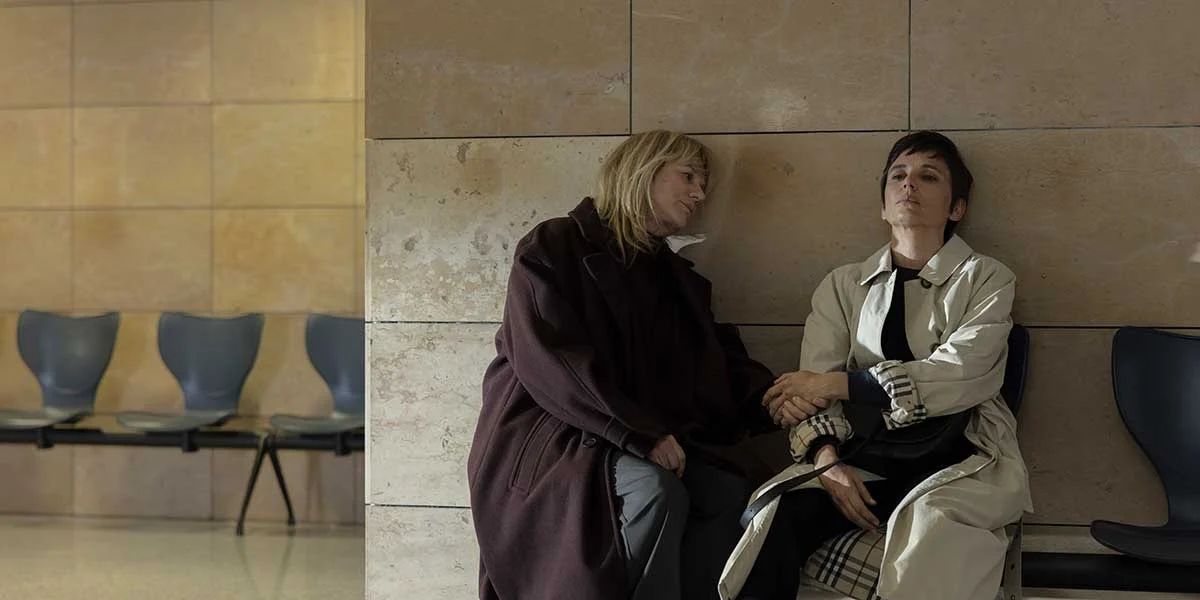
At its core, Sisters examines the immediate psychological and structural aftermath of an alleged crime occurring within a tightly knit domestic circle. Chelo (Emma Suárez) and her sister Marta (Elena Anaya) have brought their respective families together to celebrate milestones and participate in the traditional San Juan Festival. The festivities are abruptly shattered when Chelo’s 13-year-old daughter, Sofia (Carlota Keiko), accuses her 18-year-old cousin, Lucas (León Martinez), of assaulting her overnight.
The accusation instantly cleaves the family in two. Chelo adopts an immediate stance of fierce maternal protection, committing herself to navigating the grueling labyrinth of medical examinations, legal procedures, and psychological aftermath on behalf of her daughter. Conversely, Marta refuses to accept that her son is capable of such an act, generating an impossible ideological and emotional crossroads between the siblings. As Lucas is remanded to jail awaiting trial—maintaining claims of total memory loss—Sofia retreats into a protective shell, declining to speak or engage with therapeutic interventions.
Rather than utilizing graphic or gratuitous visuals for shock value, Hernández deliberately keeps the distressing subject matter at arm’s length. The narrative’s primary engine is the undulating, tense relationship between the two sisters, juxtaposing their fractured perspectives, maternal instincts, and irreconcilable realities.
Chronology and Production Background
The trajectory of Sisters reflects the methodical career progression of its director. Ione Hernández, who holds academic degrees in Journalism and Communications, established her reputation through a series of acclaimed short films that frequently engaged with complex psychological and social issues. Her previous works—including The Palace of the Moon (El palacio de la Luna), Juego, and Aizea: City of the Wind—demonstrated a sustained interest in the burdens of motherhood, the persistent haunting of childhood memories, and speculative narratives.
Transitioning from short-form storytelling to a feature-length production, Hernández spent years developing the screenplay for Sisters to ensure the subject matter was handled with sociological and psychological accuracy. Principal photography took place on location in the community surrounding Madrid, capturing the blinding light and festive atmosphere of the Spanish summer, which serves as a stark visual contrast to the dark, interiorized conflict consuming the family.
Following its post-production phase, the film secured a coveted premiere slot at the 2026 Toronto International Film Festival, positioning it among the most anticipated European festival debuts of the year. The production benefits significantly from the contributions of cinematographer Diego Dussuel, whose minimalist yet evocative framing grounds the film’s claustrophobic atmosphere, and composer Olivier Arson, whose original score provides an immersive, underlying tension.
Character Analysis and Performances
The dramatic weight of Sisters rests almost entirely on the shoulders of its lead actors, Emma Suárez and Elena Anaya. Both veteran performers commit deeply to portraying the agonizing polarization of sibling bonds tested by an unanswerable trauma. Suárez anchors Chelo with a raw, protective urgency, embodying the exhaustion and resolve of a mother fighting on behalf of her child. Anaya mirrors this intensity through Marta, portraying a mother caught in the psychological denial of maternal instinct, desperately seeking to reconcile the son she thought she knew with the severe charges leveled against him.
The younger cast members, Carlota Keiko as Sofia and León Martinez as Lucas, navigate secondary roles constrained by the script’s focus on the adult fallout. Keiko portrays Sofia’s defensive muteness with notable restraint, while Martinez captures the disorientation of an accused teenager awaiting legal reckoning behind bars. A robust supporting cast, featuring Josean Bengoetxea, Nora Otxoteko, and Aritz Kortabarria, fills out the peripheral family members, creating a convincing cacophony of panicked voices, whispered speculations, and defensive postures that characterize a family in freefall.
Despite strong performances, critical reception at the festival noted certain structural vulnerabilities. The film occasionally falters in its pacing, with a runtime of 101 minutes feeling somewhat meandering. Certain editorial choices result in lingering shots and repetitive dialogues that dilute the narrative momentum, occasionally causing the feature to feel stretched beyond its natural thematic bounds.
Broader Impact and Social Implications
Sisters arrives at a time when societal conversations surrounding the credibility of survivors, the mechanisms of institutional and familial justice, and the prevalence of domestic abuse remain devastatingly relevant. By focusing on the micro-level dynamics of a single family unit, Hernández’s debut avoids partisan didacticism, opting instead to dissect how private spaces often function as sites of institutional silence.
The film’s refusal to offer neat resolutions or comfortable moral binaries mirrors the real-world complexities of abuse allegations within close relations. Legal and sociological experts frequently note that cases involving juvenile victims and accused family members present unique challenges for the judicial system, often resulting in prolonged trauma, community fragmentation, and a breakdown of familial support networks long before a case reaches a court of law.
By examining these themes without leaning into exploitative melodrama, Hernández delivers a noble and thought-provoking picture. While Sisters may exhibit the growing pains typical of a filmmaker transitioning to long-form narratives, it succeeds in maintaining an uncomfortable, authentic intimacy. It is a brave and tangible exploration of human frailty, proving that while Ione Hernández is still refining her cinematic rhythm, her voice as a socially conscious storyteller is firmly established on the international stage.