The cinematic landscape of superhero franchises is defined by constant reinvention, shifting studio regimes, and the inevitable discarding of past creative visions. Few filmmakers, however, have experienced this cycle quite as acutely as Zack Snyder. Having spent years guiding the foundational era of the DC Extended Universe (DCEU) with films like Man of Steel and Batman v Superman: Dawn of Justice, Snyder has repeatedly found his iteration of iconic comic book characters dismantled by subsequent studio overhauls. Today, the Warner Bros. cinematic apparatus for DC is overseen by studio co-CEOs James Gunn and Peter Safran, whose mandate centers on building an entirely fresh, interconnected universe. Yet, Snyder remains undeterred by these institutional barriers, continuing to champion a long-held ambition: bringing Frank Miller’s seminal 1986 graphic novel, The Dark Knight Returns, to multiplexes.
The Pitch and the Philosophy of the Comic Book Cycle
In a wide-ranging interview with Variety to promote his forthcoming feature film The Last Photograph, Snyder revived a proposal he has discussed across multiple press tours over the years. The director expressed his desire to adapt Miller’s notoriously grim, dystopian narrative, which follows an ageing Bruce Wayne coming out of retirement to reclaim the mantle of Batman in a decaying Gotham City.
According to Snyder, the appeal of The Dark Knight Returns extends beyond a simple fondness for the source material. Instead, he views it as a bookend to a broader historical movement within the medium of comic book storytelling.
"The reason why it’s The Dark Knight Returns, if anyone would ever let me do it outside of the DC Universe since it’s a novel that just happens to have superheroes in it, is if I could do Watchmen and The Dark Knight Returns, those two books next to each other, to me, represent the complete cycle of the superhero comic book medium," Snyder stated during the interview.
Snyder contextualized his proposal within the timeline of cinematic superhero history, drawing a parallel to his 2009 adaptation of Alan Moore’s Watchmen. "You can do no more than those two books," he argued. "Watchmen came at the beginning of the superhero movie phase, so it would be super fitting to have The Dark Knight Returns come now, at what I would say is possibly—I don’t want to call it the twilight, but—we’re down the road of the superhero movie genre, and I think audiences would understand the why of it."
Chronology of the Snyderverse and Franchise Shifts
To understand the improbability of Snyder’s current pitch, it is necessary to examine the timeline of his involvement with Warner Bros. and DC. Snyder launched the modern era of DC theatrical films in 2013 with Man of Steel, starring Henry Cavill as Superman. The film grossed over $668 million worldwide, establishing a gritty, visually stylized tone that contrasted sharply with contemporary Marvel Cinematic Universe releases.
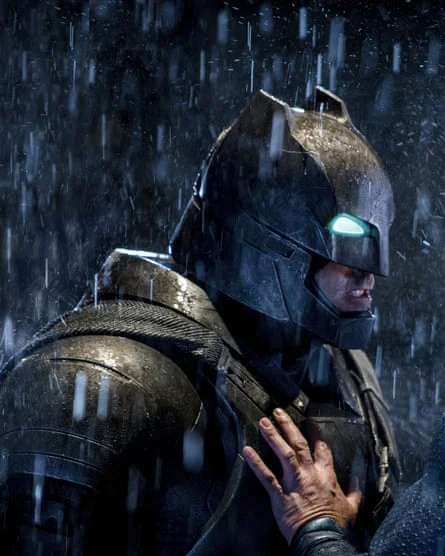
This momentum led to 2016’s Batman v Superman: Dawn of Justice, which introduced Ben Affleck as an older, battle-weary Bruce Wayne. The film drew heavily upon visual and thematic motifs from Frank Miller’s The Dark Knight Returns, featuring armor-clad brawls and a cynical perspective on vigilante justice, though it was framed within an original narrative combining elements of The Death of Superman. While the film grossed $873 million globally, it divided critics and audiences, prompting Warner Bros. to heavily intervene in Snyder’s subsequent project, Justice Lineup (2017).
Personal tragedy forced Snyder to step away from Justice League during post-production, leaving Joss Whedon to oversee extensive reshoots. The resulting theatrical cut underperformed critically and commercially. Following years of intense, unprecedented fan lobbying under the banner #ReleaseTheSnyderCut, Warner Bros. took the extraordinary step of greenlighting Snyder’s four-hour director’s cut. Released on HBO Max in March 2021 as Zack Snyder’s Justice League, the project served as a definitive closing chapter for the filmmaker’s tenure at the studio.

Obstacles Facing a Potential Adaptation
Snyder’s proposal to helm The Dark Knight Returns faces formidable practical and strategic hurdles within the current entertainment industry.
First, live-action feature film adaptations of standalone, finite graphic novels are historically rare, particularly outside of studio-controlled shared cinematic universes. Major studios generally prioritize franchise-building properties that can support sequels, spin-offs, and merchandising ecosystems over self-contained, mature narratives.
Second, DC Studios is currently in the middle of executing a comprehensive theatrical roadmap mapped out by Gunn and Safran. The studio’s newly minted DC Universe (DCU) officially begins with Superman (directed by Gunn), shifting away entirely from the continuity established by Snyder. Furthermore, Warner Bros. maintains multiple concurrent cinematic iterations of key properties through its "Elseworlds" banner. Matt Reeves is actively developing The Batman Part II, featuring Robert Pattinson as a younger, grounded Dark Knight within an independent continuity. Concurrently, director Andy Muschietti is attached to helm The Brave and the Bold, a forthcoming film that will introduce yet another live-action Batman to audiences as part of the primary DCU.
Introducing a third concurrent live-action cinematic version of Batman would present significant brand fragmentation challenges for Warner Bros. Discovery, even in an era where multiversal storytelling and alternate iterations have become commonplace in mainstream cinema.
Industry Speculation and Corporate Realities
Despite these structural roadblocks, speculation regarding potential corporate shifts has occasionally fueled speculation among online fan communities. Recent industry reports concerning potential corporate restructuring, including discussions surrounding Paramount Skydance’s interest in assets tied to Warner Bros. Discovery, have led commentators in niche corners of the blogosphere to theorize about future leadership changes at DC Studios. Some internet speculation has suggested that incoming corporate leadership could theoretically alter the studio’s long-term creative trajectory once existing executive contracts expire.
However, industry analysts emphasize that such corporate maneuvering rarely results in the retroactive restoration of defunct cinematic universes. Studio leadership under Gunn and Safran remains deeply committed to establishing a cohesive, internally consistent narrative universe designed to compete directly with rival comic book adaptations over the next decade.
Implications and the Power of Fan Culture
Snyder’s persistent advocacy for The Dark Knight Returns underscores the unique relationship between modern filmmakers, intellectual property rights, and vocal digital fanbases. The phenomenon of the #ReleaseTheSnyderCut campaign proved that organized, highly dedicated digital communities can influence corporate decision-making under exceptional circumstances, resulting in an unprecedented $70 million reinvestment into an alternate cut of a previously released blockbuster.
Whether Snyder’s backdoor campaign for Frank Miller’s masterpiece will generate enough momentum to catch the attention of studio executives remains uncertain. While an official greenlight for a Snyder-directed adaptation of The Dark Knight Returns appears mathematically and strategically unlikely under the current regime at DC Studios, the filmmaker’s unwavering commitment ensures that the debate over how iconic comic book properties are translated to the screen will continue to resonate across the entertainment industry. For now, Snyder’s pitch serves as both a reflection of his distinct directorial ambitions and a reminder of the enduring volatility of Hollywood franchise management.