The Genesis of a Paranormal Icon
The narrative of What Happened to Doris centers on the life of Doris Bither, a single mother residing in Culver City, California, during the mid-1970s. In 1974, Bither reached out to a team of researchers from the University of California, Los Angeles (UCLA), specifically seeking help for what she described as a series of increasingly violent, invisible, and sexually predatory entities that haunted her home.
At the time, the investigation was led by Barry Taff, a parapsychologist, and Kerry Gaynor. The case became a sensation within the scientific community and the media, as the team alleged they witnessed physical manifestations of light, materialized objects, and, most disturbingly, the physical abuse of Bither by an unseen force. These events were meticulously documented in case files, which eventually caught the attention of author Frank De Felitta. De Felitta’s subsequent 1978 novel, The Entity, brought the story into the mainstream, followed by the 1982 film adaptation starring Barbara Hershey.
The new production from Nick Simon aims to pivot away from the sensationalized tropes of the original 1980s adaptation, opting instead for a more grounded, character-driven exploration of the trauma and social isolation faced by a woman struggling to protect her children while dealing with forces that conventional science struggled to explain.
Cast, Crew, and Production Insights
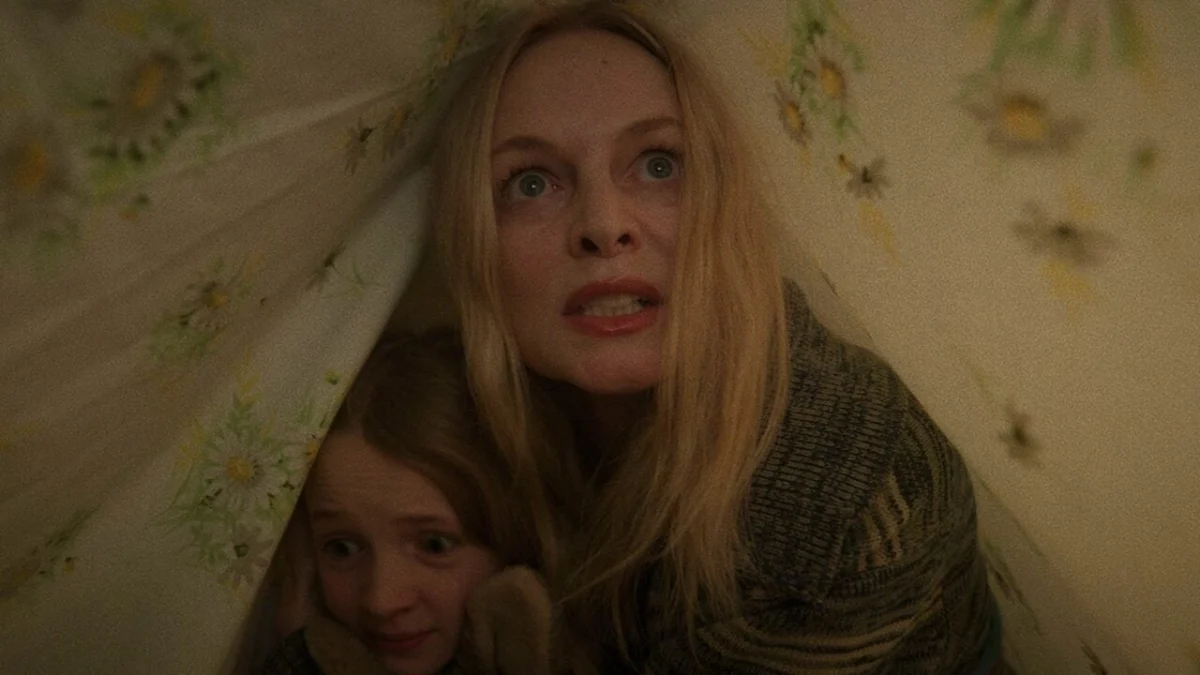
The production of What Happened to Doris represents a significant collaboration between genre-savvy filmmakers and established acting talent. Director Nick Simon, known for his work on The Girl in the Photographs, has assembled a cast that balances seasoned veterans with rising stars. Heather Graham, whose recent performance in the Lovecraftian horror film Suitable Flesh drew widespread critical acclaim for its intensity and nuance, anchors the film as the protagonist. Her involvement has generated considerable buzz, as her ability to portray vulnerability alongside steel-willed determination is expected to bring a new level of gravity to the role.
Joining Graham are industry stalwarts including Mimi Rogers, known for her versatile work in both television and film, and Marcus Coloma. The cast is rounded out by Kevin Keppy, Daniel Reed Ferrell, and Margo Parker. The screenplay was penned by Thomas Fenton, who was tasked with distilling the dense, often conflicting accounts of the Bither case into a cohesive, atmospheric narrative that respects the source material while modernizing the storytelling approach.
Chronology of the Case: From Culver City to the Screen
To understand the significance of this film, one must look at the timeline of the actual events that transpired in California nearly fifty years ago:
- August 1974: Doris Bither approaches the UCLA Parapsychology Department regarding a series of disturbing phenomena in her home.
- Late 1974 – 1975: A team of investigators, including Dr. Barry Taff, begins monitoring the Bither residence. They report capturing photographs of unexplained light phenomena and documenting physical bruising on Bither.
- 1978: Frank De Felitta publishes The Entity, a fictionalized account based on the Bither case, which becomes a bestseller.
- 1982: The Entity, a major motion picture, is released, cementing the "Doris Bither case" as a staple of American paranormal folklore.
- 2024–2026: Pre-production and filming for What Happened to Doris commence, marking a return to the original source material for a new generation.
- September 2026: The film is scheduled for its World Premiere at Fantastic Fest.
Fact-Based Analysis of the Phenomenon
The "Entity" case remains one of the most debated subjects in the history of paranormal research. From a clinical perspective, critics have long argued that the events could be explained by severe psychological distress, the influence of substance abuse, or the manifestation of repressed trauma. However, for those involved in the original 1970s investigation, the evidence—including purported photographic plates and eyewitness testimonies from multiple researchers—remains a point of contention that defies simple explanation.

What Happened to Doris appears to be positioning itself as a "prestige horror" entry. By focusing on the domestic environment and the psychological toll on the mother and her children, the film taps into the "haunted household" subgenre while grounding it in the specific, documented history of the Bither investigation. This dual approach allows the film to appeal to fans of the original case while providing a compelling human drama that stands on its own.
The Role of Parapsychology in Modern Cinema
The resurgence of interest in 1970s paranormal cases reflects a broader trend in the horror industry toward "based on true events" storytelling. Audiences have demonstrated a continued appetite for narratives that blend historical inquiry with supernatural elements. Unlike the 1982 version of The Entity, which leaned heavily into the visceral, high-octane horror aesthetics of the early 80s, the current production is expected to emphasize the procedural aspects of the investigation.
The inclusion of the UCLA research team as characters in the film serves to bridge the gap between the victim’s subjective experience and the external, analytical gaze of the investigators. This structural choice provides a necessary layer of objectivity, allowing the audience to witness the events through multiple lenses: the terror of the victim and the skepticism of the academic.
Implications for Future Adaptations
The success of What Happened to Doris at Fantastic Fest will likely set the tone for how "true crime" paranormal stories are handled in the future. As technology allows for more sophisticated visual effects, the challenge for filmmakers is to balance the spectacular nature of paranormal claims with the need for psychological depth. By selecting a lead of Heather Graham’s caliber, the production signals that it values performance and character development as much as the scares themselves.
Furthermore, the film’s release offers a chance to re-evaluate the original 1974 case files in a modern context. As archival research into 20th-century paranormal investigations continues to grow, films like this serve as gateways for audiences to explore the history of organizations like the UCLA Parapsychology Department and the societal attitudes toward mental health and the occult during the 1970s.
Conclusion and Anticipation
As the World Premiere at Fantastic Fest approaches, the excitement surrounding What Happened to Doris is palpable. By revisiting a story that has haunted the public imagination for decades, Nick Simon and his team are undertaking a significant creative challenge. Whether the film ultimately serves as a faithful historical reconstruction or a reimagining of the horror, it is poised to be one of the most significant genre releases of the year.
For horror enthusiasts and historians of the paranormal alike, the film represents an intersection of cinema and memory. It asks the audience not only to fear the unseen but to consider the context of the woman at the center of the storm—a woman whose life became a footnote in the history of the unexplained. With its blend of high-profile talent, a compelling source story, and a focus on the human element, What Happened to Doris is set to leave a lasting impression on the landscape of contemporary horror.