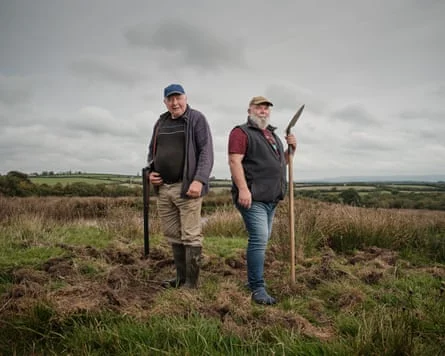
The British countryside has long been framed as a battleground of opposing ideologies: the urgent, unyielding crusade of rewilders striving to arrest the precipitous decline of native biodiversity, and the stubborn, deeply entrenched resolve of traditional agriculturalists whose livelihoods depend on intensive food production. Nowhere is this modern dichotomy more vividly personified than in the rolling, rural landscape of north-west Devon, where two neighbours—both named Derek—have spent the past three years chronicling their ideological standoff in an unexpected, critically acclaimed new documentary film titled Derek vs Derek.
The Protagonists and the Genesis of Conflict
On one side of the hedgerow is Derek Gow, an outspoken, fast-talking Scottish conservationist widely credited with spearheading the return of the Eurasian beaver to England. Gow’s farm has undergone a radical transformation; once a standard livestock holding, it has been systematically stripped of its agricultural utility to make way for nature. Gow is actively breeding and reintroducing a range of extirpated species into the British countryside, including wildcats, white storks, red-backed shrikes, glowworms, and adders. To Gow, conventional farming is an ecologically disastrous enterprise that squanders public subsidies on overgrazed pastures, chemical inputs, and imported animal feed.
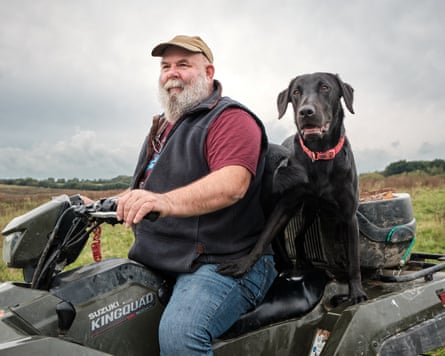
Directly across the boundary line sits his neighbour, Derek Banbury, a proud, unrepentant intensive farmer of 50 years. Operating behind tightly clipped hedgerows, Banbury manages a sprawling dairy and beef enterprise housing up to 600 cattle. For Banbury, the fundamental mandate of agriculture is clear: feeding a growing global population with affordable, abundant food.

The uneasy proximity of these two contrasting philosophies initially manifested as a portrait of neighbours at war. The friction escalated into tangible conflict when Gow’s reintroduced wild boar escaped their enclosures and rooted up Banbury’s manicured pastures—prompting Banbury to have the animals shot. Further tensions flared over the introduction of beavers, the presence of storks, and Gow’s public advocacy for the historical reintroduction of wolves to Britain. Banbury and local farming syndicates viewed these initiatives with deep suspicion, even outright hostility.
A Cinematic Pivot: From Feud to Understanding
The trajectory of their relationship shifted entirely when documentary-maker James Dawson arrived in Devon. Initially setting out to record Gow’s dramatic transition from sheep farming to ecological restoration, Dawson was hosted by the Banbury family, whose wife, Linda, had converted former pigsties and agricultural sheds into holiday cottages. Sharing breakfast in the farmhouse kitchen exposed Dawson to the charisma, sharp wit, and unexpected commonalities shared by both men.
Realising the narrative potential of their juxtaposition, Dawson expanded the project to follow the two Dereks over a three-year period. The resulting documentary, Derek vs Derek, captures not only the physical transformation of Gow’s land from a degraded mudbath into a thriving wildlife sanctuary, but also the psychological evolution of Banbury. While Banbury remains steadfast in his commitment to food production, his exposure to Gow’s rewilding efforts has fostered a nuanced acknowledgement of the ecological degradation associated with decades of intensive farming.
Chronology of the Project and Public Reception
The production timeline of Derek vs Derek spanned three intensive years of filming, capturing moments of friction, local community reactions, and moments of shared vulnerability.
- Phase One (Years 1–2): Initial filming captured the stark ideological divide. Incidents such as escaped wild boar, local auctioneer banter targeting Banbury, and disagreements over land management highlighted the cultural chasm between the two neighbours.
- Phase Two (Year 3): As filming progressed, both men were compelled to step outside their comfort zones. Banbury was taken to tour Gow’s burgeoning wildflower meadows, where rare birds and butterflies have flourished. Concurrently, Gow gained a deeper appreciation for the economic pressures and generational knowledge possessed by older agriculturalists.
- Phase Three (Premiere & Festivals): The documentary debuted to standing ovations at international film festivals in Thessaloniki, Greece, and Sheffield, UK. Ahead of its wider theatrical release scheduled for October 2, the filmmakers organized local agricultural previews, including a special screening hosted in the Banburys’ newly erected farm barn for over 300 local farmers and neighbours.
Broader Impact and Implications for British Agriculture
The release of Derek vs Derek arrives at a critical juncture for British environmental policy. As the UK transitions away from the European Union’s Common Agricultural Policy towards Environmental Land Management (ELM) schemes—which reward farmers for public goods such as clean water, carbon sequestration, and biodiversity enhancement—the agricultural sector faces profound structural change.
Gow’s pragmatic proposals offer a potential blueprint for bridging the gap between conservationists and producers. Rather than demanding the total cessation of farming, Gow suggests a compromise: if every agriculturalist sets aside just 10% of their least productive land for nature recovery, it could reverse the national extinction crisis. Furthermore, Gow advocates for a model wherein farmers are financially supported to breed rare wild animals in captivity and release them locally, giving rural communities a direct stake in managing and protecting local wildlife populations.
This pragmatic approach resonates with the realities acknowledged by Banbury and his peers. While intensive farmers continue to grapple with volatile milk prices, rising operational costs, and strict market demands, the recognition of localized nature loss is becoming harder to ignore. Linda Banbury, who emerges alongside her husband as a breakout presence in the film, emphasizes the necessity of empathy and dialogue across ideological divides.
Ultimately, Derek vs Derek transcends its local Devon setting to offer a hopeful parable for modern environmentalism. By demonstrating that hardened ideological opponents can share a breakfast table, borrow equipment, and arrive at a mutual respect without entirely abandoning their core principles, the film suggests that the path to ecological restoration in Britain does not require the eradication of farming—but rather a collaborative renegotiation of the space shared between humanity and the natural world.