
The stifling heatwaves gripping the United Kingdom have transformed daily existence into an immediate environmental barometer, according to acclaimed actor Benedict Cumberbatch. Speaking from an air-conditioned hotel room in London’s Soho during the height of the summer season, the Oscar-nominated actor noted that the relentless temperatures are no longer abstract meteorological anomalies. Government and scientific data underscore the severity of these conditions; a report co-authored by the Met Office estimated that over 2,700 excess deaths occurred across England and Wales during the May and June heatwaves alone. These extreme weather events have placed unprecedented strain on natural ecosystems, agricultural output, and municipal water supplies.
For Cumberbatch, the alignment between record-breaking temperatures and his promotional tour for the new documentary How to Live on Earth carries a profound sense of irony. The film launches globally on YouTube, serving as a visual and philosophical blueprint for humanity’s future interactions with a stressed and depleted biosphere. Blending cinematic monologues delivered within the cavernous exhibition halls of London’s Natural History Museum with on-the-ground reportage, the documentary highlights activists, scientists, and culinary innovators who are pioneering sustainable methodologies to halt anthropogenic environmental degradation.
A Two-Decade Environmental Journey and Professional Compromises
Cumberbatch’s off-screen commitment to environmentalism spans two decades, marked by personal lifestyle modifications such as adopting a plant-based diet and striving to minimize his carbon footprint. However, the realities of the film industry have occasionally tested his convictions. While preparing for his role as captive British spy Greville Wynne in the historical feature The Courier, Cumberbatch faced a rigorous physical transformation that conflicted with his ethical choices.

To accurately portray Wynne’s emaciated state during imprisonment in a Soviet jail, medical advisors instructed the actor to eliminate dietary fiber entirely and consume lean animal protein. Recalling the physical toll, Cumberbatch noted that his blood sugar plummeted, leading to significant weight loss and severe fatigue. Colleagues and health supervisors advised him to reintroduce meat to sustain basic physiological functions under grueling production conditions.
Today, Cumberbatch has largely returned to his plant-based lifestyle, though any consumption of animal products is strictly sourced through ethical means, such as wild venison. In the United Kingdom, regulated deer culling is necessary due to an overpopulation of the species that threatens local woodland regeneration.
The Green Rider Movement and Industry-Wide Accountability
The challenges encountered during the production of The Courier reflect broader systemic issues within the entertainment industry, which historically generates significant carbon emissions through travel, equipment logistics, and waste. To combat this, Cumberbatch collaborates with the Green Rider movement, an advocacy group urging performers to integrate strict pollution-reduction clauses into their standard working contracts.
These contractual stipulations mandate that production companies measure and actively reduce carbon outputs throughout filming. The initiative has begun to gain traction among major studios, with Cumberbatch confirming active negotiations and implementations on high-profile projects, including Marvel’s Avengers franchise productions in the United Kingdom. Industry stakeholders have increasingly recognized that systemic sustainability requires top-down contractual obligations rather than voluntary individual efforts.

Addressing the broader discourse on celebrity carbon footprints, Cumberbatch cautions against counterproductive polarization and accusations of hypocrisy. While he firmly rules out the use of private aviation, he emphasizes that targeted criticism of high-profile individuals often distracts from larger systemic polluters, such as the global fashion and industrial food supply chains, which exert a far greater cumulative impact on global emissions.
Direct Action, Civil Liberties, and the Shifting Political Landscape
Cumberbatch’s environmental advocacy extends beyond lifestyle choices and cinematic projects into the realm of public activism. In 2019, he participated in Extinction Rebellion demonstrations in central London to draw attention to government inaction regarding global heating. In the years since, he has expressed deep concern over legislative crackdowns on peaceful protest, particularly the imposition of extended custodial sentences for activists who engage in direct action by blocking roadways or targeting commercial property. Within a democratic framework, Cumberbatch argues, citizens must retain the fundamental right to peaceful assembly and direct expression, even when those methods cause public disruption.
Cinematic Structure and the Search for Alternative Solutions
Unlike many contemporary environmental documentaries that rely heavily on fatalism and ecological despair, How to Live on Earth consciously pursues a constructive narrative trajectory. Directed and produced in collaboration with industry peers, the film showcases proactive responses to ecological crises. Notable segments include coverage of Indigenous communities fighting to protect salmon populations from destructive dam infrastructure, as well as experiments with alternative protein production led by former White House culinary professionals.
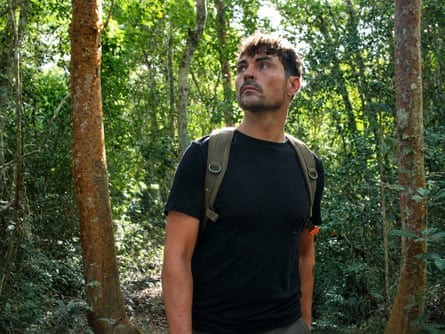
The documentary features prominent fieldwork experts, including big-cat biologist Dan O’Neill, who spends months conducting research in remote rainforest environments. O’Neill’s work explores the fragile equilibrium of biodiversity and highlights the psychological dissonance of modern connectivity. In one scene captured for the film, O’Neill transitions immediately from weeks of complete isolation in the jungle to an overwhelming barrage of digital notifications upon turning on his mobile phone in a transit vehicle. This juxtaposition underscores a widespread societal tension surrounding technological saturation, a sentiment echoed by Cumberbatch, who admits to avoiding thousands of unanswered digital communications for months at a time to mitigate information fatigue.
Economic Restructuring and Valuation of Natural Capital
A central thesis of How to Live on Earth involves reimagining global economic systems to reflect the true value of living ecosystems. The documentary challenges viewers to rethink the financial hierarchies of resource extraction, arguing that intact ecosystems—such as living rainforests or surviving savannah wildlife populations—possess infinitely greater intrinsic and economic value than the commodities derived from their destruction, such as timber or ivory.
Cumberbatch advocates for the creation of innovative financial frameworks that allow investors to act as shareholders in nature. By establishing economic models where natural carbon sequestration, watershed protection, and biodiversity preservation are directly monetized, governments and corporations can incentivize the safeguarding of vital biomes rather than their exploitation. He remains cautiously optimistic that public fatigue with extractive industries, combined with a rejection of regressive populist and nationalist politics, will foster a cultural pivot toward ecological stewardship.
Urban Integration and Daily Practice
While the documentary transports audiences to remote global locations, its concluding message emphasizes local engagement. Both Cumberbatch and O’Neill actively incorporate environmental mindfulness into their urban routines in London. Cumberbatch frequently utilizes public transport, cycles, walks his dog, and practices wild-water swimming in the ponds of Hampstead Heath. Similarly, O’Neill utilizes the Walthamstow Wetlands to maintain a daily connection with local urban biodiversity.
Cumberbatch concludes that maintaining an intrinsic sense of wonder—an innate capacity often diminished by the pressures of modern human development—is essential for fostering long-term environmental protection. How to Live on Earth releases globally on YouTube on September 20, offering audiences a resource for reflection, policy discussion, and actionable ecological preservation.