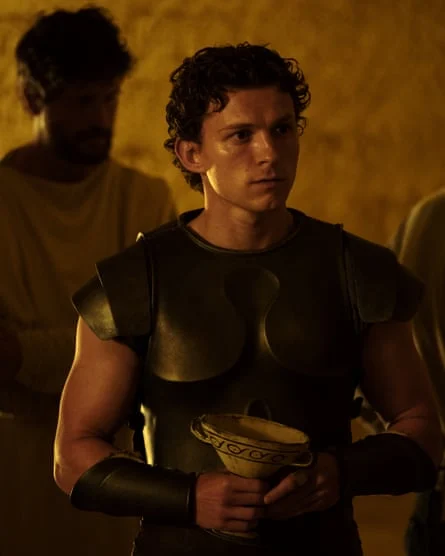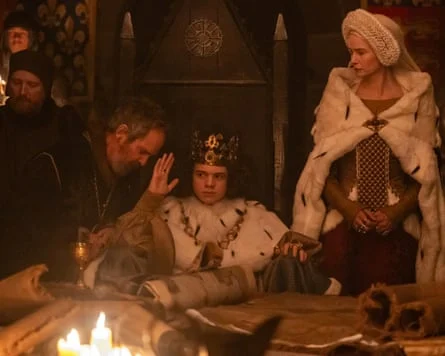
The cinematic landscape has long maintained an ambivalent relationship with the historical epic. While major studios repeatedly invest massive capital into young leading men carrying medieval narratives, contemporary audiences have demonstrated a distinct reluctance to embrace them at the box office. Recent cinematic history is littered with underperforming period pieces. Timothée Chalamet and Chris Pine featured in the medieval-set features The King and Outlaw King respectively, both of which struggled to capture broad cultural engagement. Ridley Scott’s ambitious 2021 feature The Last Duel managed to recoup only a fraction of its reported $100 million production budget. Earlier in the year, the Saudi-backed seventh-century drama Desert Warrior, starring Anthony Mackie and Ben Kingsley, quietly materialized as one of the most significant commercial disappointments in recent memory. Furthermore, discourse surrounding the genre intensified following reports that Ridley Scott attributed the box-office shortcomings of Gladiator II to star Paul Mescal allegedly lacking sufficient traditional masculinity—a diagnostic framework that drew widespread scrutiny from industry analysts.
It is within this fraught commercial climate that director Paul Greengrass presents his latest feature, The Uprising. On paper, the production possessed all the necessary components of prestige cinema. It paired a celebrated blue-chip director, known for helming the critically acclaimed Bourne trilogy, with Andrew Garfield, a nuanced and introspective leading man. Moreover, the narrative centers on the Peasants’ Revolt of 1381, a historical milestone that mirrors contemporary socio-economic anxieties, including the Western world’s documented regression toward repressive authoritarianism and widening wealth disparities. However, the resulting cinematic product is a disjointed and heavy-handed endeavor that struggles to balance its thematic ambitions with coherent narrative execution.
Historical Context and Narrative Foundation
Set against the grim backdrop of late 14th-century England, The Uprising portrays a society crippled by systemic oppression, economic devastation, and the lingering trauma of the Black Death. Greengrass visualizes the era through a palette of muted, sludge-grey tones, populated by commoners clad in scratchy brown garments, effectively communicating an atmosphere of pervasive misery. The primary catalyst for the unfolding conflict is the imposition of exorbitant, regressive poll taxes levied by a despotic royal administration to finance foreign military campaigns and royal extravagance.
Andrew Garfield anchors the narrative as an anonymous figure known simply as the Ploughman, a grieving widower who has lost his wife and children to the pandemic. Rather than engaging with complex political philosophy, the Ploughman’s radicalization stems from personal exhaustion. When confronted by a royal tax collector demanding verification of his family’s deaths, he violently clears the administrative table, declaring that the populace has surrendered enough of its livelihood. This act of localized defiance serves as the spark for a broader communal uprising.
Despite Garfield’s committed performance, the character suffers from a lack of distinct narrative definition. Conceived as an archetypal everyman intended to unify the oppressed populace of England, the Ploughman frequently reads as generic rather than grounding. The character eventually intersects with historical figures of the 1381 rebellion, notably the radical priest John Ball, portrayed by Jamie Bell, and the charismatic rebel leader Wat Tyler, played by Cosmo Jarvis. Both supporting actors deliver grounded, period-appropriate performances that successfully evoke the texture of late medieval society. Joined by a rebellious young woman named Alyce, played by Thomasin McKenzie, the faction embarks on a turbulent march toward London with the stated objective of confronting the monarch and restoring the egalitarian principles allegedly outlined in the Domesday Book.
Cinematic Execution and Stylistic Choices

The geographical progression of the rebellion tracks closely with historical accounts of the 1381 revolt, moving rapidly through modern-day Kent. The insurgents assemble in Maidstone, execute a raid on Canterbury Cathedral, and subsequently converge upon Blackheath to negotiate with the Crown. Visually, the film oscillates between striking aesthetic compositions and exhausting stylistic habits. Greengrass employs occasional sweeping aerial photography, capturing evocative visuals such as a flotilla navigating the River Thames. However, his trademark handheld camera technique—instrumental in his contemporary thrillers—feels increasingly fatigued within a historical framework. The kinetic, shaky-cam approach applied to medieval combat sequences results in a disorienting viewing experience that often obscures choreography rather than heightening tension.
Amidst the stylistic turbulence, several performances provide critical narrative anchor points. Katherine Waterston delivers a commanding, icy portrayal of the king’s mother, while Tom Hollander and Stephen Dillane inject much-needed political cunning into their respective turns as members of the royal council. Furthermore, the film features a singular, visceral sequence in the third act that successfully tests the boundaries of PG-13 historical violence. Unfortunately, these highlights are frequently undermined by protracted scenes involving the Ploughman rhythmically polishing his agricultural implements or prolonged, static debates within the sterile halls of Windsor Castle.
Marketing Controversies and Industry Implications
The commercial rollout of The Uprising was further complicated by last-minute promotional maneuvers that drew skepticism from film critics and industry observers alike. Weeks prior to its scheduled theatrical release, domestic distributor Focus Features briefly adjusted the film’s official title to The Uprising: The Rise of Robin Hood. Promotional materials began asserting that the narrative depicted actual historical events that subsequently inspired the folklore surrounding Robin Hood and his band of outlaws.
This marketing strategy presented a glaring chronological contradiction. The Peasants’ Revolt of 1381 occurred nearly two centuries after the traditional timeline associated with the folkloric Robin Hood legends, which are typically set during the reigns of King Richard I and King John in the late 12th century. Furthermore, the final cut of the film contains zero references to the legendary archer, exposing the title adjustment as an eleventh-hour promotional desperate attempt to manufacture commercial appeal for a feature that ultimately struggled to resonate with critics or mainstream ticket buyers.
Broader Societal Implications
The ultimate failure of The Uprising to successfully merge historical drama with contemporary political commentary highlights a recurring pitfall in modern prestige filmmaking. While the parallels between 14th-century economic disenfranchisement and modern systemic inequality are pronounced, Greengrass largely eschews narrative subtlety. Rather than allowing the audience to synthesize these thematic connections organically, the production accelerates through plot points at a relentless pace, denying viewers the necessary breathing room for emotional or intellectual engagement.
Ultimately, The Uprising underscores the ongoing commercial and creative difficulties facing the historical epic genre. As studios continue to search for formulas that can successfully translate complex historical events into profitable cinematic ventures, productions like Greengrass’s latest effort demonstrate that star power and topical relevance alone are insufficient substitutes for rigorous narrative structure, historical fidelity, and disciplined editorial execution.