The trajectory of Jesse Eisenberg’s filmography offers a fascinating case study in the evolution of a distinct cinematic persona. Emerging in the early 2000s within the independent film circuit, Eisenberg quickly became synonymous with a specific brand of hyper-articulate, nervous, and self-aware intellectualism. Over more than two decades, however, he has consistently subverted these expectations, transitioning from teenage coming-of-age comedies to dark auteur-driven satires, blockbuster antagonists, and critically acclaimed directorial endeavors. Analyzing his body of work reveals not merely a portfolio of varied roles, but a continuous interrogation of modern masculinity, social alienation, and ambition.
Early Breakthroughs and the Codification of the Onscreen Nerd

Eisenberg’s introduction to feature films began in earnest at the turn of the millennium. In 2002, he made his feature debut in Roger Dodger, directed by Dylan Kidd. Portraying Nick, a high school student grappling with inexperience and anxiety who seeks counsel from his womanizing uncle (played by Campbell Scott), Eisenberg established the baseline of his early career. This performance captured a delicate intersection of innocence and premature self-awareness that would define independent cinema’s portrayal of adolescent male angst during the era.
This thematic exploration continued in Noah Baumbach’s 2005 black-comedy-drama The Squid and the Whale. Loosely based on the filmmaker’s own upbringing, the film cast Eisenberg as 16-year-old Walt, a precocious and insufferable youth who internalizes the intellectual pomposity of his failing novelist father, played by Jeff Daniels. In a marked departure from the sympathetic underdogs of his debut, Eisenberg imbued Walt with high-handed arrogance and emotional fragility, presenting an unvarnished critique of intellectual pretension.
The mid-to-late 2000s cemented his status as a staple of indie-adjacent coming-of-age narratives. In Greg Mottola’s Adventureland (2009), set in 1987, Eisenberg played James Brennan, a recent college graduate forced to take a mundane summer job at a local amusement park to fund his graduate studies. The film highlighted the existential dread of early adulthood, pairing Eisenberg with Kristen Stewart to explore the acute social pain of romantic longing and professional limbo. Released the same year, Ruben Fleischer’s Zombieland offered a commercially lucrative spin on similar personality traits. As Columbus, a cautious survivor navigating a post-apocalyptic, zombie-infested United States alongside Woody Harrelson and Emma Stone, Eisenberg utilized his signature neurotic timing to weaponize vulnerability into survival strategy.

Subversion, Psychological Thrillers, and Auteur Collaborations
As his career progressed into the 2010s, Eisenberg actively sought out projects that challenged the audience’s perception of his established typecasting. In Richard Ayoade’s 2013 psychological thriller The Double, an adaptation of Fyodor Dostoevsky’s novella, Eisenberg tackled the notoriously difficult double-role format. Playing both the self-effacing, invisible office worker Simon and his charismatic, predatory doppelgänger James, he delivered a masterclass in duality, illustrating the psychological torment of inadequacy in a dystopian corporate bureaucracy.
His collaboration with legendary filmmaker Woody Allen in 2016’s Café Society further complicated his cinematic image. Set in the 1930s Hollywood and New York scenes, Eisenberg played Bobby Dorfman, a young man who transitions from a gauche, romantic assistant to a worldly, white-tuxedoed nightclub manager. While channeling Allen’s vocal cadence and rhythmic anxieties, the role allowed Eisenberg to chart a genuine passage of time, aging the character from wide-eyed innocence to world-weary heartbreak.

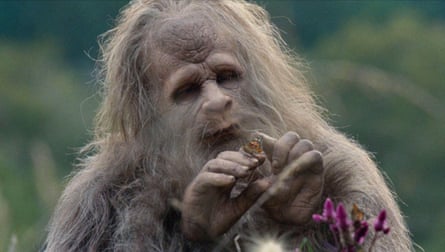
Eisenberg’s willingness to subvert audience expectations reached new heights in Riley Stearns’s dark satire The Art of Self-Defense (2019). Playing Casey, a timid office worker who turns to a hyper-masculine karate dojo for protection after being assaulted, Eisenberg examined the dangerous pipeline from victimhood to toxic aggression. The film effectively inverted the expected narrative arc of his typical characters, transforming nervous shyness into chilling, systemic violence. More recently, his physical and comedic limits were tested in the Zellner brothers’ Sasquatch Sunset (2024). Under heavy prosthetic makeup and a full hairy suit, Eisenberg played a nonverbal Sasquatch navigating the wilderness, delivering a completely internalized, cult-status performance devoid of traditional dialogue.
The Definitive Masterpiece: The Social Network
No discussion of Eisenberg’s career is complete without addressing his transformative portrayal of Mark Zuckerberg in David Fincher’s 2010 biographical drama The Social Network, written by Aaron Sorkin. The film, which chronicles the founding of Facebook at Harvard University and the subsequent legal battles, provided Eisenberg with the ultimate vehicle for his intellectual persona.
Working with Sorkin’s rapid-fire, rat-a-tat dialogue, Eisenberg abandoned any attempt to make his character conventionally endearing. Instead, he presented Zuckerberg as a driven, obsessive, and fiercely entitled visionary whose social rejection fuels an unrelenting desire for dominance. The performance redefined his career, earning him an Academy Award nomination for Best Actor and proving that his trademark nervous cadence could be weaponized into a symbol of cold, calculating technological disruption. The cultural impact of the portrayal was so profound that it permanently shaped public perception of the real-life tech billionaire, while opening doors to high-profile commercial roles, including Lex Luthor in Zack Snyder’s DC cinematic universe and J. Daniel Atlas in the Now You See Me franchise.
Directorial Evolution and Recent Works
In recent years, Eisenberg has expanded his artistic footprint into filmmaking and screenwriting, culminating in his directorial masterpiece, A Real Pain (2024). Set in Poland and deeply personal to Eisenberg—who acquired Polish citizenship prior to its release—the film follows two mismatched cousins, David (played by Eisenberg) and Benji (played by Kieran Culkin), on a heritage tour honoring their late Holocaust-survivor grandmother.

Ceding the more flamboyant, anarchic moments to Culkin’s free-spirited Benji, Eisenberg anchors the film with a restrained, uptight, and deeply analytical supporting performance as David. The dynamic between the two actors showcases Eisenberg’s maturation as a cinematic storyteller, balancing historical trauma, family dysfunction, and contemporary anxiety with a nuanced touch. Industry analysts have noted that the film marks a significant maturation in Eisenberg’s career trajectory, signaling his successful transition from generational indie icon to a mature, respected auteur capable of balancing emotional gravity with subtle wit.