
As the autumn season reaches its midpoint, streaming platforms traditionally pivot entirely toward autumnal and Halloween-themed programming, flooding libraries with slashers, supernatural thrillers, and horror anthologies. However, Netflix has structured its October 2026 catalog to balance its seasonal horror slate with a robust, diverse collection of non-scary cinematic offerings. While dedicated horror features continue to dominate specialized genre tracking, the platform has simultaneously rolled out high-profile Netflix Originals, acclaimed international festival acquisitions, and major studio-licensed titles catering to subscribers seeking drama, high-stakes political thrillers, animation, and historical epics.
The strategy reflects an ongoing shift in subscription video-on-demand curation: satisfying seasonal expectations while retaining broad-market appeal through prestige filmmaking, family entertainment, and critically acclaimed library additions. This month’s non-horror lineup spans star-studded political dramas, satirical eco-thrillers, boundary-pushing music documentaries, and enduring cinematic classics from legendary directors including Michael Mann, Ridley Scott, and Christopher Nolan.
Premium Netflix Originals and High-Profile Acquisitions
The cornerstone of the platform’s October 2026 non-horror strategy rests on star-studded Original films and major festival acquisitions that command immediate global viewership. Leading the charge is the political crime thriller Animals, directed by and starring Academy Award winner Ben Affleck. The R-rated feature, which experienced a protracted development cycle that initially attached Matt Damon to the lead role before Affleck assumed primary creative and starring duties, places Affleck in the role of Mark Kimball, an independent candidate for the office of Mayor of Los Angeles.
Set during the final, tense days of a fiercely contested electoral race, the plot thickens when Kimball’s son is abducted, presenting a devastating ultimatum tied to a demanding ransom. Alongside Kerry Washington, who portrays Kimball’s wife Abigail, the film explores financial desperation, political compromise, and long-buried personal secrets. Early viewership metrics confirm the drawing power of the project: Animals secured the number-one position on the English-language movie charts globally, pulling in 23.8 million views within its opening days. Critical reception has highlighted the sharp, scene-stealing performance of Gillian Anderson as a hardened political fixer, grounding a narrative that examines the intersection of high-stakes municipal politics and personal vulnerability.
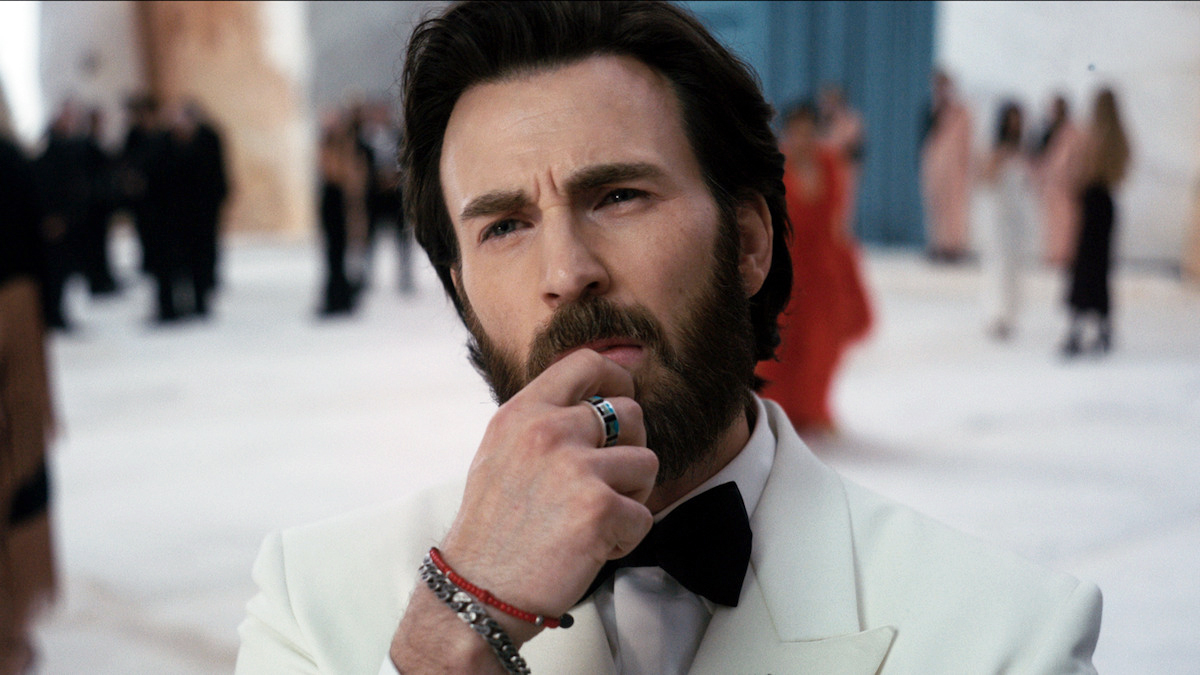
Complementing the political drama is Romain Gavras’s English-language feature debut, Sacrifice. Following its premiere at the Toronto International Film Festival (TIFF), Netflix secured United States distribution rights for the satirical eco-thriller. Starring Chris Evans as Mike Tyler—a fading, existentially adrift action star attempting to revitalize his public image through environmental activism—the film takes a sharp, cynical look at modern celebrity culture. Tyler attends a high-profile eco-gala in Greece, only to be taken hostage by Joan, played by Anya Taylor-Joy, the zealous leader of a doomsday cult. The narrative, co-written by Gavras and Succession writer Will Arbery, posits that a nearby volcanic eruption can only be averted through the sacrifice of three prominent figures. The film’s biting critique of billionaire hypocrisy and performative activism polarized festival critics, yet it remains one of the most conceptually daring ensembles of the autumn release schedule.
Adding depth to the documentary sector, Netflix introduced The Disciple: A Wu-Tang Fable, directed by Academy Award winner Joanna Natasegara. Premiering earlier in the year at the Sundance Film Festival, the feature chronicles the extraordinary true story of Tarik “Cilvaringz” Azzougarh, a Dutch-Moroccan superfan who penetrated the inner circle of the legendary Wu-Tang Clan. Under the tutelage of RZA, Azzougarh became the driving force behind Once Upon a Time in Shaolin, a secretive, six-year recording project resulting in a single physical copy of a 31-track album encased in an ornate silver box. The documentary explores modern music economics, the psychology of extreme fandom, and the philosophical value of art in an era dominated by digital streaming.
Strategic Library Expansions and Major Studio Licensing Deals
Beyond original productions, Netflix’s October 2026 schedule is heavily bolstered by strategic licensing agreements with major Hollywood studios, most notably Disney and Paramount Pictures. These partnerships have injected high-demand catalog titles into the platform, immediately altering domestic viewership rankings.
A primary driver of family and nostalgic viewership is the arrival of the complete Ice Age franchise from 20th Century Studios. Spanning all five original animated features—Ice Age, The Meltdown, Dawn of the Dinosaurs, Continental Drift, and Collision Course—the collection landed on the platform under a broader multi-title Disney licensing arrangement. Featuring the voice talents of Ray Romano, John Leguizamo, and Denis Leary, the prehistoric herd’s misadventures immediately dominated consumption metrics, occupying half of the platform’s English-language movie top ten during its debut week. Industry analysts note that this three-month licensing window is strategically timed ahead of the theatrical release of Ice Age: Boiling Point, scheduled for February 2027, setting a clear precedent for cross-promotional studio windows on streaming networks.
Animation enthusiasts also received the SVOD premiere of Transformers One (2024). Directed by Josh Cooley, the critically acclaimed prequel explores the foundational rift between Orion Pax and D-16 on the planet Cybertron, charting their evolution into the iconic ideological adversaries Optimus Prime and Megatron. Despite an underperforming theatrical run, the film’s arrival on Netflix has offered it a second life, praised by critics for its sophisticated narrative depth, vibrant aesthetic, and emotional resonance divorced from traditional live-action constraints.
Cinematic Masterpieces and Epic Revivals
The platform has similarly expanded its roster of cinematic masterworks, headlined by the addition of Michael Mann’s 1995 crime epic Heat. Starring Al Pacino as relentless LAPD detective Vincent Hanna and Robert De Niro as meticulous professional thief Neil McCauley, the nearly three-hour Los Angeles-set cat-and-mouse game remains a benchmark of the crime genre. The inclusion of Heat on the platform carries added contextual weight as development proceeds on a planned cinematic continuation based on Mann’s co-authored sequel novel, bringing heightened attention to the foundational film’s iconic diner confrontation and downtown shootouts.
Adding to the historical and epic drama categories, Netflix is slated to debut Ridley Scott’s Roman double feature on October 21st, pairing the Academy Award-winning Gladiator (2000) with its late-2024 sequel, Gladiator II. The former anchors the pairing with Russell Crowe’s definitive portrayal of Maximus Decimus Meridius alongside Joaquin Phoenix’s Commodus, while the latter expands the scope to the Colosseum adventures of Paul Mescal’s adult Lucius, bolstered by Denzel Washington’s scene-stealing turn as the Machiavellian power broker Macrinus.
Rounding out the month’s prestige additions are biographical and psychological dramas that examine obsession and intellect. Edward Zwick’s Pawn Sacrifice (2014) arrives on October 30th, detailing the Cold War psychological crucible of the 1972 World Chess Championship between American prodigy Bobby Fischer (Tobey Maguire) and Soviet champion Boris Spassky (Liev Schreiber). Concurrently, Christopher Nolan’s intricate Victorian mystery The Prestige (2006) provides subscribers with an exploration of professional rivalry and obsession, featuring Christian Bale, Hugh Jackman, and a memorable supporting turn by David Bowie as Nikola Tesla.
Broader Industry Implications and Audience Impact
The deliberate curation of October 2026 demonstrates how major streaming operators mitigate the monocultural dominance of seasonal genres. By balancing high-concept horror with prestige dramas, family franchises, and festival-tier documentaries, Netflix captures fragmented audience segments that might otherwise disengage during single-genre holiday windows.
The integration of major studio catalog titles via targeted licensing windows further illustrates a maturing digital distribution model. Studios and streaming platforms increasingly recognize the mutual benefit of short-term windowing: library titles generate renewed intellectual property awareness and drive subscriber retention, while capitalising on upcoming theatrical sequels or pop-culture anniversaries. As consumption data shows rapid audience migration toward these licensed properties—exemplified by the immediate charting of the Ice Age collection and high-profile views for Animals—the overarching programming strategy proves that counter-programming remains one of the most effective tools for maintaining platform engagement across diverse subscriber demographics.