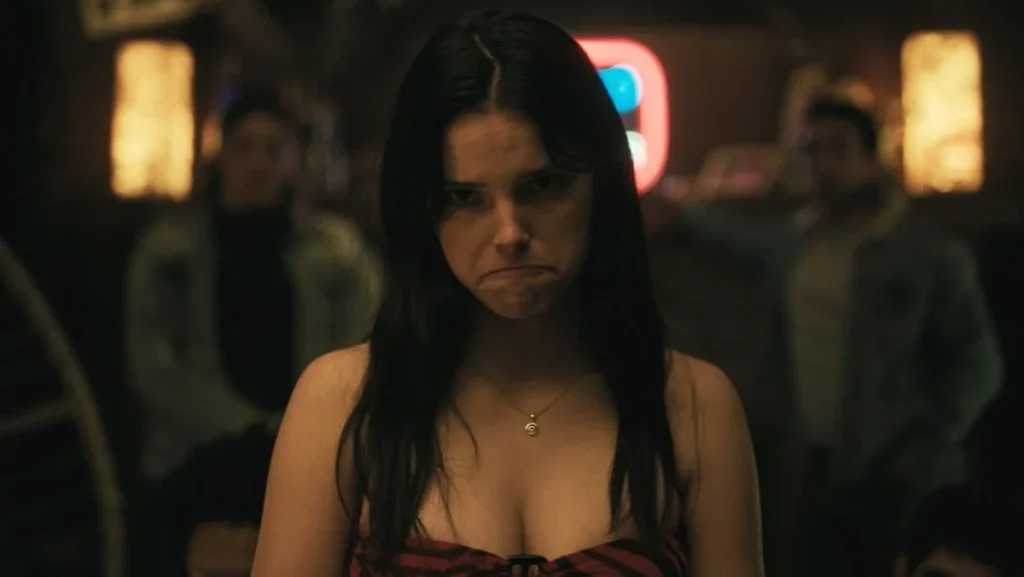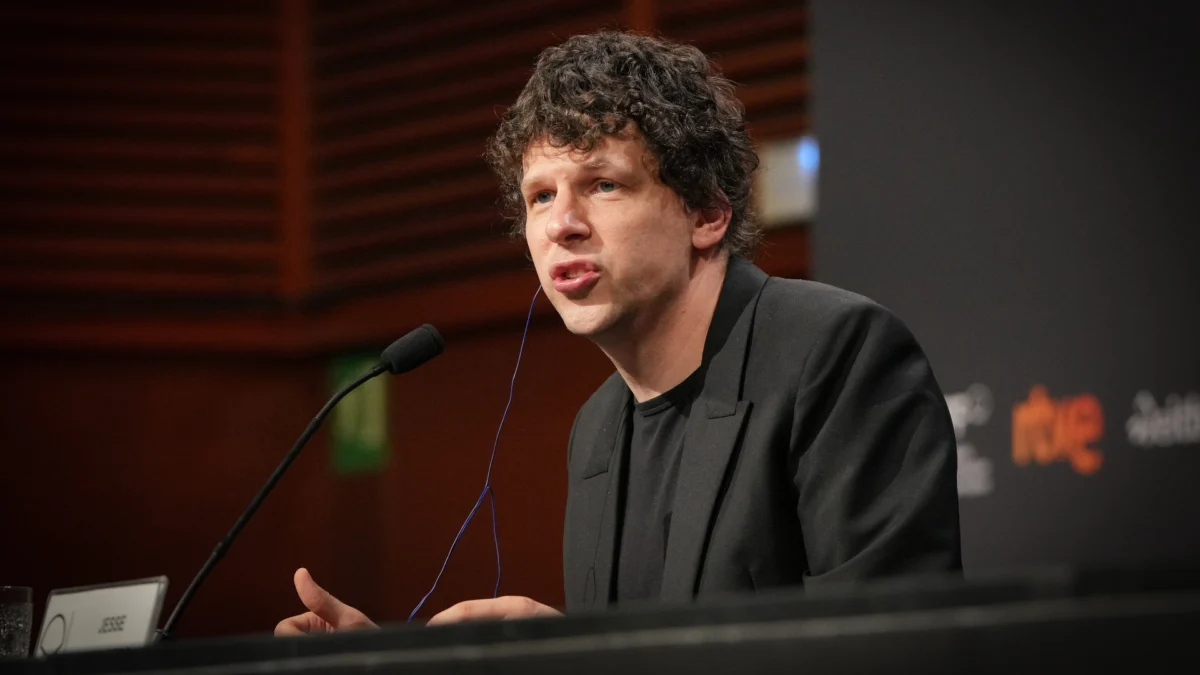
The 2026 San Sebastian International Film Festival, currently unfolding in the picturesque coastal city of Spain, has become the stage for Jesse Eisenberg’s latest creative endeavor, The Debut. During a press conference held this past Wednesday, the actor, writer, and director offered a candid look into the autobiographical underpinnings of his new project, while addressing his broader shift from a cynical view of the acting profession to a deep appreciation for the craft. The film, which features a high-profile ensemble including Julianne Moore, Paul Giamatti, and Halle Bailey, serves as a poignant exploration of the transformative power of the performing arts.
A Narrative Rooted in Personal History
The Debut centers on Mona Friedman, portrayed by Julianne Moore, a shy woman who finds herself unexpectedly cast in a local community theater production. Under the guidance of a demanding and enigmatic director, played by Paul Giamatti, Moore’s character undergoes a profound internal metamorphosis. Eisenberg, who recently received critical acclaim for his Oscar-nominated film A Real Pain, revealed that the premise is deeply tethered to his own adolescence in central New Jersey during the early 1990s.
"The movie takes place in 1990, and when I was in central New Jersey at that time, I was very much like Mona Friedman," Eisenberg noted during the press engagement. He described his younger self as socially isolated and struggling with the insecurities common to childhood. For Eisenberg, the local community theater was not merely a hobby but a sanctuary. He recalled being a target for bullying due to his physical appearance, specifically his curly hair, only to find the theater environment to be an "alien planet" where he was welcomed and celebrated. This contrast between the harsh realities of his school environment and the communal embrace of the theater provided the emotional blueprint for the screenplay.
The Evolution of a Directorial Perspective
Eisenberg’s transition into directing has been marked by a significant shift in his perception of acting. Throughout his earlier career, he admitted to harboring a cynical outlook on the industry, viewing it as a vanity-driven profession that often rewarded superficiality. However, his collaboration with Julianne Moore on his 2022 directorial debut, When You Finish Saving the World, proved to be a turning point.
Observing Moore’s meticulous and often grueling preparation process—where she would engage in deep emotional labor far removed from the levity of the set—challenged his assumptions. "I realized that acting is a valuable, difficult, and challenging craft," Eisenberg remarked. This change in perspective is reflected in the tone of his current work, which seeks to honor the vulnerability and commitment required of performers. His admiration for the craft has clearly deepened, moving from a self-referential focus to an appreciation of the collaborative and sacrificial nature of the medium.
Production Dynamics and Cast Chemistry
The production of The Debut has been noted for its unexpected interpersonal dynamics, particularly the chemistry between Moore and Giamatti. Eisenberg highlighted that the romantic undertones that emerged between their characters were largely organic, rather than scripted. While the original screenplay framed Giamatti’s director character as a primarily intimidating and mysterious figure, Giamatti’s performance infused the role with a warmth that fundamentally altered the film’s trajectory.
The supporting cast, which includes notable talents such as Bernadette Peters, Colton Ryan, Lilli Cooper, Maulik Pancholy, and Bonnie Milligan, further underscores the film’s commitment to the authentic, high-stakes environment of community theater. By centering the story on an older woman, Eisenberg argued that he was able to capture a more profound emotional resonance that a younger protagonist might not have conveyed with the same level of nuance.
Addressing the Social Network Legacy
Beyond his latest work, the press conference inevitably turned to Eisenberg’s decision to decline a return to his breakout role as Mark Zuckerberg in the upcoming Aaron Sorkin project, The Social Reckoning. The film, which serves as a spiritual successor to 2010’s The Social Network, is set to feature Jeremy Strong in the lead role.
Eisenberg maintained a diplomatic stance regarding the project, praising Sorkin’s writing and expressing confidence in Strong’s performance. His refusal to reprise the role was framed not as a critique of the production, but as a personal boundary. "It just didn’t feel like something I wanted to act in again," he stated. Eisenberg also touched upon the irony of being perpetually linked to the Facebook founder, noting that the public often possesses a more detailed and expansive knowledge of the platform than he does—a state of detachment he prefers to maintain.
Contextualizing the San Sebastian Film Festival
The San Sebastian International Film Festival, now in its 74th year, remains one of the most prestigious cinematic events in the Spanish-speaking world and a vital hub for international film distribution. Running from September 18 to September 26, 2026, the festival provides a platform for both established auteurs and emerging voices to showcase work that often challenges mainstream narrative conventions.
The inclusion of The Debut in this year’s lineup aligns with the festival’s historical emphasis on character-driven dramas and cross-cultural narratives. For a filmmaker like Eisenberg, whose work increasingly bridges the gap between independent sentimentality and high-production polish, San Sebastian offers an audience that values the deliberate pacing and thematic depth present in his current body of work.
Implications for the Independent Film Sector
The success of a film like The Debut depends heavily on the delicate balance between its autobiographical heart and its broader commercial appeal. In an industry currently navigating the rise of AI-driven content and a fluctuating theatrical market, Eisenberg’s focus on the "human cost" of performance and the community-building aspects of theater serves as a counter-narrative to the increasingly digitized landscape of modern filmmaking.
Data from the independent film sector over the past decade suggests that projects grounded in specific, localized experiences—much like Eisenberg’s 1990s New Jersey setting—often find a more sustainable, long-term audience than high-concept blockbusters. By highlighting the emotional labor of actors like Moore and the collaborative warmth brought by Giamatti, Eisenberg is positioning The Debut not just as a piece of entertainment, but as a commentary on the endurance of the performing arts in an increasingly atomized society.
As the San Sebastian festival progresses, the reception of The Debut will likely serve as a litmus test for the continued appetite for intimate, character-driven storytelling. For Eisenberg, the experience represents a full circle—from the bullied child seeking refuge in a community playhouse to the director now curating those very emotions for the screen. Whether the audience responds to this specific blend of nostalgia and professional maturation remains to be seen, but the transparency with which he has approached the project underscores a maturation in his own career that mirrors the evolution of his characters.
Ultimately, the film stands as a testament to the idea that the "ridiculous job" of acting, as he once perceived it, is a vital component of the human experience. Through his direction, Eisenberg invites the audience to consider that the moments of vulnerability and shared humanity—whether on a stage in New Jersey or on a set in a major studio—are the threads that bind both the performer and the observer. As the industry looks toward the next wave of releases, the focus remains on whether such earnest, grounded narratives can continue to command the spotlight in an era of constant, high-speed media consumption.