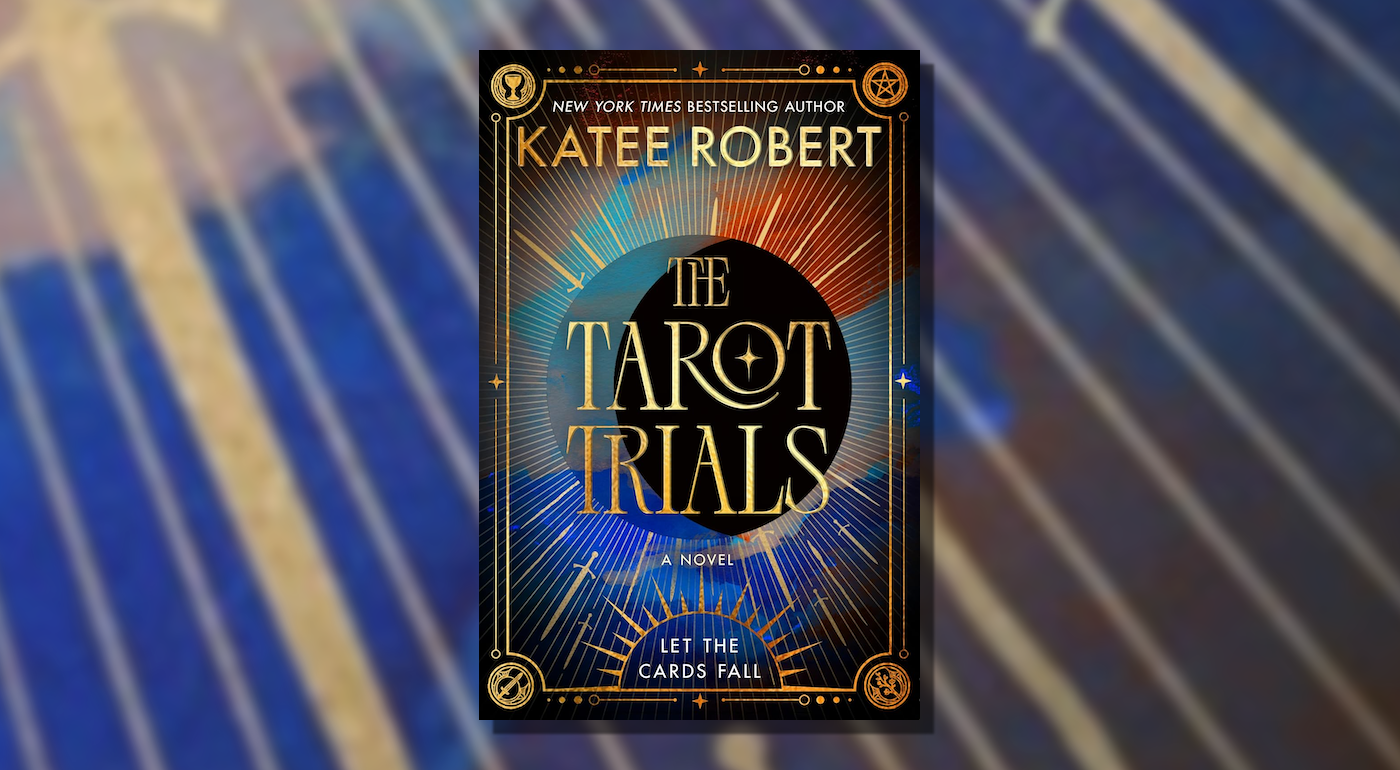
The speculative fiction landscape is preparing for a high-stakes expansion this autumn with the upcoming publication of The Tarot Trials by bestselling author Katee Robert. Scheduled for release on October 20 through Tor Books, the novel introduces readers to a dark, highly competitive fantasy universe built around the intricate mechanics of tarot magic, political factionalism, and brutal survival. Alongside the standard print and digital editions, Macmillan has confirmed the simultaneous release of an audiobook edition narrated by Lindsey Dorcus, broadening the accessibility of the immersive new title for consumers and fantasy enthusiasts alike.
The release of The Tarot Trials comes at a time of robust commercial demand for adult fantasy characterized by complex magic systems, political intrigue, and lethal tournament tropes. Tor Books, an imprint of Macmillan known for publishing foundational and contemporary speculative fiction, has positioned the novel as a flagship release for the fourth quarter. Industry analysts note that titles blending accessible game-like mechanics with high-stakes emotional motivations consistently capture significant market share among adult fiction readers. By incorporating familiar esoteric symbolism derived from major and minor tarot arcana, Robert aims to appeal to both traditional epic fantasy readers and a growing demographic of modern readers drawn to mystical and occult-infused narratives.
Background Context Of The Tarot Trials And The Cinque
Within the narrative framework of the novel, the sociopolitical structure of the world is governed by an elite ruling body known as the Cinque. This organization holds absolute authority over the various districts and courts, maintaining a rigid hierarchy that dictates resource distribution and social standing. However, membership in the Cinque is not hereditary in the traditional sense; rather, it is earned through participation and victory in the titular Tarot Trials—a deadly, high-octane competition where representatives of different factions fight for supremacy.
The protagonist, Kestrel, enters the Trials carrying the heavy burden of generational trauma and political martyrdom. Her mother previously achieved the rare feat of winning the Trials, securing a place among the Cinque before being executed for alleged treason against the Minor Court. Trained from youth to follow in her mother’s footsteps, Kestrel assumes the mantle of the Champion of the Moon. Her objectives extend beyond mere survival; she seeks to master volatile new powers of shadow and illusion, navigate a treacherous landscape of shifting alliances, and confront the very champion responsible for her mother’s death years prior. The narrative explores themes of systemic inequality, notably contrasted through the stark disparity between the resource-rich Cups District and the impoverished populace struggling for daily sustenance.
Chronology And Detailed Breakdown Of The Excerpted Events
An exclusive literary excerpt provided by Tor Books details a harrowing sequence of events during a nocturnal phase of the Trials, illustrating the immediate dangers and tactical complexities participants face. The scene unfolds on a moonlit rooftop within the urban sprawl of the competition grounds, where Kestrel observes a tactical confrontation among five remaining champions: Death, Judgment, the Lovers, the Empress, and the Tower.
Initially operating under precarious provisional alliances, the champions assemble in a street below Kestrel’s vantage point. Judgment, a powerful combatant bearing deep animosity toward Death, attempts to broker a targeted elimination by enlisting the aid of the Empress and the Lovers. The confrontation escalates into a multi-faceted magical skirmish that highlights the diverse applications of court-affiliated magic. The Lovers deploy a psychological manipulation technique capable of inducing profound emotional distress, while the Empress demonstrates geokinetic abilities, manipulating surrounding flora to entangle the towering adversary known simply as the Tower.
Despite coordinated efforts by Judgment’s faction, the balance of power shifts rapidly due to miscalculated distances and individual combat proficiency. The Tower leverages brute force and elemental disruption to neutralize both the Lovers and the Empress in swift succession. Following these eliminations, the conflict culminates in a direct confrontation between the Tower and Judgment. Judgment attempts to incapacitate the Tower using psychological manipulation and a specialized kinetic spike, mirroring tactics utilized during previous iterations of the Trials. However, the Tower successfully counters the maneuver, fatally impaling Judgment with his sword.

The sequence underscores a central thematic maxim of the competition: alliances are inherently ephemeral, and survival frequently depends on calculated opportunism rather than cooperative agreements. The excerpt concludes with Kestrel attempting to retreat undetected, only to be compromised by an accidental misstep and the subtle intervention of an unidentified rival, leaving her immediate survival hanging in the balance.
Statements, Reactions, and Stakeholder Perspectives
While fictional narratives operate within constructed universes, promotional materials and publisher statements from Tor Books offer insight into the artistic direction and thematic focus of The Tarot Trials. Representatives for the publisher emphasize that the novel represents a maturation of Robert’s established voice, successfully bridging romantic tension with the rigorous world-building demands of epic fantasy.
Audiobook narrator Lindsey Dorcus has similarly expressed enthusiasm for the project, noting in promotional commentary that the audio adaptation required nuanced vocal differentiation to capture the distinct psychological profiles of the various champions. The integration of audio formats alongside traditional print is a deliberate strategy by Macmillan to maximize audience reach upon launch, capitalizing on the continuing expansion of the audiobook market within the fantasy genre.
Fact-Based Analysis Of Broader Implications For The Genre
The publication of The Tarot Trials contributes to several broader trends within contemporary commercial publishing. First, it reflects the enduring popularity of the "deadly trial" subgenre, which has seen significant mainstream success over the past decade. By grounding this familiar structural trope in the rich, archetypal imagery of tarot cards—such as the Major Arcana figures of Death, Judgment, the Tower, and the Empress—Robert introduces a layer of interpretative depth that elevates the material beyond standard tournament fiction.
Furthermore, the socioeconomic undercurrents present in the excerpt—specifically Kestrel’s critique of resource hoarding by the Minor Courts while lower-class citizens face chronic deprivation—suggests that the narrative will engage with substantive themes of institutional corruption and class rebellion. These elements provide necessary thematic weight, transforming what might otherwise be a purely kinetic action sequence into a story with broader allegorical resonance regarding power distribution and systemic oppression.
Broader Impact And Market Outlook
As the October 20 release date approaches, anticipation for The Tarot Trials continues to build across literary communities and reviewer platforms. The combination of a high-profile author with an established readership, a striking visual design by Tor Books, and a simultaneous unabridged audiobook release positions the novel as a major contender for autumn bestseller lists.
For readers and industry observers alike, the title serves as a barometer for current consumer appetites regarding dark fantasy that balances intricate world-building with fast-paced, high-stakes plotting. Whether Kestrel will successfully navigate the lethal labyrinth of the Trials, uncover the truth behind her mother’s execution, and dismantle the oppressive architecture of the Cinque will be revealed when Tor Books officially releases the novel to the public this October.