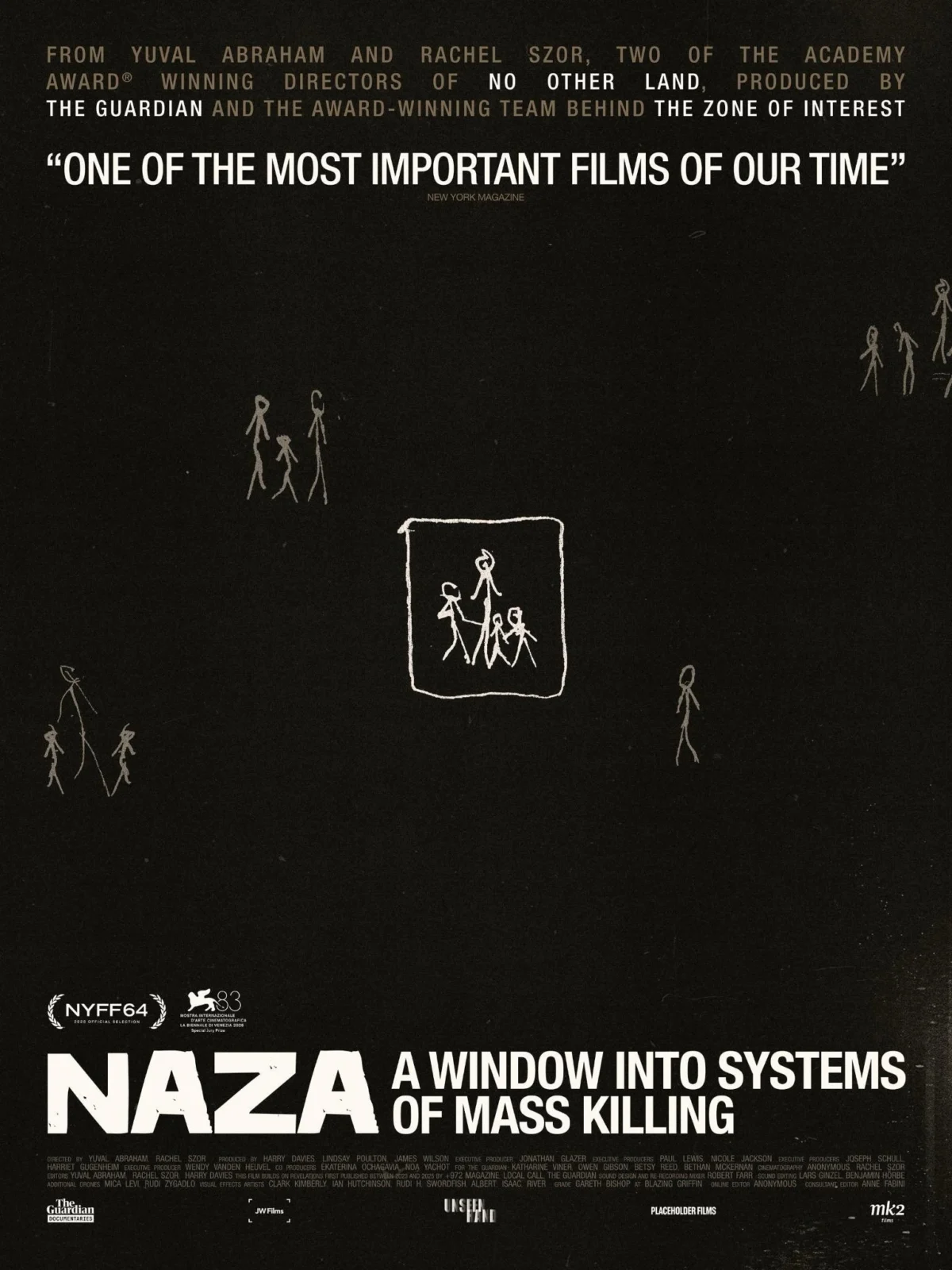
Mk2 Films has released the official trailer for NAZA, a harrowing and critically acclaimed investigative documentary that examines the integration of artificial intelligence into modern military operations. The film, which held its world premiere earlier this month at the 2026 Venice Film Festival, has quickly emerged as one of the most talked-about and socially urgent non-fiction works of the year. Co-directed by Israeli filmmakers and journalists Yuval Abraham and Rachel Szor—best known for their previous work on No Other Land—the documentary utilizes unprecedented access and covertly gathered material to dissect the mechanisms behind targeted killings and civilian casualties in Gaza.
The documentary was produced through a collaborative effort involving The Guardian, JW Films, Placeholder Films, and Unseen Hand, with Academy Award-winning filmmaker Jonathan Glazer (The Zone of Interest) serving as executive producer. Filmed covertly under the cover of night from rooftops in Tel Aviv, NAZA explores the chilling intersection of advanced machine learning algorithms, mass surveillance, and state-sponsored military strategy. Following its festival debut, the film is scheduled for a limited theatrical release in the United States beginning September 30, 2026, followed by a free global online release hosted by The Guardian in November.
Background Context and Investigative Origins
The genesis of NAZA is deeply rooted in the investigative reporting that emerged in the wake of the October 7, 2023, attacks and the subsequent military escalation in Gaza. Much of the foundational material featured in the documentary was initially uncovered through joint investigations published by The Guardian, alongside reporting partners +972 Magazine and Local Call.
Directors Yuval Abraham and Rachel Szor spent three years conducting clandestine interviews and observations, documenting the accounts of individuals who claim to have designed, deployed, and operated the military’s algorithmic targeting systems. In a joint statement, the filmmakers explained the moral imperative driving the project:

"We made this film out of a sense of obligation to use our position as Israeli filmmakers and journalists to examine the systems behind the mass killing of Palestinian civilians for which our country is responsible. While filming members of Israel’s military on rooftops at night in Tel Aviv over the past three years, we found ourselves asking the very questions that were asked by our grandparents’ generation and throughout the 20th century: how does one group of people allow the total dehumanization of another? What do the inner workings of such a system look like?"
By moving beyond traditional print journalism, the filmmakers sought to capture not only the explicit disclosures made by insiders but also the profound psychological weight of what remains unsaid—the institutional silences that allow automated warfare mechanisms to function without public scrutiny.
The Chronology of the Project
The timeline of NAZA spans a complex period of geopolitical conflict, investigative journalism, and cinematic production:
- October 2023 and Onward: Following the outbreak of the war in Gaza, investigative journalists begin publishing initial findings regarding automated military databases and targeting protocols used by intelligence agencies.
- 2023–2026: Directors Yuval Abraham and Rachel Szor conduct secretive filming sessions at night on Tel Aviv rooftops, capturing insider accounts and the operational environment surrounding AI-assisted targeting systems.
- Early September 2026: NAZA holds its world premiere at the 2026 Venice Film Festival, drawing widespread critical attention and positioning itself as a standout title of the festival circuit.
- September 25, 2026: Mk2 Films releases the official theatrical trailer and poster to the public, amplifying anticipation for its commercial rollout.
- September 30, 2026: The documentary opens in select theaters across the United States.
- November 2026: The Guardian prepares to stream the film for free globally on its digital platforms, ensuring wide accessibility.
Supporting Data and Technological Implications
While military forces increasingly integrate artificial intelligence into logistics, reconnaissance, and target selection to supposedly increase operational efficiency and minimize collateral damage, human rights organizations and technology ethicists have raised profound concerns. Systems frequently analyzed in contemporary military-technical discourse—such as AI platforms utilized to generate target lists at rapid speeds—have been heavily scrutinized by international legal experts.
Data compiled by human rights monitors indicates unprecedented levels of urban destruction and civilian displacement in the Gaza Strip since late 2023. Critics of automated warfare argue that delegating life-and-death decisions to algorithms abstracts the moral weight of combat, reducing human lives to data points processed by machine learning models. NAZA provides a rare, inside perspective on the creation of these digital architectures, showing how sweeping electronic surveillance networks feed vast quantities of personal and positional data into military databases, ultimately enabling large-scale kinetic operations with minimal human deliberation.

The involvement of high-profile industry figures, including executive producer Jonathan Glazer, has further amplified the film’s reach. Glazer, whose own cinematic work frequently explores the banality of evil and the psychological compartmentalization required to ignore systemic atrocities, lends considerable artistic weight to the project. Producers Harry Davies, Lindsay Poulton, and James Wilson bring extensive investigative and documentary pedigree to the production, ensuring rigorous journalistic standards underpin the cinematic presentation.
Broader Impact and Ethical Analysis
The release of NAZA arrives at a critical juncture in the global discourse surrounding artificial intelligence, autonomous weapons systems, and international humanitarian law. As militaries worldwide race to incorporate machine learning into command-and-control structures, regulatory bodies, the United Nations, and civil society groups are struggling to establish legal frameworks that can govern technologies operating at speeds exceeding human cognitive response times.
From a geopolitical standpoint, the documentary challenges official narratives surrounding precision warfare by featuring testimonies from the personnel who built and administered the technology. By examining the domestic and operational environments in which these tools are conceptualized—such as the quiet rooftops of Tel Aviv operating against the backdrop of distant urban devastation—the film creates a stark juxtaposition between the sterile, digital nature of modern command systems and the tangible human consequences on the ground.
Legal scholars suggest that documentaries like NAZA may play a significant role in future accountability proceedings, archiving firsthand admissions and systemic workflows that are rarely accessible to independent investigators. Furthermore, the decision by The Guardian to stream the film for free starting this November underscores an institutional commitment to public education regarding the realities of algorithmic warfare.
As the film prepares for its theatrical rollout in the United States on September 30, 2026, industry analysts anticipate sustained debate regarding the ethics of artificial intelligence in combat zones. NAZA demands that audiences confront uncomfortable questions about the delegation of lethal authority to machines, the normalization of mass surveillance, and the collective responsibility of societies living in the shadow of automated violence.