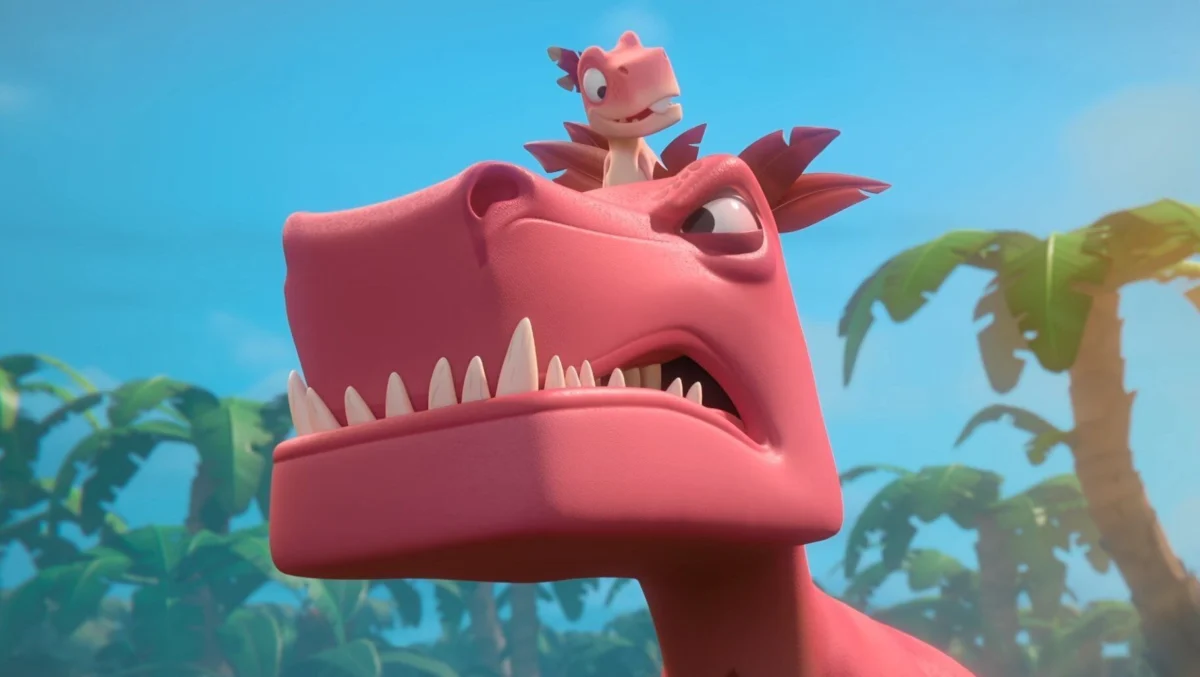
In an unexpected departure from standard streaming industry protocols, Netflix has officially reversed its cancellation of the popular CG-animated preschool series Bad Dinosaurs, greenlighting both a second and third season. The decision comes after the platform initially decided against renewing the show for a sophomore run, a move that highlights how sustained post-launch viewership, ancillary platform engagement, and algorithmic re-evaluations can ultimately alter corporate trajectories in the modern media landscape.
The reversal represents a rare instance of a streaming platform breathing new life into a children’s animation property after publicly shelving it. Created by Joel Veitch, Alex Mallinson, and David Shute, Bad Dinosaurs first stomped onto screens in 2024, offering a prehistoric blend of slapstick comedy, family dynamics, and visually striking animation. While its initial cancellation reflected a broader industry shift toward risk aversion and immediate monetization in children’s programming, the series’ enduring digital footprint forced a strategic recalculation within Netflix’s content acquisition and renewal divisions.
The Chronology of a Prehistoric Reversal
The journey of Bad Dinosaurs from cancellation to a double-season renewal has been anything but conventional. When the series debuted in 2024, it received a relatively quiet rollout typical of many mid-tier preschool and family animation projects on major subscription video-on-demand services. Despite capturing the attention of a core demographic, the initial metrics did not immediately trigger an automatic renewal under Netflix’s stringent performance criteria.
By late 2024, the reality of the streaming market caught up with the production team. In November 2024, Executive Producer Paul Schleicher addressed the show’s apparent demise during an appearance on the Kids Media Club Podcast. Schleicher openly discussed Netflix’s decision not to move forward with new episodes, expressing professional disappointment while acknowledging the changing economic realities of the industry. He noted that the streaming landscape had shifted drastically, placing less emphasis on original titles that required incubation time or lacked an instantly proven, massive audience. At the time, creators and fans alike accepted that the adventures of the mischievous dinosaur family had come to an abrupt end.
However, the shelf-life of digital content often defies traditional broadcast metrics. Following Schleicher’s comments, Bad Dinosaurs experienced a sustained wave of organic discovery. Rather than fading into the background of Netflix’s sprawling catalog, the series found a dedicated and growing audience that continued to stream episodes long after the initial premiere window closed. This delayed momentum caught the attention of platform executives, culminating in the recent announcement by Heather Tilert, Vice President of Animation Series for Kids and Preschool at Netflix, that the series had been officially revived for an eight-episode second season and an eight-episode third season.
Quantitative Analysis: The Metrics That Saved the Show
Netflix operates under a notoriously data-driven model, relying heavily on viewership hours, completion rates, and global engagement metrics to determine the viability of its intellectual property. In the case of Bad Dinosaurs, the numbers ultimately told a compelling story that overshadowed early executive hesitation.
According to official platform disclosures, Bad Dinosaurs spent five consecutive weeks within the prestigious Netflix Global Top 10 for television, a notable achievement for a non-franchise preschool animated series. More impressively, the series accumulated nearly 55 million views globally since its 2024 debut. When examined through Netflix’s comprehensive Engagement Reports, the show amassed a staggering 154.1 million viewing hours, translating directly into the milestone figure of 54.4 million views.
Beyond the walled garden of the subscription service, the franchise leveraged external ecosystems to build undeniable momentum. The Netflix Jr. YouTube channel became a crucial funnel for discoverability, pulling in millions of views on clips, shorts, and compilation videos featuring the show’s chaotic prehistoric characters. This cross-platform synergy created a feedback loop: YouTube engagement drove platform curiosity, while Netflix subscriptions fostered loyalty that spilled back over into viral digital video consumption. Industry analysts point to this ecosystem interplay as a primary catalyst for the revival, proving that children’s content often requires different valuation metrics than adult prestige dramas or live-action blockbusters.
Strategic Shifts in Netflix’s Kids and Family Programming
The resurrection of Bad Dinosaurs was quietly unveiled as part of a much broader, comprehensive update regarding Netflix’s upcoming children’s and family programming slate. The announcement underscores the strategic importance of the family demographic to the platform’s overarching business model.
During the first half of the reporting cycle, kids and family programming accounted for a substantial 15 percent of total viewing hours across the entire Netflix service. This massive consumption share highlights why the streamer continues to invest heavily in the vertical, even as overall industry spending on children’s animation has faced contraction. By reviving an established intellectual property rather than building a new preschool brand from scratch, Netflix mitigates financial risk while capitalizing on existing brand recognition.
The broader slate announcements indicate a renewed focus on recognizable properties and reliable formats that can sustain high repeat-viewing figures—a critical metric in preschool households where young viewers frequently watch their favorite episodes dozens of times.
Broader Industry Implications
The un-cancellation of Bad Dinosaurs serves as a fascinating case study in the evolution of streaming economics. For years, the prevailing narrative surrounding subscription video-on-demand services has been one of finality: once a show is canceled, its production assets are shelved, tax write-downs are processed, and the creative teams move on to other projects.
However, as subscriber growth plateaus and platforms search for reliable content libraries that can retain younger, highly engaged demographics, the traditional rules of cancellation are being rewritten. Shows with strong long-tail performance—particularly in animation, where production cycles are long and character recognition retains value over years—are increasingly being viewed through a more flexible lens.
For the creators of Bad Dinosaurs—Joel Veitch, Alex Mallinson, and David Shute—the reversal is a vindication of their initial vision. It demonstrates that the appetite for distinct, character-driven animation remains high, provided the distribution model allows enough time for word-of-mouth and algorithmic momentum to take effect.
As production ramps up on the newly ordered eighth-episode seasons for Season 2 and Season 3, the industry will be watching closely to see if other streaming platforms follow Netflix’s lead in adopting more responsive, data-informed renewal strategies for animated properties. For now, the inhabitants of the Bad Dinosaurs universe have secured a permanent place in the modern streaming ecosystem, proving that in the digital age, a canceled show is not always dead-extinct.