
The release of Netflix’s new docudrama Unabomber has reignited historical scrutiny regarding the formative years of Theodore "Ted" Kaczynski, the infamous domestic terrorist who terrorized the United States through a mail-bombing campaign spanning nearly two decades. Directed by Janus Metz and starring Russell Crowe as Harvard professor Dr. Henry Murray alongside Jacob Tremblay as a teenage Kaczynski, the production explores a controversial psychological defense theory. This narrative posits that intensive psychological experiments conducted on Kaczynski during his undergraduate years at Harvard University served as a primary catalyst for his radicalization, eventual mental deterioration, and subsequent acts of violence.
While the film employs a dual-timeline structure—contrasting the mid-1990s FBI manhunt with Kaczynski’s late-1950s experiences in academia—it has drawn mixed evaluations from historians, criminal justice researchers, and critics. The core contention of the film relies heavily on a hypothesis presented during Kaczynski’s 1998 trial: that the intense interrogations and psychological stressors he endured as a study participant fundamentally altered his worldview and exacerbated underlying vulnerabilities.
Main Facts of the Case and Cinematic Adaptation
Ted Kaczynski’s bombing campaign, executed between 1978 and 1995, resulted in three fatalities and 23 injuries, permanently altering public infrastructure, mail handling, and national security protocols. Following a massive multi-agency manhunt led by the Federal Bureau of Investigation—culminating in his arrest at his remote Montana cabin in April 1996—Kaczynski avoided the death penalty by pleading guilty in 1998 to multiple counts of illegal transportation, mailing, and use of explosives. He was subsequently sentenced to multiple life terms without the possibility of parole, ultimately dying in federal custody in June 2023.
The Netflix project directed by Metz, with a screenplay by Sam Chalsen and Nelson Greaves, focuses heavily on Kaczynski’s early intellectual promise. Entering Harvard at the exceptionally young age of 16 in 1958, Kaczynski became a subject in psychological studies overseen by Dr. Henry Murray, then the director of the Harvard Psychological Clinic and a prominent figure in personality psychology. Murray was also a co-creator of the Thematic Apperception Test (TAT), a projective psychological tool designed to reveal unconscious conflicts and internal dynamics through narrative responses to ambiguous images.
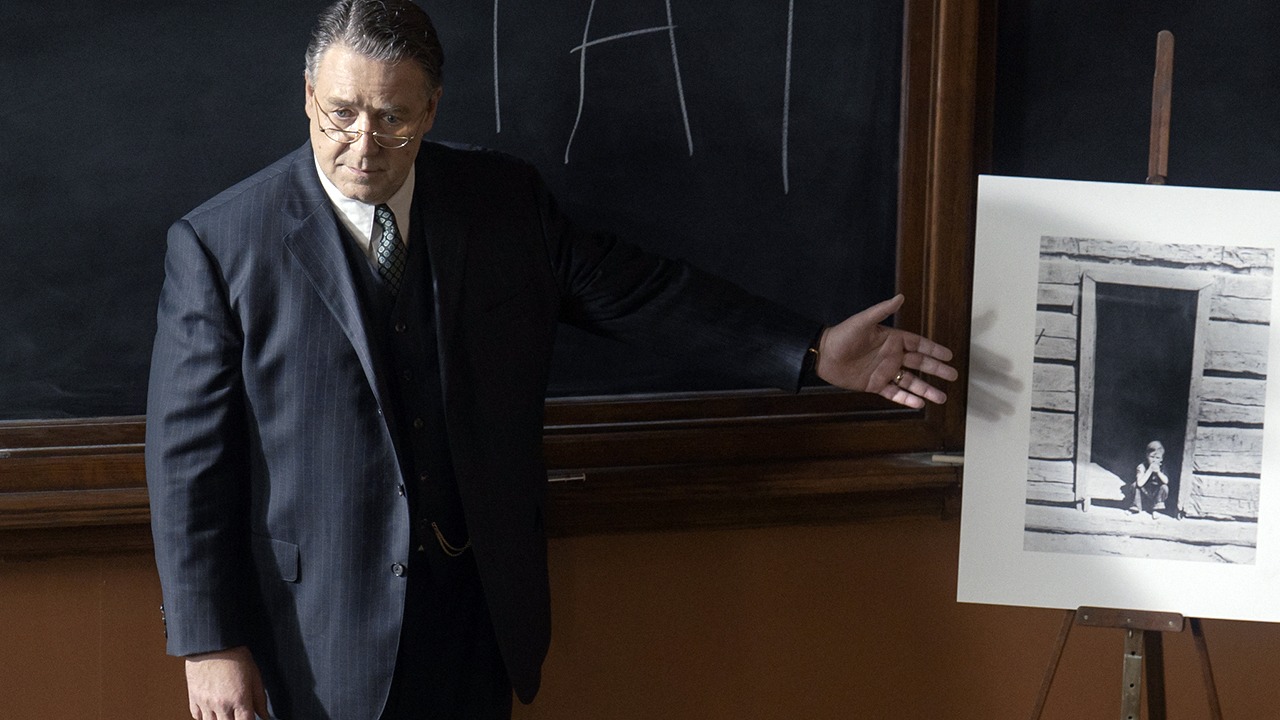
In the cinematic retelling, Murray’s experiments—characterized by aggressive interrogations and psychological stress tests—are depicted as deeply abusive and transformative, laying the psychological groundwork for Kaczynski’s later rejection of modern technology and societal norms as detailed in his 1995 manifesto, Industrial Society and Its Future.
Chronology of Events: From Academia to Infamy
To contextualize the timeline presented in the docudrama, historical records outline a specific trajectory from Kaczynski’s academic beginnings to his isolation and crimes:
1958: Sixteen-year-old Ted Kaczynski matriculates at Harvard College, demonstrating extraordinary mathematical aptitude. Shortly after enrollment, he is recruited into a research study directed by Dr. Henry Murray.
1958–1961: Over roughly three years, Kaczynski participates in stressful, highly critical interrogation sessions designed to test ego strength under pressure. Contemporaneous accounts from fellow students note an increasing social withdrawal and cynicism in Kaczynski during this period.
1962–1969: Kaczynski earns his undergraduate degree, completes a Ph.D. in mathematics at the University of Michigan, and briefly serves as an assistant professor at the University of California, Berkeley, before resigning abruptly.
1971: Kaczynski abandons academic life entirely, relocating to a remote, off-the-grid cabin in Lincoln, Montana, where he begins living a subsistence lifestyle.
1978–1995: The Unabomber executes a sustained mail-bombing campaign targeting universities, airlines, and computer stores, prompting the longest and most expensive manhunt in FBI history.
June 1995: Kaczynski’s 35,000-word manifesto is published in major newspapers under threat of continued bombings, leading to his identification and denunciation by his brother, David Kaczynski.
April 1996: FBI agents apprehend Kaczynski at his Montana cabin.
1998: Kaczynski pleads guilty to avoid the death penalty and receives multiple life sentences.
2023: Kaczynski dies by suicide at the Federal Medical Center in North Carolina at the age of 81.
Supporting Data and Historical Critiques
The central premise explored in the Netflix production—that Murray’s experiments were the direct root cause of Kaczynski’s domestic terrorism—remains a subject of intense academic and forensic debate. While biographers and defense attorneys have long noted the psychological strain Kaczynski experienced at Harvard, mainstream historians and mental health experts urge caution against drawing a direct, linear cause-and-effect relationship between undergraduate stress and subsequent mass violence.

Forensic psychiatric evaluations conducted prior to his trial noted symptoms consistent with paranoid schizophrenia, a condition characterized by systematized delusions and social alienation. However, scholars note that Kaczynski himself frequently downplayed the long-term impact of the Harvard experiments in his personal journals, attributing his worldview primarily to his deep-seated philosophical opposition to industrialization and technological expansion rather than interpersonal trauma in college.
Furthermore, even members of Kaczynski’s own defense and family circles have previously characterized theories directly linking the Murray experiments to his criminal actions as overly reductive. David Kaczynski, whose cooperation with federal authorities ultimately led to his brother’s arrest, has consistently emphasized the complex interplay of severe mental illness, social isolation, and intellectual radicalization rather than pinning total responsibility on a single collegiate research program.
Critique of Narrative Structure and Cinematic Performance
From a critical standpoint, reviewers have noted stark contrasts in the quality of storytelling between the two primary timelines in Unabomber. The contemporary 1990s investigation storyline introduces a fictionalized composite FBI investigator, Joanne Miller, portrayed by Shailene Woodley, alongside partner performances that have drawn criticism for relying on conventional procedural tropes. Critics argue that the modern manhunt sequences often feel mechanical, leaning heavily on exposition rather than dynamic investigative tension.
Conversely, the historical flashback sequences featuring Russell Crowe and Jacob Tremblay have received notable praise for their intense psychological dynamics. Crowe portrays Dr. Murray with a commanding intellectual arrogance and magnetic authority, capturing the academic hubris of mid-century behavioral science. Tremblay effectively portrays Kaczynski’s transition from an optimistic, mathematically gifted adolescent to a deeply cynical and increasingly alienated young man.
However, narrative liberties taken by the screenwriters—such as depicting Murray diagnosing Kaczynski with schizophrenia directly within the narrative timeline—depart from historical records, which indicate no formal clinical diagnosis until decades later by court-appointed medical professionals prior to the 1998 trial. This dramatization has drawn scrutiny for bending historical fact to serve a conventional cinematic "origin story" arc.

Broader Impact and Implications
The release of Unabomber raises enduring ethical and philosophical questions regarding the dramatization of real-world tragedies. By framing a mass casualty offender through the lens of institutional abuse, productions of this nature risk inadvertently pathologizing or romanticizing the trajectory of violent extremism, transforming complex societal and psychological failures into a neat, cinematic narrative package.
At the same time, the project underscores ongoing historical accountability regarding mid-century human subject research. The ethics of mid-20th-century psychological experimentation—exemplified by studies conducted without modern standards of informed consent and psychological safety—remain a dark chapter in academic history, drawing legitimate institutional and public inquiry.
Ultimately, while Unabomber offers compelling performances and high production values, it highlights the inherent difficulty of translating complex forensic histories into narrative drama without oversimplifying the multifactorial causes of violent crime. As audiences and critics evaluate the series, the challenge remains to separate dramatic license from historical reality, ensuring that the exploration of institutional wrongdoing does not obscure the gravity of the offenses committed.