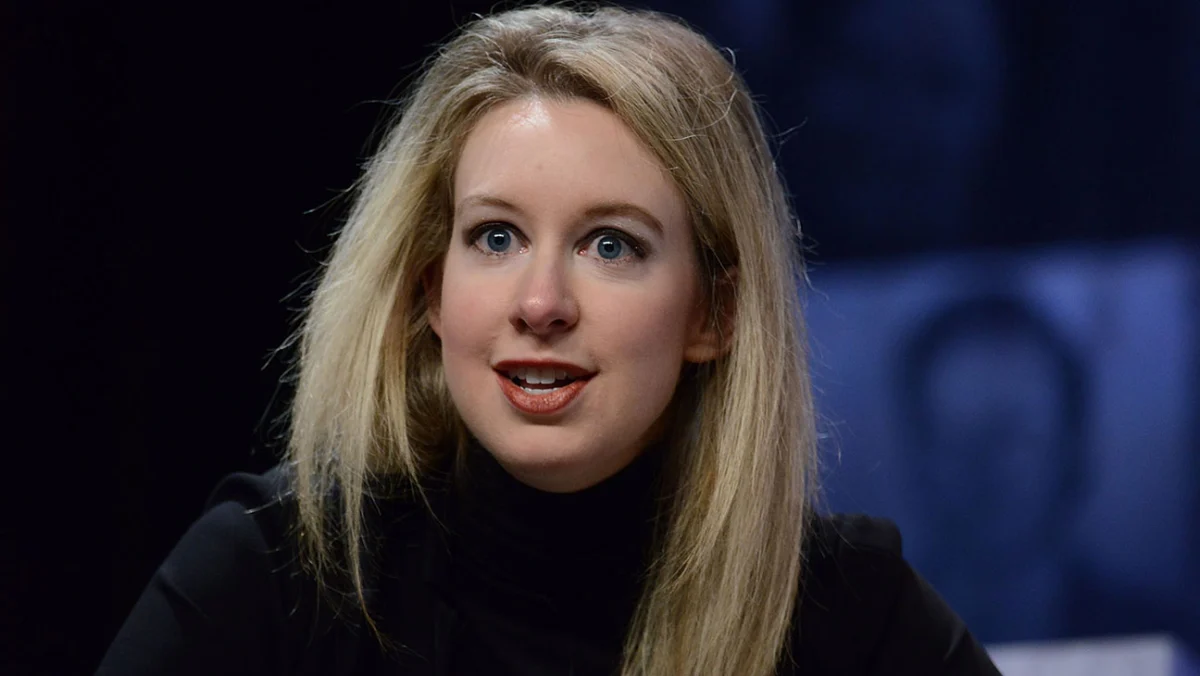
The disgraced founder of Theranos, Elizabeth Holmes, issued a rare and personal communication via X (formerly Twitter) this past Sunday, marking a significant shift in how she engages with the public from behind bars. Serving an 11-year prison sentence following her 2022 conviction for wire fraud and conspiracy, Holmes announced that future communications authored personally by her will be identified with the suffix "-EAH." This move arrives just weeks before the October 16 theatrical release of "You Can See Everything," an A24 documentary directed by Nathan Fielder and Lance Oppenheim that promises an unprecedented, intimate look at her life in the final weeks before her incarceration.
A New Protocol for Digital Communication
For years, the Elizabeth Holmes social media account has functioned as a curated portal, managed primarily by her partner, Billy Evans, and a support team. Her official biography on the platform has long carried the disclaimer: "Mostly my words, posted by others." However, Sunday’s post—a lengthy, emotional statement accompanied by a photograph of her and Evans—signaled a desire to reclaim her personal narrative.
"I was silenced for a long time. And then imprisoned. I am fighting to prove my innocence and come home to my babies and the love of my life," Holmes wrote in the verified post. She detailed the physical and emotional toll of her confinement, noting that she has been imprisoned for "1,216 endless days and nights." By establishing a signature protocol, Holmes appears to be attempting to distinguish her own voice from the strategic messaging often associated with legal defense teams or public relations surrogates.
The Rise and Fall of Theranos: A Chronological Context
The narrative surrounding Elizabeth Holmes remains one of the most prominent corporate scandals in modern American history. Once heralded as the youngest self-made female billionaire, Holmes founded Theranos in 2003 with the promise of revolutionizing blood testing through its proprietary "Edison" technology.
- 2003: Holmes drops out of Stanford University to launch Theranos.
- 2014: At its peak, the company is valued at $9 billion, with Holmes gracing the covers of major business publications.
- 2015: An investigative report by The Wall Street Journal exposes that the company’s blood-testing technology is largely non-functional and that Theranos had been using third-party commercial analyzers to perform its tests.
- 2018: The U.S. Securities and Exchange Commission (SEC) charges Holmes and former Theranos president Ramesh "Sunny" Balwani with "massive fraud." Theranos officially dissolves.
- 2022: A federal jury convicts Holmes on four counts of wire fraud and conspiracy. She is sentenced to 135 months (11.25 years) in federal prison.
- 2023: Holmes begins her sentence at the Federal Prison Camp in Bryan, Texas.
- 2026: Reports confirm that her projected release date, including time in a halfway house, is set for 2027.
Documentary Spotlight: You Can See Everything
The upcoming documentary "You Can See Everything" is expected to be a watershed moment in the public consumption of the Holmes saga. Unlike previous investigative documentaries that focused on the technological failures or the legal proceedings, the Fielder-Oppenheim production is characterized by a "fly-on-the-wall" perspective. Filmed during the 34-day window between her sentencing and her surrender to federal authorities, the film captures the mundanity and the tension of her final days of freedom.
The project has already drawn significant attention for its R-rating, which the Motion Picture Association (MPA) attributed to "language" and "graphic nudity." Industry analysts suggest this rating may indicate a stylistic departure from standard documentary filmmaking, potentially leaning into the uncomfortable, hyper-realistic aesthetic for which Nathan Fielder is known. By granting a film crew access to her home and family life, Holmes has effectively invited the public into the private sphere she is now fighting to return to.
Legal Status and Future Projections
While Holmes continues to maintain her innocence on social media, her legal options have been significantly narrowed. In 2024, the Ninth Circuit Court of Appeals upheld her conviction, effectively ending her primary avenues for overturning the jury’s verdict. According to the Federal Bureau of Prisons, Holmes is currently scheduled to transition to a halfway house in 2027.
The transition from a federal correctional facility to a community-based reentry program is a standard progression for non-violent offenders, yet the media attention surrounding Holmes ensures that every step of her reintegration will be scrutinized. Her partner, Billy Evans, remains a central figure in her narrative. In her recent statement, Holmes explicitly defended his role: "Billy is one of the people carrying that responsibility for me. He fights fiercely for me and our family. I love him beyond space and time."
Broader Implications of the "Personal" Narrative
The use of social media from prison creates a complex intersection between legal strategy and personal branding. Legal experts observe that public declarations of innocence—while potentially comforting to supporters—rarely carry weight in appellate court proceedings. However, they serve an essential purpose in shaping the "court of public opinion."
By citing the Bible verse "The truth will set you free" (John 8:32), Holmes is positioning her struggle as one of moral rectitude rather than mere legal dispute. This rhetoric is designed to cultivate a base of support that views her conviction as a miscarriage of justice. For a public that has consumed books, podcasts, and limited series about her life, the introduction of her own "signed" messages adds a new layer of psychological intrigue.
Fact-Based Analysis of the Public Sentiment
The reaction to Holmes’s posts remains deeply polarized. On one hand, she retains a segment of the public who believe the legal system disproportionately targeted a woman who was attempting to innovate in a male-dominated field. On the other hand, the majority of the medical and scientific community, along with her former investors and employees, view the conviction as a necessary consequence of endangering public health and misleading stakeholders to the tune of hundreds of millions of dollars.
The "1,216 days" figure cited by Holmes underscores the duration of her current reality, yet it also serves as a reminder to the public of the weight of her sentencing. As the release of "You Can See Everything" approaches, the cultural conversation will likely shift from the mechanics of the Theranos fraud to the character of the woman who orchestrated it.
Conclusion: The Narrative Continues
As Elizabeth Holmes prepares for the next phase of her life—a transition to a halfway house in 2027—her communication strategy suggests she is not content to fade into obscurity. By delineating between her team’s updates and her own "EAH" signatures, she is attempting to regain agency over her own story.
Whether the upcoming documentary will humanize her, further villainize her, or simply provide a dispassionate look at a life in transition remains to be seen. What is clear is that the saga of Theranos is far from over. As Holmes noted in her final remarks on Sunday, she remains "profoundly grateful for the support" she receives in her ongoing effort to "expose the truth and challenge deeply entrenched perceptions." For now, her audience will have to wait until October 16 to see how much of that "truth" is reflected in the lens of the latest documentary effort, and whether her personal appeals on social media will succeed in shifting the public narrative before her eventual release.