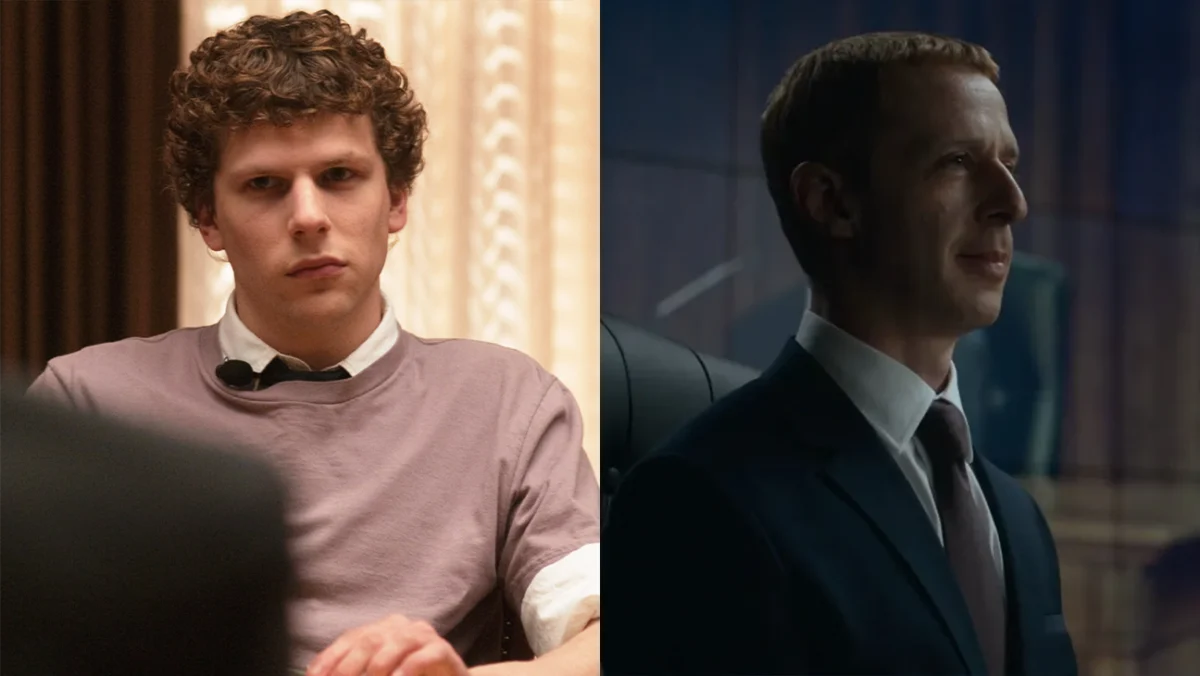
In a significant revelation that sheds light on the intricacies of actor-character identification and the enduring legacy of a cinematic portrayal, acclaimed screenwriter and director Aaron Sorkin has confirmed the precise reasons behind Jesse Eisenberg’s decision to decline reprising his iconic role as Mark Zuckerberg in the highly anticipated sequel, The Social Reckoning. Sorkin’s candid disclosure underscores a profound struggle many actors face when a defining performance inextricably links them to a real-life, often polarizing, figure. Eisenberg, whose nuanced portrayal of the Facebook founder earned him an Academy Award nomination and widespread critical acclaim, ultimately sought to distance himself from a character whose public perception has only grown more complex and controversial since the original film’s release.
During a recent interview with Vanity Fair, Sorkin, the visionary behind the Oscar-winning 2010 film The Social Network and the architect of its forthcoming follow-up, detailed his strenuous efforts to persuade Eisenberg. Sorkin shared that he spent three days attempting to convince the actor to return to the role that arguably catapulted him to a new echelon of Hollywood recognition. "I felt like it belonged to him, and he was certainly battle-tested," Sorkin remarked, acknowledging the deep connection Eisenberg forged with the character. The actor-director, celebrated for his recent work on A Real Pain, had delivered a performance in The Social Network that was both mesmerizing and unsettling, capturing the idiosyncratic genius and social awkwardness attributed to Zuckerberg during Facebook’s formative years.
However, despite Sorkin’s earnest appeals and the undeniable success of their previous collaboration, Eisenberg remained resolute in his decision. The core of his reluctance, as explained by Sorkin, was a fervent desire to break free from the persistent conflation with the real-world Mark Zuckerberg. "He simply did not want to be conflated with Mark Zuckerberg anymore, that he has his problems with the guy," Sorkin elaborated. This sentiment extends beyond mere professional detachment, touching upon the tangible, and often irritating, manifestations of public perception. Sorkin cited a specific example: "He doesn’t like kids coming up to him in airports with business cards that say ‘I’m CEO, bitch’ for him to sign." This anecdote vividly illustrates the burden of a role that, for many, became synonymous with the real individual, blurring the lines between fiction and reality in the public imagination.
Eisenberg’s comments from last year, when asked about his absence from the sequel, echo Sorkin’s recent revelations. Speaking on the Today show, he stated, "Listen, for reasons that have nothing to do with how amazing that movie will be, really, truthfully. But when you play a character, you feel, at some point, you’ve grown into something else." This statement suggests a personal and artistic evolution, a natural progression away from a character that, while career-defining, might have become creatively restrictive or personally cumbersome. The intense scrutiny and public identification that often accompany playing a living, globally recognized figure like Mark Zuckerberg can be a double-edged sword for an actor, offering unparalleled exposure but also the risk of typecasting and an enduring public association that outlives the performance itself.
The Enduring Legacy of The Social Network
To fully grasp the weight of Eisenberg’s decision, one must revisit the profound impact of The Social Network. Released in 2010, the film was not merely a biographical drama; it was a cultural phenomenon that redefined how a generation understood the origins of social media and the complex personalities behind its rise. Directed by David Fincher and featuring Sorkin’s signature rapid-fire, incisive dialogue, the film garnered immense critical acclaim, winning three Academy Awards for Best Adapted Screenplay, Best Original Score, and Best Film Editing, from a total of eight nominations, including Best Picture. Its financial success was also notable, grossing over $224 million worldwide against a $40 million budget, a testament to its broad appeal and timely subject matter.
Eisenberg’s portrayal of Zuckerberg was central to this success. He captured a figure often perceived as enigmatic and aloof, bringing a nervous intensity and intellectual swagger that resonated deeply with audiences and critics alike. The film’s narrative, built on parallel legal depositions, dissected themes of friendship, betrayal, ambition, and the murky ethics of Silicon Valley’s early days. It painted a portrait of Zuckerberg as a brilliant but socially isolated prodigy, a depiction that, while fictionalized, heavily influenced public perception of the real entrepreneur for years to come. The "I’m CEO, bitch" line, famously uttered by Zuckerberg to Eduardo Saverin in the film, became an instant cultural catchphrase, encapsulating the character’s assertive, almost arrogant, drive—a detail that clearly had a lasting and unwelcome impact on Eisenberg’s post-film life. The success of the film, ironically, created the very problem Eisenberg now sought to escape.
The Genesis of The Social Reckoning and a New Face for Zuckerberg
The concept of a sequel, now titled The Social Reckoning, has been a topic of speculation for years, fueled by the ever-evolving narrative surrounding Facebook (now Meta Platforms) and its profound, often contentious, influence on global society. The original film ended as Facebook was on the cusp of global domination, but since then, the company has faced an array of unprecedented challenges: allegations of facilitating election interference, widespread data privacy scandals (most notably Cambridge Analytica), concerns over mental health impacts, the proliferation of misinformation, and intense scrutiny from governments worldwide. These developments have shifted Zuckerberg’s public image from that of a groundbreaking innovator to a figure often associated with the darker side of technological progress and corporate accountability.
Sorkin, recognizing the rich dramatic potential in these unfolding sagas, has openly expressed his belief that there is a compelling new story to tell. The very title, The Social Reckoning, suggests a thematic pivot from the origin story to an examination of consequences and accountability, mirroring the real-world trajectory of Meta. Given the subject matter’s heightened complexity and the real-life Zuckerberg’s increased public profile and legal challenges, the role demands an actor capable of conveying this evolved persona.
With Eisenberg’s definitive refusal, the search for a new Mark Zuckerberg became paramount. The torch has now been passed to Jeremy Strong, an actor celebrated for his intense, method-acting approach and his Emmy-winning performance as Kendall Roy in HBO’s Succession. Strong’s casting marks a significant shift, introducing a fresh interpretation to a role previously defined by another acclaimed actor.
Jeremy Strong’s Methodical Immersion
The story of Strong’s casting is as compelling as the narrative he now joins. Vanity Fair reported that the filmmaker first broached the idea of the sequel’s script to Eisenberg at the 2025 Vanity Fair Oscar Party. It was at this very event that Sorkin also encountered Strong. In a proactive move characteristic of his dedication to his craft, The Apprentice actor seized the opportunity, pitching himself for the role of Zuckerberg should Eisenberg ultimately decline. This serendipitous encounter and Strong’s immediate initiative highlight his keen interest and readiness to embrace such a challenging part.
Strong’s reputation precedes him; he is renowned for his immersive, deeply researched approach to character. His commitment to authenticity, often involving extensive background work and remaining in character off-set, aligns perfectly with the demands of portraying a real-life figure with such a distinct public presence. Sorkin’s observation from the set of The Social Reckoning confirms this immediate immersion: "He showed up on his first day, and when he said ‘good morning’ to me, he was already talking like Mark." This detail provides a tantalizing glimpse into Strong’s performance, suggesting a complete transformation from the outset, aiming to capture Zuckerberg’s unique vocal cadence and mannerisms.
This level of dedication is particularly crucial for a role where the previous actor’s performance is so deeply ingrained in the public consciousness. Strong faces the unique challenge of both honoring the established character framework and injecting his own interpretive nuances to reflect Zuckerberg’s evolution over the past decade and a half. His experience in portraying complex, often morally ambiguous, figures with intense internal lives makes him a compelling choice to explore the later, more embattled phases of Zuckerberg’s career.
Broader Implications: Actor Identity and the Weight of Iconic Roles
Eisenberg’s decision to sever ties with the Mark Zuckerberg persona in The Social Reckoning speaks to a broader phenomenon in the acting world: the struggle with typecasting and the public’s conflation of actor with character. For some performers, an iconic role can become a gilded cage, limiting future opportunities or perpetually linking them to a single performance. While many actors embrace such lasting identification, others, like Eisenberg, seek to diversify their artistic output and establish a distinct identity independent of their most famous roles. The specific nature of playing a living, highly scrutinized individual like Zuckerberg amplifies this challenge, as the character’s real-world actions and public image continue to evolve, casting a long shadow over the fictionalized portrayal.
The transition from Eisenberg to Strong for The Social Reckoning also offers a fascinating study in cinematic continuity and interpretation. Audiences will naturally compare the two performances, bringing their pre-existing perceptions of Zuckerberg, shaped in part by The Social Network, to Strong’s new take. This presents both a significant hurdle and a creative opportunity for Strong to redefine the character for a new era, exploring the vulnerabilities, pressures, and perhaps even the moral compromises that have come to define Zuckerberg’s later years as a tech mogul.
Anticipation Builds for The Social Reckoning
The release of the first trailer for The Social Reckoning has only heightened anticipation for the film. Beyond Jeremy Strong’s central performance, the movie boasts a strong ensemble cast, including Jeremy Allen White, Mikey Madison, Betty Gilpin, and Patrick Fischler. While specific character details for these actors are yet to be fully revealed, their presence suggests a continuation of Sorkin’s penchant for sharp dialogue and intricate character dynamics, likely exploring the various individuals and factions that have shaped or been impacted by Facebook’s journey.
The film’s scheduled release date of October 9 positions it squarely in the heart of awards season, signaling the studio’s confidence in its critical potential. The Social Reckoning arrives at a pivotal moment, as debates surrounding big tech, privacy, and the future of digital communication remain at the forefront of global discourse. Sorkin’s sequel promises not just a continuation of a compelling story but a timely reflection on the societal impact of one of the most influential inventions of the 21st century. Jesse Eisenberg’s departure, while marking the end of an era for the character, ultimately paves the way for a fresh perspective and a new chapter in the cinematic exploration of Mark Zuckerberg’s enduring legacy.