The entertainment industry has long maintained a dual reputation as one of the most culturally influential yet notoriously difficult sectors to enter. Aspiring filmmakers, screenwriters, producers, and executives routinely face a daunting barrier to entry: bridging the gap between theoretical knowledge and the practical, hands-on competencies required on a modern, professional production set. For more than two decades, educational institutions situated at the heart of media capitals have sought to dismantle this barrier. Among them, The Los Angeles (L.A.) Film School has stood as a significant pipeline for cultivating the next generation of industry professionals, anchoring its educational philosophy in creativity, technical proficiency, collaboration, and immersion.
Background Context and Institutional History
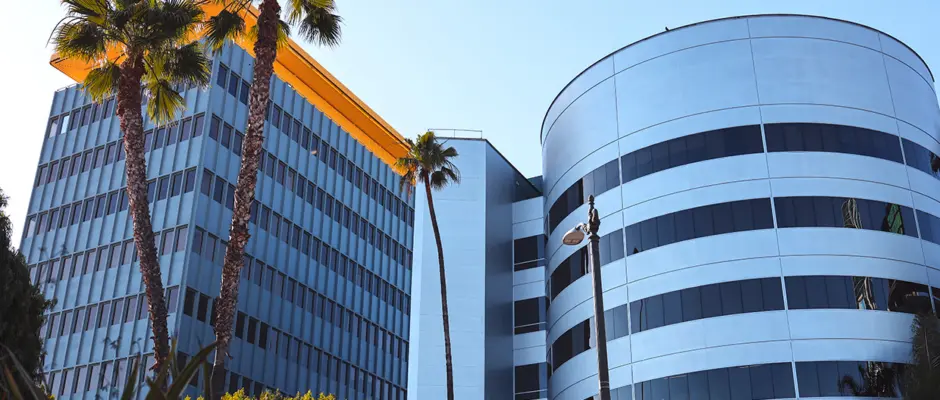
Founded in 1999 by a collective of seasoned Hollywood professionals, industry veterans, and educators, The L.A. Film School was established with a singular objective: to replicate the fast-paced, high-stakes environment of professional film and television production within an educational framework. Located in the historic heart of Hollywood—specifically occupying iconic buildings such as the historic RCA building on Sunset Boulevard—the institution was designed to immerse students directly into the culture of the entertainment capital of the world.
In its early years, the school focused primarily on foundational cinematic arts, training students in the technical intricacies of film production, audio engineering, and post-production workflows. As the media landscape underwent seismic technological shifts—most notably the transition from analog celluloid to digital cinematography, the proliferation of non-linear editing systems, and the subsequent rise of streaming platforms—the institution expanded its academic footprint. Today, the school encompasses a diverse array of degree pathways that reflect the multifaceted nature of modern media, ranging from traditional on-set production and animation to digital marketing, entertainment business management, and online screenwriting.
Chronology of Institutional Growth and Curriculum Evolution
The trajectory of The L.A. Film School mirrors the broader democratization and digitization of the entertainment industry itself. A chronological review of its development highlights its adaptability to industry trends:
- 1999: The L.A. Film School opens its doors in Hollywood, initially offering intensive, hands-on programs centered around film production and recording arts, taught by active industry professionals.
- Late 2000s: Recognizing the rapid transition of the industry toward digital workflows, the school updates its infrastructure, incorporating industry-standard digital cinema cameras, advanced soundstages, and computer graphics labs.
- 2010s: To accommodate a global student body and the demands of a workforce shifting toward remote and digital collaboration, the institution launches comprehensive online degree programs, starting with entertainment business and digital filmmaking.
- Present Day: The curriculum grows to include specialized tracks in animation, media communications, and advanced writing for emerging digital and immersive media platforms, blending traditional physical production facilities with robust virtual learning management systems.
Comprehensive Academic Offerings
The modern academic catalog of The L.A. Film School is structured to provide targeted, career-focused training across various disciplines within entertainment and media. These programs cater to diverse professional ambitions, balancing theoretical foundations with practical application.
Film and Digital Production Programs
For students aiming to work directly on physical or digital sets, the institution offers dedicated on-campus and remote pathways:
- Bachelor of Science in Film Production: Rooted deeply in visual storytelling, this on-campus program allows students to concentrate their studies in specific core disciplines: cinematography, directing, production, and producing. Students operate professional-grade camera packages, lighting grids, and sound equipment, simulating real-world crew hierarchies and responsibilities.
- Bachelor of Science in Digital Filmmaking Online: Delivered entirely through a digital learning environment, this program equips students with the narrative and technical tools required for modern video content creation. The curriculum emphasizes producing, screenwriting, directing, cinematography, and digital editing, enabling students to build professional portfolios from diverse geographic locations.
- Associate of Science in Film: An accelerated, in-person program designed to fast-track students into entry-level production roles. The curriculum covers every stage of the production pipeline, providing hands-on experience in cinematography, directing, set operations, and producing.
Writing and Creative Development
Storytelling remains the foundational currency of the entertainment industry. The school addresses this through specialized writing curricula:
![Craft your story, leave a legacy [Sponsored]Filmmaker Magazine](https://cdn.filmmakermagazine.com/uploads/2026/07/LAFS_building-1240x698.jpg-628x348.png)
- Bachelor of Science in Writing for Film & TV Online: This immersive program focuses on the mechanics of narrative structure, dialogue construction, and character development. Delivered online, it trains aspiring writers to craft scripts tailored for traditional feature films, television episodic formats, and emerging immersive media environments.
Business, Management, and Communications
Understanding the commercial and promotional mechanics of show business is as vital as artistic execution. The business and communication programs include:
- Bachelor of Science in Entertainment Business: Available both online and on-campus, this program pulls back the curtain on the corporate architecture of show business. Students study contract negotiation, intellectual property rights, talent management, distribution models, and entertainment marketing, preparing them for administrative and executive roles.
- Bachelor of Science in Media Communications Online: Focused on mass communication in the digital age, this program explores social media management, digital content generation, and new media advertising strategies, teaching students how to harness modern digital ecosystems for entertainment brands and media enterprises.
Animation and Visual Effects
With visual effects and computer-generated imagery (CGI) driving modern box-office blockbusters and streaming series, technical artistry is in high demand:
- Bachelor of Science in Animation: This on-campus program trains students in the comprehensive pipeline of computer animation, covering aesthetic principles, technical software proficiencies, and studio workflows utilized by professional animation houses.
- Bachelor of Science in Animation Online: Beginning with the fundamental principles of computer-generated art, this virtual program transitions students into advanced subjects such as 3D model creation, character rigging, digital sculpting, and environmental rendering.
Supporting Data and Educational Methodology
The effectiveness of modern vocational and professional education in the arts is frequently measured by institutional integration, facility quality, and alumni placement. Data from educational research bodies indicate that creative arts programs combining direct access to professional-grade hardware with active mentorship yield higher rates of job readiness.
The L.A. Film School utilizes a pedagogical model known as experiential learning. By embedding students in simulated production environments equipped with gear identical to those found on major motion picture lots—such as high-end digital cinema cameras, professional sound mixing boards, and green screen stages—the institution minimizes the traditional learning curve graduates face upon entering the workforce. Furthermore, the integration of faculty members who maintain active memberships in industry guilds (such as the Directors Guild of America, the Producers Guild of America, and the Academy of Motion Picture Arts and Sciences) ensures that the curriculum remains responsive to shifting industry protocols, union standards, and technological advancements.
Broader Impact and Industry Implications
The continuous evolution of entertainment education holds significant implications for the broader media ecosystem. As traditional studio systems decentralize and the demand for original content surges across global streaming services, the industry requires a steady influx of versatile professionals who require minimal on-the-job training regarding standard equipment and set etiquette.
Institutions situated within entertainment hubs like Los Angeles serve as vital cultural and economic arteries. By drawing talent from across the globe, schools like The L.A. Film School contribute to the continuous renewal of Hollywood’s creative workforce. The transition toward robust online programs also democratizes access to industry-standard education, allowing individuals who cannot relocate to Southern California to acquire specialized skills in writing, business, and digital media production.
Ultimately, the intersection of structured academic training and real-world simulation provides a predictable framework for individuals seeking to navigate an unpredictable industry. As technology continues to redefine the boundaries of filmmaking, animation, and digital communication, the ongoing adaptation of media education will remain a critical determinant of who shapes the future of global entertainment. For prospective students seeking comprehensive program details and admission requirements, further information is accessible via lafilm.edu.