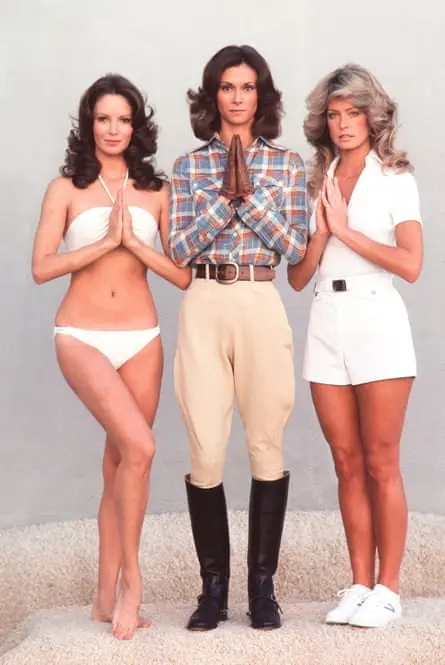
Fifty years after the iconic television phenomenon first flashed across American television screens, Jaclyn Smith remains the definitive survivor of a bygone era in pop culture. Running for five turbulent, highly influential seasons from 1976 to 1981, Charlie’s Angels redefined the boundaries of prime-time television. As the sole original cast member to remain with the series from its pilot episode through its final broadcast, Smith has uniquely witnessed the enduring cultural footprint of the show. At 80 years old, the veteran actress and entrepreneur has codified her storied life and career into a new memoir, I Once Knew a Guy Called Charlie, offering a candid yet remarkably optimistic window into an era of excess, overnight celebrity, and groundbreaking television history.
The Early Years: Houston Roots and a Grounded Upbringing
Long before she was immortalized as the calm, empathetic private investigator Kelly Garrett, Smith’s formative years were anchored in the stability of a traditional mid-century Texas upbringing. Born in Houston in the 1940s, she was raised by a hard-working dentist father, who instilled in her a formidable professional work ethic, and a devoted mother whom Smith affectionately describes as a foundational "goddess of love." Her childhood was largely characterized by pastoral tranquility, spent largely between suburban Houston and a sprawling 200-acre family farm intersected by the San Marcos River.

However, beneath the surface of this idyllic environment emerged early manifestations of obsessive-compulsive disorder. Smith has openly discussed how compulsive behaviors and repetitive prayer manifested during her youth as a mechanism to protect loved ones—a psychological coping strategy that initially surfaced around the safety of her grandfather and later resurfaced during moments of acute stress and early motherhood.
Despite these private struggles, her early ambitions pointed toward the stage. By the late 1950s, she was training at a Houston dance school operated by Patsy Swayze—mother of the late actor Patrick Swayze, whom Smith recalls as a young boy of seven. Armed with ambition and the blessing of her parents, a young Smith relocated to New York City in the late 1960s to pursue a serious career as a professional dancer.
Navigating New York and the Threshold of Stardom
Upon arriving in Manhattan, Smith’s father mandated that she reside at the prestigious, women-only Barbizon Hotel—a legendary New York institution that famously housed literary and cultural icons such as Sylvia Plath, Joan Didion, and Grace Kelly. The residence enforced strict Victorian-era protocols, requiring residents to wear skirts, hosiery, and heels in public spaces while barring male visitors above the mezzanine level.
The late 1960s New York performing arts scene offered a stark contrast to the stringent rules of the Barbizon. It was an environment defined by ferocious competition, yet it retained an accessibility that has since vanished from the entertainment industry. Unlike contemporary performers who must navigate complex ecosystems of social media metrics, managers, and specialized representation, Smith cut her teeth through open casting calls and mass cattle calls for Broadway productions.
While her counterculture peers embraced the tumultuous political protests, experimental drug use, and bohemian lifestyles of the early 1970s, Smith maintained a distinctly pragmatic, old-fashioned approach. Her early audition for the landmark counterculture musical Hair—where she arrived wearing a prim blue leotard, pink tights, and a neat bun—neatly encapsulated her outsider status regarding the era’s radical subcultures. Instead of walking on the wild side, she focused on relentless hard work, securing lucrative commercial modeling contracts and minor television roles that slowly elevated her profile.
Navigating Industry Hazards and Establishing Agency
Like countless women navigating the entertainment industry during the 1970s, Smith encountered routine sexual harassment and systemic barriers. Reflecting on an era preceding modern accountability movements, she acknowledges that such exploitation was pervasive. However, she attributes her ability to navigate these hazards to a deeply ingrained sense of self-reliance instilled by her parents.

On multiple occasions, Smith turned down career opportunities rather than compromise her boundaries. She famously refused a nude scene that would have secured her a larger role in an early feature film, and she was dropped from another project simply because she had married, reflecting an industry standard that demanded actresses remain publicly single and commercially available. Rather than succumbing to career desperation, Smith relied on her financial independence and unwavering professional standards.
Her television résumé steadily expanded through guest appearances on established procedural dramas such as McCloud and various made-for-television movies. A turning point arrived when she was cast opposite Robert Wagner in the crime-solving television series Switch. It was Wagner who subsequently recommended Smith to powerhouse television producers Aaron Spelling and Leonard Goldberg, who were actively assembling a daring, unconventional project centered on a trio of female detectives working for an elusive benefactor named Charlie.
The Phenomenon of Charlie’s Angels
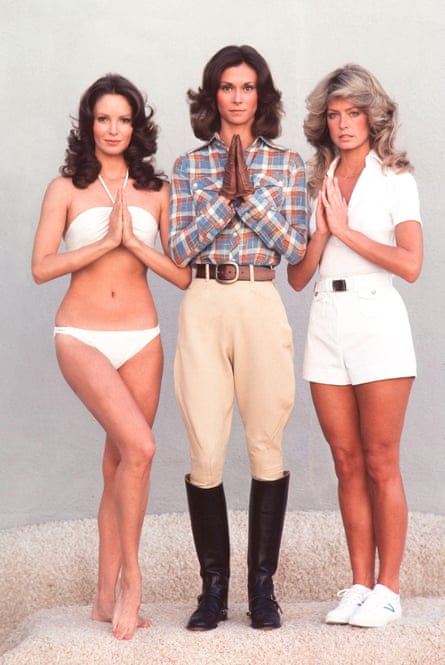
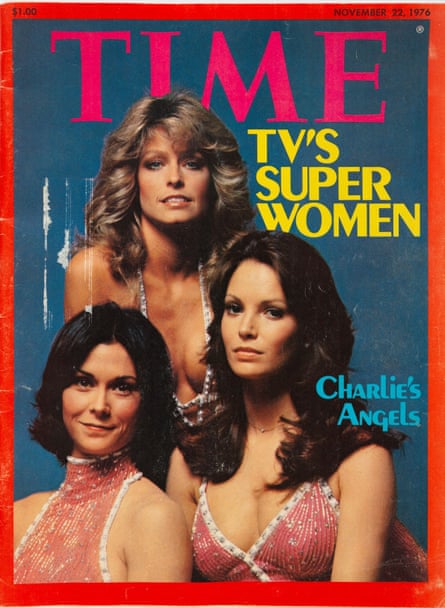
When Charlie’s Angels premiered on ABC in September 1976, it was an immediate, seismic cultural juggernaut. The series fundamentally subverted traditional television tropes by replacing conventional male action leads with three glamorous, intelligent women who actively pursued danger rather than waiting to be rescued. Alongside Farrah Fawcett and Kate Jackson, Smith anchored a weekly narrative format that blended high-speed pursuits, exotic undercover operations, and undeniable pop-culture escapism.
Behind the scenes, however, navigating the production required strategic negotiations. As the final actress cast in the ensemble, Smith was initially offered the lowest compensation package among the trio: $3,000 per episode, compared to $5,000 for Fawcett and $10,000 for the more established Jackson. Recognizing the parity of their labor, Smith’s agent advised caution, but she stood her ground, demanding equal pay to Fawcett. The gamble succeeded, establishing a precedent for value that eventually saw her salary climb to $100,000 per episode by the show’s fifth and final season.
Despite persistent media narratives attempting to manufacture backstage animosity among the lead actresses, Smith maintains that the original trio forged an unbreakable bond of sisterhood and mutual support. This solidarity proved critical as the cast grappled with unprecedented, overnight global fame. The sudden explosion of celebrity necessitated round-the-clock security details, private bodyguards, and enduring legal battles against stalkers—including an incident where a trespasser scaled studio security fences to confront Smith under the delusion that he was her husband.
As the series progressed into the 1980s, the behind-the-scenes atmosphere shifted. By the final season, the pressures of intense production schedules, combined with the pervasive influence of recreational drugs such as cocaine on Hollywood sets, eroded some of the initial joy of the project. Remaining strictly detached from the off-camera excesses, Smith focused entirely on her professional responsibilities, prioritizing her craft before returning to her trailer.
Post-Angel Career and Entrepreneurial Purns
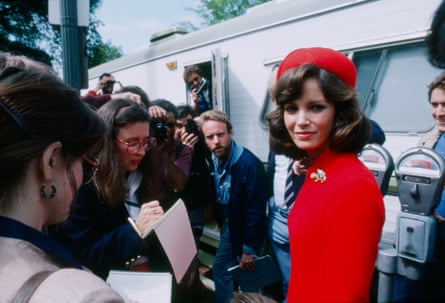
Following the cancellation of Charlie’s Angels in 1981, Smith confronted the immediate hurdle of industry typecasting. Hollywood executives struggled to dissociate her image from the glamorous, high-flying detective archetype. Nevertheless, she actively challenged these limitations, fighting hard to secure the coveted title role in the 1981 television biographical miniseries Jacqueline Bouvier Kennedy—a performance that earned critical acclaim and validated her dramatic range beyond the Spelling universe.
As she entered her 40s—an era historically fraught with diminishing opportunities for actresses in mainstream media—Smith strategically diversified her professional portfolio. Long before modern influencer culture and celebrity brand partnerships became standard industry practice, she pioneered a lucrative, highly successful business empire encompassing signature fashion lines and home-interiors collections sold through major retail networks.
Personal Evolution and Lasting Legacy
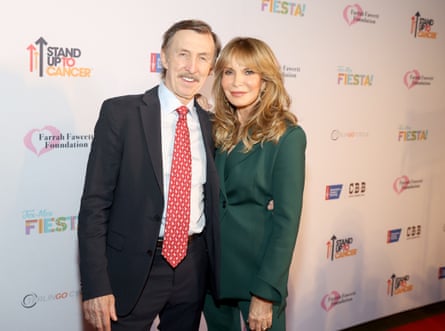
Smith’s personal life has experienced both public scrutiny and private triumphs. Her early marriages to actor Roger Davis and actor Dennis Cole ultimately dissolved, but her union with third husband Tony Richmond brought two children, leading to a balanced life of dedicated motherhood and commerce. In 1991, she married cardiothoracic surgeon Brad Allen, a relationship that she regards as the realization of a lifelong aspiration to recreate the profound marital stability modeled by her parents.
Looking back across a career spanning over half a century, Smith’s journey from a dance student in Houston to a foundational pillar of American television history underscores a rare blend of resilience, professional integrity, and steady optimism. Whether discussing the enduring sisterhood of the original Angels or reflecting upon the seismic cultural shifts of modern media, Jaclyn Smith remains remarkably at peace with the legacy she built—one grounded not in the fleeting excesses of Hollywood, but in enduring values forged on a Texas farm.