The American Western, once defined by the rigid moral binary of white hats and black hats, has undergone a radical metamorphosis over the last four decades. While the traditional tropes of the genre—the lone rider, the lawless frontier, and the cycle of vengeance—remain foundational, contemporary storytellers have migrated these themes into unexpected territories. From the neon-lit peep shows of Houston to the methamphetamine labs of Albuquerque and the blood-soaked sands of the 1850s, the Western is no longer a period piece; it is a psychological framework used to explore the darkest corners of the human condition.
As highlighted in the latest special issue of TV Guide Magazine, "Cowboys: From the Wild West to the New West," four specific titles stand out as pivotal markers in this evolution: the 1984 cinematic masterpiece Paris, Texas, the era-defining television drama Breaking Bad, Quentin Tarantino’s operatic Kill Bill duology, and the 2025 Netflix visceral epic American Primeval. Together, these works demonstrate that the "Cowboy Cred" of a story is determined not by the presence of a horse or a six-shooter, but by the enduring struggle of the individual against a harsh, unforgiving horizon.
The Psychological Frontier: Paris, Texas and the Internalized Western
Released in 1984, Paris, Texas serves as the bridge between the classical Western and the modern "existential" Western. Directed by Wim Wenders and written by the legendary Sam Shepard, the film strips away the external violence of the genre and replaces it with a devastating internal conflict. The story begins with Travis Henderson (Harry Dean Stanton) wandering out of the desert, a visual echo of the classic opening of John Ford’s The Searchers. However, unlike Ethan Edwards, Travis is not hunting an external enemy; he is a man hollowed out by his own failures.
The film’s narrative arc follows Travis as he is reunited with his brother Walt (Dean Stockwell) and his estranged son Hunter. The journey leads them to Houston in search of Jane (Nastassja Kinski), the wife Travis lost to his own jealousy and instability. By the time the film reaches its climax—a series of conversations through a one-way mirror in an adult club—it becomes clear that the "frontier" being explored is one of memory and regret.

Industry analysts often point to Paris, Texas as a masterclass in atmospheric storytelling. The film won the Palme d’Or at the 1984 Cannes Film Festival, a testament to how its Western sensibilities resonated on a global scale. Ry Cooder’s slide guitar score, inspired by the desolate landscapes of the Southwest, has since become synonymous with the "Neo-Western" aesthetic. By proving that a Western could revolve around a conversation rather than a shootout, Wenders and Shepard expanded the genre’s boundaries, allowing it to encompass the quiet tragedies of modern life.
Breaking Bad: The Outlaw Myth in the Modern Age
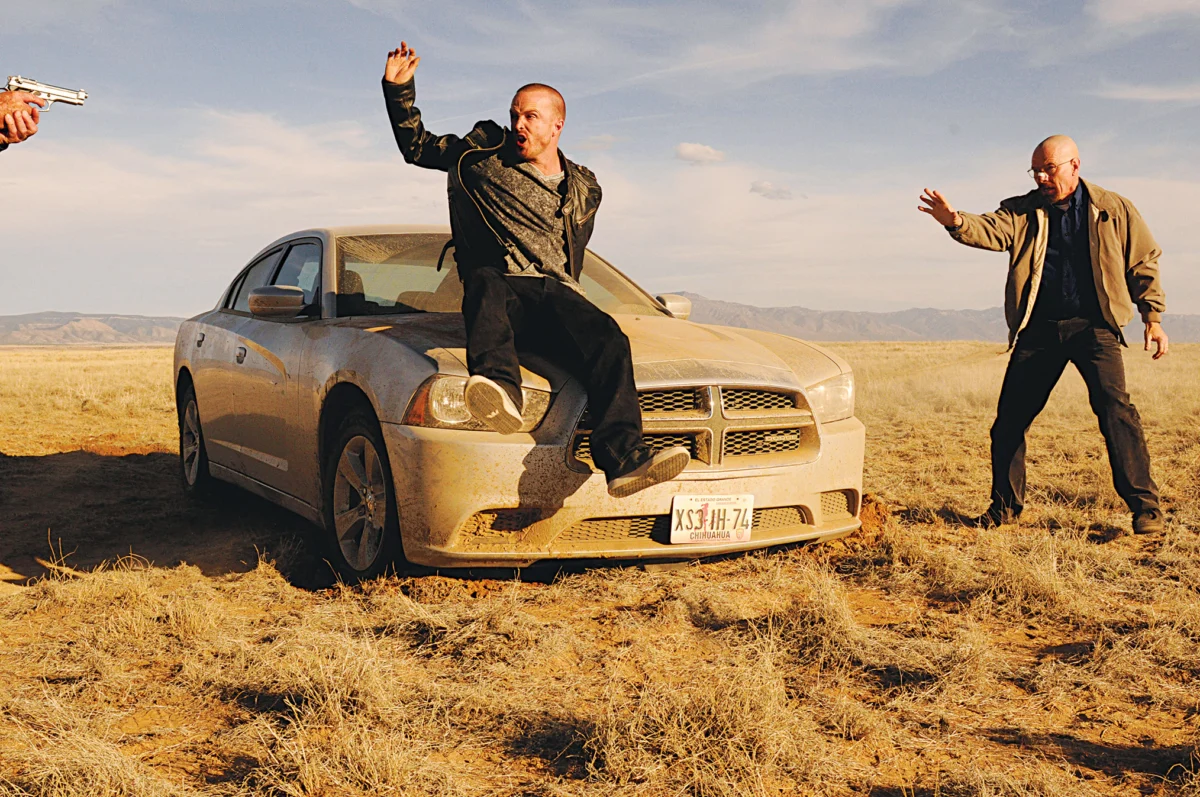
If Paris, Texas internalized the Western, Breaking Bad (2008–2013) modernized its most dangerous archetype: the self-made outlaw. Created by Vince Gilligan, the series transformed the Western from a historical setting into a contemporary moral laboratory. Walter White (Bryan Cranston), a chemistry teacher diagnosed with terminal cancer, embarks on a descent into the criminal underworld that mirrors the "Manifest Destiny" of the Old West—a ruthless pursuit of power and territory at any cost.
Set against the stark, beautiful backdrop of the New Mexico desert, Breaking Bad utilized the landscape as a primary character. Gilligan has frequently acknowledged the show’s Western DNA, noting that the series was designed to follow a man who, in the tradition of the frontier, decides to live by his own rules. The desert serves as both a laboratory for White’s methamphetamine production and a graveyard for his enemies, echoing the lawless territories of the 19th century.
The data surrounding the show’s success underscores its impact. Breaking Bad earned 16 Primetime Emmy Awards and is widely cited by critics as one of the greatest television series of all time. Its influence on the "New West" genre is seen in its portrayal of the drug trade as a modern-day gold rush, where characters like Jesse Pinkman (Aaron Paul) serve as the moral casualties of a lawless expansion. The arrival of Gustavo Fring (Giancarlo Esposito) in Season 3 introduced the "civilized" villain—the corporate rancher equivalent—providing a sophisticated foil to White’s increasingly primitive brutality.
Kill Bill: The Spaghetti Western as Operatic Revenge
Quentin Tarantino has never hidden his reverence for Sergio Leone, the father of the Spaghetti Western. In Kill Bill: Vol. 1 (2003) and Vol. 2 (2004), Tarantino synthesized the tropes of samurai cinema with the stylistic flourishes of the Western to create a global revenge epic. The protagonist, known as the Bride (Uma Thurman), is the ultimate lone avenger. Left for dead at her own wedding, she embarks on a mission to systematically eliminate the members of the Deadly Viper Assassination Squad and their leader, Bill (David Carradine).

While Volume 1 leans heavily into martial arts aesthetics, Volume 2 is a quintessential Western. The setting shifts to the dusty landscapes of the American Southwest and Mexico, featuring high-noon standoffs and graveyard escapes. Tarantino even utilized the music of Ennio Morricone, the composer for Leone’s "Dollars Trilogy," to cement the film’s genre credentials.
The Bride represents a subversion of the traditionally male-dominated Western hero. She is cold, efficient, and driven by a personal code of justice that supersedes the law. By casting David Carradine—the star of the 1970s series Kung Fu, which itself blended Western and Eastern philosophies—Tarantino created a meta-textual link between different eras of the genre. Kill Bill demonstrated that the Western’s themes of vengeance and closure are universal, capable of being transplanted into any cultural or stylistic context.
American Primeval: Reclaiming the Raw Reality of the Frontier
The latest entry into the Western canon, the 2025 Netflix series American Primeval, represents a move toward "Hyper-Realism." Unlike the romanticized visions of the 1940s and 50s, this series, starring Taylor Kitsch and Betty Gilpin, portrays the 1850s American West as a site of unmitigated chaos and survival. The story follows Sara Rowell (Gilpin), a mother navigating a landscape where every interaction is a gamble and civilization is a distant, failing dream.
American Primeval rejects the "clean" birth of the American West. It draws comparisons to the grim fatalism of The Revenant and the moral complexity of Deadwood. The character of Isaac Reed (Kitsch) embodies the "damaged guide"—a man whose survival skills are honed by a world that has stripped him of his humanity.
The series arrives at a time when audiences are increasingly interested in deconstructive history. By focusing on the intersections of Indigenous tribes, Mormon settlers, and desperate opportunists, American Primeval provides a panoramic view of the "blood price" required to settle the frontier. It serves as a stark reminder that the West was not "won" through heroism alone, but through a brutal negotiation of power and endurance.

Chronology of the Re-Imagined Western
The evolution of these titles shows a clear timeline of how the genre has adapted to cultural shifts:
- 1984: Paris, Texas introduces the "Emotional Western," proving the genre’s themes can exist without physical combat.
- 2003–2004: Kill Bill globalizes the Western, blending it with Eastern cinema and operatic violence.
- 2008–2013: Breaking Bad brings the Western into the 21st century, using the drug trade to explore the corruption of the American Dream.
- 2025: American Primeval returns to the historical setting but strips away nostalgia, presenting a raw, transactional view of the frontier.
Broader Impact and Industry Implications
The enduring popularity of these "redefined" Westerns suggests that the genre’s core elements—the struggle for autonomy, the consequences of violence, and the search for identity—remain deeply relevant to modern audiences. The shift toward moral ambiguity reflects a broader societal move away from simplistic narratives. In the "New West," there are no easy answers, and the heroes are often as flawed as the villains they pursue.
From a production standpoint, the success of these titles has fueled a resurgence in Western-themed content across streaming platforms. The high viewership for series like Yellowstone and its various prequels, combined with the critical acclaim for films like The Power of the Dog, indicates that the Western is currently experiencing a "Platinum Age." This resurgence is driven by a desire for stories that grapple with the complexities of the American identity and the harsh realities of the natural world.
As noted in the TV Guide Magazine special issue, the West was never "born clean." It was a place of immense struggle and profound loss, rewritten over decades into a myth of progress. The four titles discussed here—Paris, Texas, Breaking Bad, Kill Bill, and American Primeval—serve to peel back those layers of myth, revealing the raw, beating heart of a genre that refuses to die. Whether through the lens of a telescope in the desert or the barrel of a gun in a meth lab, the Western continues to hold a mirror up to the American soul, challenging us to look at what lies beyond the horizon.