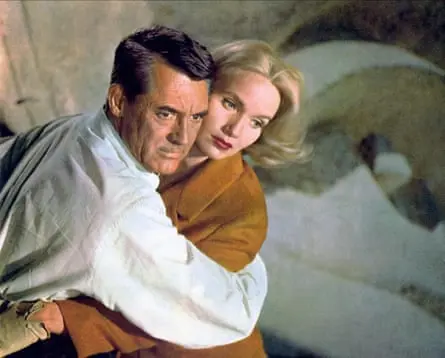
The golden age of Hollywood has lost one of its final and most luminous icons. Eva Marie Saint, the Academy Award-winning actress whose career spanned more than six decades and included unforgettable performances opposite cinematic giants like Marlon Brando and Cary Grant, has passed away at the age of 102. A family spokesperson confirmed on Tuesday that the legendary performer died of natural causes at her home in Los Angeles, bringing to a close a life defined by quiet grace, immense versatility, and a steadfast dedication to her craft.
Saint’s passing marks the twilight of an extraordinary generation of actors who defined the studio era and successfully transitioned into the modern landscape of film and television. From her gritty, naturalistic film debut in Elia Kazan’s 1954 masterpiece On the Waterfront to her timeless portrayal of the cool, enigmatic Eve Kendall in Alfred Hitchcock’s 1959 thriller North by Northwest, Saint established herself as a performer of rare depth. Unlike many of her contemporaries who courted tabloid notoriety, Saint balanced international stardom with a remarkably grounded personal life, maintaining a 65-year marriage to director and producer Jeffrey Hayden until his death in 2016.
Early Life and the Ascent to Stage and Screen
Born in New Jersey in 1924 to a Quaker family, Saint’s journey to Hollywood was neither immediate nor accidental. Raised during the tumultuous years of the Great Depression, she developed an early interest in performance, eventually studying theater at Bowling Green State University in Ohio. Following graduation, she navigated the competitive landscape of New York City’s mid-century entertainment sector, taking on a myriad of jobbing roles in early television and radio—mediums that were still in their relative infancy.
Her early struggles and undeniable potential caught the attention of the mainstream press in 1949. A feature in Life magazine famously chronicled her efforts to gain a foothold in the entertainment industry, opening with the prophetic observation: "The name of Eva Marie Saint may someday be a household word."
By the early 1950s, that prediction began to materialize. Saint demonstrated her formidable dramatic range on both the fledgling television screen and the Broadway stage. In 1953, she starred in both the original live television broadcast and the subsequent Broadway premiere of Horton Foote’s poignant play The Trip to Bountiful. Her performance as Thelma Jackson showcased a vulnerability and emotional authenticity that caught the eye of one of Hollywood’s most formidable directors.
The Breakthrough: On the Waterfront and Academy Glory
Director Elia Kazan was in the audience for The Trip to Bountiful when he spotted Saint, immediately recognizing a quality that set her apart from the traditional, high-glam starlets of the era. Kazan invited her to audition for his upcoming gritty drama about corruption in New Jersey dockworker unions, On the Waterfront.
The audition process was rigorous, requiring Saint to improvise a scene alongside Marlon Brando, who was already established as a revolutionary force in American acting. Saint later recalled that she found the intimidating experience exceptionally difficult. Nevertheless, her chemistry with Brando and her authentic, unvarnished delivery secured her the role of Edie Doyle, the moral compass and love interest of Brando’s conflicted protagonist, Terry Malloy.
The film was a critical and commercial triumph, and Saint’s performance earned universal acclaim. At the 27th Academy Awards held in 1955, she took home the Oscar for Best Supporting Actress. The win instantly propelled her into the upper echelon of Hollywood royalty, establishing her as an actor capable of holding her own alongside the most powerful screen presences of the twentieth century.
The Hitchcock Years and Cinematic Versatility
Rather than being typecast as a dramatic ingenue, Saint capitalized on her Oscar win by actively seeking diverse roles across a wide spectrum of genres. In 1956, she starred opposite comedian Bob Hope in the romantic comedy That Certain Feeling. She followed this with deeply challenging dramatic work, playing a woman struggling to cope with her husband’s secret drug addiction in Fred Zinnemann’s 1957 issue picture A Hatful of Rain, and co-starring alongside Elizabeth Taylor in the sweeping Civil War-era western Raintree County.
However, it was her collaboration with master suspense filmmaker Alfred Hitchcock that cemented her status as an enduring pop-culture icon. In 1959, Saint was cast as Eve Kendall in North by Northwest, starring opposite Cary Grant. The film, celebrated for its razor-sharp wit, breathtaking set pieces, and sophisticated romance, presented Saint in a new light: sleek, mysterious, and effortlessly glamorous.

Saint frequently shared the amusing anecdote of how she secured the career-defining role. During a lunch appointment with Hitchcock—a director notorious for meticulously controlling the visual presentation of his leading ladies—Saint arrived wearing a simple beige dress and white gloves. Recognizing the aesthetic precision that the director appreciated, she understood the visual language required to convince him she could embody the sophisticated, quick-witted secret agent he envisioned. Her performance remains a textbook study in cinematic charm and tension.
Balancing Family and a Storied Career
As the 1960s commenced, Saint maintained her momentum with a prominent role as American nurse Kitty Fremont in Exodus (1960), Otto Preminger’s sprawling cinematic adaptation of Leon Uris’s best-selling novel chronicling the founding of the state of Israel.
Despite her sustained success, Saint made a conscious and deliberate decision to step back from the relentless pace of Hollywood studio filmmaking. Prioritizing her young family with her husband, Jeffrey Hayden—whom she married in 1951—she chose to be more selective with her projects. Even with a reduced workload, her mid-decade credits remained impressive: she starred alongside Warren Beatty in All Fall Down (1962), reunited with Elizabeth Taylor in Vincente Minnelli’s drama The Sandpiper (1965), and played a journalist entangled in a romance with Yves Montand in John Frankenheimer’s high-octane racing drama Grand Prix (1966).
As the cultural and cinematic landscape shifted dramatically during the 1970s and 1980s, large-scale feature film roles for older actresses grew increasingly scarce. Despite earning critical praise for her work in the 1970 infidelity drama Loving alongside George Segal, Saint transitioned gracefully into television movies and guest-starring roles, finding the medium increasingly welcoming to mature female talent.
A Resurgence and Later Years
Saint enjoyed a celebrated "comeback" to feature films in the 1986 comedy Nothing in Common, starring Tom Hanks and Jackie Gleason. Her presence in the film reminded contemporary audiences of her enduring charisma and impeccable comedic and dramatic timing.
Into the twilight of her career, Saint continued to accept choice roles with legendary filmmakers. In 2005, she portrayed Sam Shepard’s mother in the Wim Wenders-directed western Don’t Come Knocking. A year later, she accepted a role that brought her career full circle in a poignant meta-textual sense: she played Martha Kent, the adoptive mother of Clark Kent, in Bryan Singer’s superhero blockbuster Superman Returns (2006). The film also featured posthumous archival footage of her On the Waterfront co-star Marlon Brando, whose estate granted permission for his 1978 appearance as Jor-El to be digitally integrated into the picture.
While her feature film appearances became sporadic, Saint remained a formidable presence on television. In 1990, she delivered a critically acclaimed performance in the television mini-series People Like Us—adapted from Dominick Dunne’s novel—which earned her a Primetime Emmy Award nomination and further solidified her reputation for dramatic excellence. Her final onscreen credit arrived in 2014 with Winter’s Tale, where she portrayed the sister of Colin Farrell’s character.
Industry Reactions and Legacy
Following the announcement of her death, tributes poured in from across the global film community, historians, and fans alike. Film institutions and contemporary actors lauded Saint not only for her immense talent on screen but also for her uncommon warmth, humility, and professional integrity.
Film historians note that Saint’s career represents a vital bridge between the method-driven realism of the 1950s and the polished studio craft of the classic era. She successfully navigated a Hollywood system that frequently marginalized women, using her intellect and artistic independence to curate a body of work remarkable for its quality and diversity.
Eva Marie Saint is survived by her children and extended family. Her passing closes a remarkable chapter in the history of cinema, but her indelible performances—from the rain-slicked New York piers of On the Waterfront to the dizzying heights of Mount Rushmore in North by Northwest—ensure that her artistic legacy will endure for generations to come.