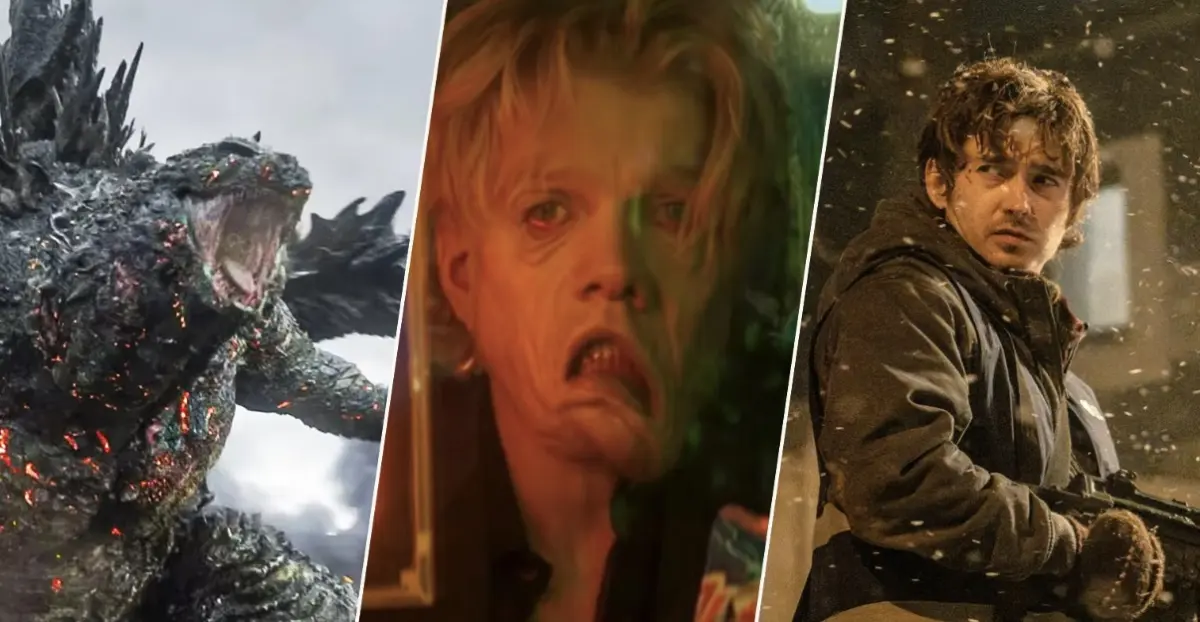
Godzilla Minus Zero has officially secured the top spot at the North American box office, marking a historic milestone for international cinema and cementing the enduring appeal of the legendary kaiju franchise. The R-rated, Japanese-language sequel, directed by Takashi Yamazaki, debuted with an estimated $31.6 million across domestic theaters. This figure brings its total global gross to approximately $63 million within its opening window, a testament to the film’s widespread cross-cultural appeal and the effectiveness of modern premium large-format screenings.
The financial performance of the film is particularly noteworthy when compared to its predecessor, Godzilla Minus One. Released in 2023, the previous installment earned $11.4 million during its domestic opening weekend. The performance of Minus Zero represents nearly triple the initial haul of the 2023 film, signaling a significant shift in audience demand for high-stakes, subtitled genre cinema. IMAX screens alone contributed $12.7 million to the total opening gross, highlighting the critical importance of large-format presentations in driving modern theatrical attendance.
A Historical Benchmark for Non-English Language Cinema
The success of Godzilla Minus Zero extends beyond the boundaries of the Godzilla franchise, as it has shattered long-standing records for non-English language films in North America. For over two decades, the martial arts epic Hero, directed by Zhang Yimou and starring Jet Li, held the record for the highest-grossing opening weekend for a live-action, non-English language film produced outside of the United States. Released in 2004, Hero debuted with $17.8 million.
Godzilla Minus Zero has surpassed this benchmark by nearly $14 million, establishing a new high-water mark that few foreign productions have approached since the turn of the millennium. Industry analysts suggest that this shift reflects a broader normalization of subtitled content among general audiences, bolstered by the success of international streaming platforms and a globalized cultural landscape that increasingly prioritizes high-concept, visually ambitious storytelling over linguistic barriers.
The Production Context and Yamazaki’s Vision
Takashi Yamazaki’s approach to the sequel has been cited by industry observers as a primary factor in the film’s resonance. By focusing on the emotional gravity of the Shikishima family and the post-war societal trauma that defines the setting, Yamazaki has successfully balanced human-centric drama with the technical demands of the kaiju genre. This narrative structure mirrors the acclaim received by the previous entry, which earned an Academy Award for Best Visual Effects, the first time a Godzilla film has achieved such an honor.
The possibility of a third installment has already entered public discourse. Following the film’s successful rollout, Yamazaki addressed the potential for future projects within this specific continuity. In recent statements, the director expressed a willingness to continue exploring this iteration of the monster, noting that he would be receptive to further offers from Toho to expand the franchise. Such a collaboration would likely involve the introduction of additional iconic adversaries from the Godzilla rogues’ gallery, following the successful reinterpretation of King Ghidorah in the current film.

Continued Momentum for Genre Films: Clayface and Resident Evil
While Godzilla dominates the headlines, other genre-focused films are also seeing robust performance figures. The body horror film Clayface has surpassed the $100 million mark globally, a performance that has exceeded initial industry projections. The film earned $6.6 million domestically during its third weekend, a modest 39% decline that underscores high audience retention and favorable word-of-mouth. To date, the film has secured $56 million in the North American market.
The success of Clayface highlights a strategic trend for major studios: the investment in specialized, mid-budget horror projects that target dedicated fan bases while maintaining a distinct visual identity. With filmmaker Francis Galluppi currently developing a new Constantine project, industry experts anticipate that studios will continue to leverage intellectual property from comic book divisions to produce auteur-driven horror content.
Similarly, Zach Cregger’s adaptation of Resident Evil has now exceeded $400 million in global box office receipts. This performance is particularly striking when juxtaposed with the 2021 release of Resident Evil: Welcome to Raccoon City, which concluded its global run with approximately $42 million. The success of Cregger’s film is often attributed to its accessibility; the narrative was crafted to be self-contained, allowing audiences unfamiliar with the source material to engage with the film as a standalone thriller. This strategy has proven effective in mitigating the "adaptation trap," where films become too reliant on dense franchise lore at the expense of general accessibility.
Strategic Implications for the Film Industry
The current box office landscape suggests a fundamental shift in how international and genre-specific films are marketed and consumed. The success of these titles—Godzilla, Clayface, and Resident Evil—points to a decline in the reliance on broad, four-quadrant blockbusters as the sole drivers of theater revenue. Instead, films that cater to specific, highly engaged fan bases are proving to be remarkably resilient.
For studios, the implication is clear: quality and accessibility, rather than the scale of the franchise alone, are the primary drivers of commercial success. As production budgets fluctuate and competition from home streaming services intensifies, the theatrical experience is increasingly defined by the "event" nature of the film. The reliance on premium formats, such as IMAX, and the willingness to explore original takes on established intellectual properties have allowed these films to reach audiences that were previously considered inaccessible to non-English or genre-heavy content.
Chronology of Recent Box Office Successes
- 2004: Zhang Yimou’s Hero sets the domestic opening record for a non-English language film at $17.8 million.
- 2021: Resident Evil: Welcome to Raccoon City finishes its theatrical run with a total of $42 million worldwide.
- 2023: Godzilla Minus One debuts with $11.4 million in North America, eventually winning the Oscar for Best Visual Effects.
- 2026 (November): Godzilla Minus Zero debuts to $31.6 million, setting a new record for international film openings in North America.
- 2026 (Ongoing): Clayface surpasses $100 million worldwide, defying initial industry projections of $80–100 million.
- 2026 (Ongoing): Resident Evil reaches $400 million worldwide, establishing a new commercial standard for video game adaptations.
Future Outlook
The financial performance of these films provides a roadmap for future studio strategies. As the industry looks toward the next calendar year, the emphasis on creative autonomy—seen in the work of directors like Yamazaki and Cregger—suggests that audiences are increasingly prioritizing directorial vision over standardized franchise templates.
For the Godzilla franchise specifically, the path forward appears promising. The integration of traditional kaiju tropes with modern, grounded filmmaking techniques has proven to be a sustainable model. As negotiations for potential sequels continue, the focus will likely remain on maintaining the balance between the spectacle of the monster’s presence and the emotional stakes of the human characters caught in its path. If current trends hold, the remainder of the year is likely to see these genre titles continue their sustained, albeit measured, performance in the international theatrical market. The success of these films proves that when studios take risks on distinctive, high-quality genre storytelling, the audience response is not only immediate but potentially record-breaking.