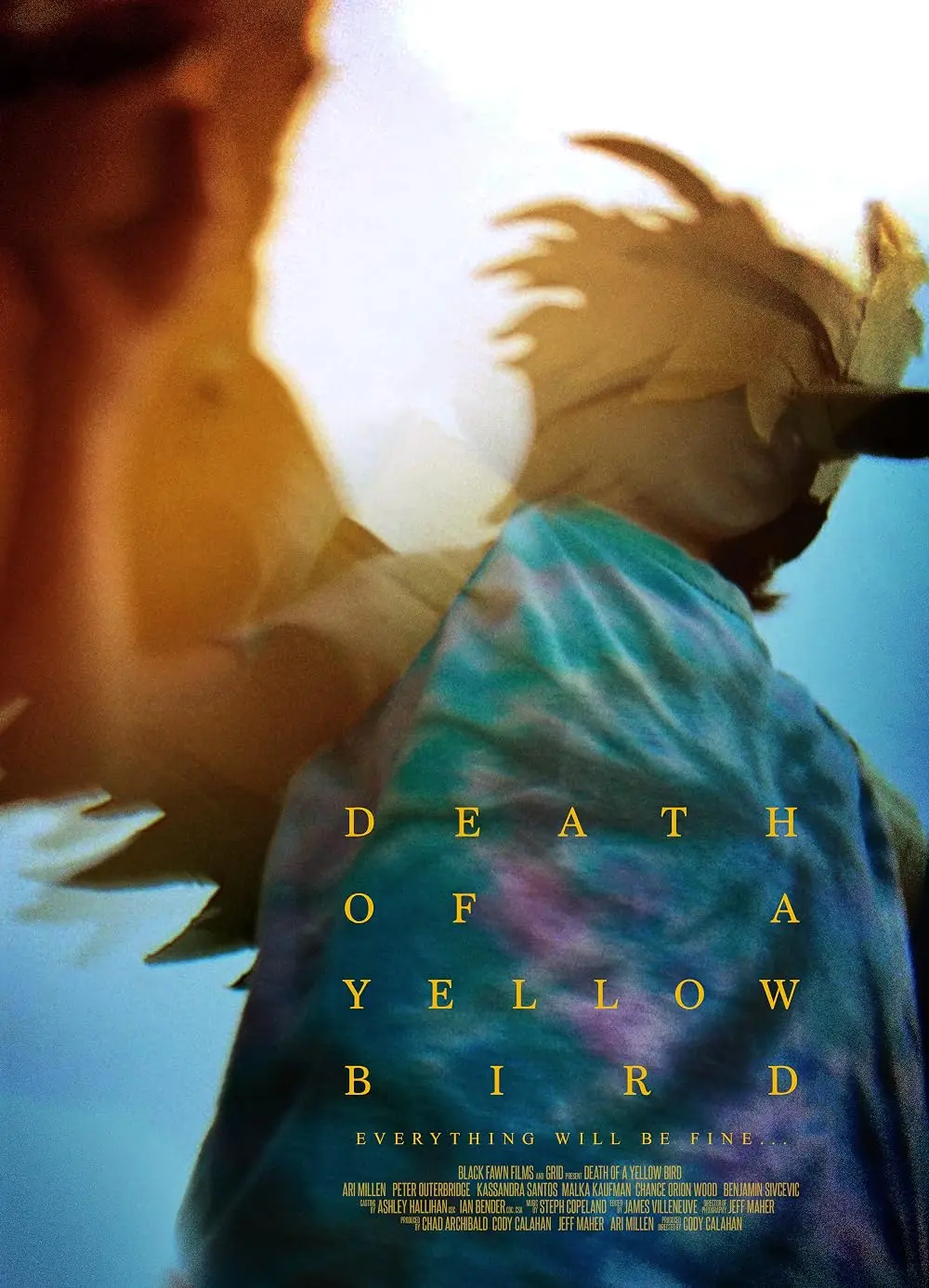
The 2026 edition of Fantastic Fest, held annually in Austin, Texas, served as the global stage for the premiere of Death of a Yellow Bird, a genre-defying feature directed by Cody Calahan. Known previously for his production work on A24’s acclaimed audio-horror film Undertone, Calahan transitions into the director’s chair to explore the intersection of terminal illness and the supernatural. The film, which stars Ari Millen as a man confronting his own mortality, has emerged as a significant entry in the contemporary horror landscape, specifically within the burgeoning "analog horror" subgenre. By weaving together the technical limitations of found-footage aesthetics with a deeply personal narrative regarding grief and reconciliation, the film positions itself alongside established classics that prioritize emotional resonance as much as traditional scares.
Narrative Framework and Character Study
The film’s plot centers on an unnamed protagonist, portrayed by Ari Millen, who receives a terminal cancer diagnosis. In a move to process the reality of his shortened life expectancy, he retreats to his long-abandoned childhood home during the peak of winter. This isolation is further compounded by the physical distance from his wife and young son, a narrative choice that underscores the character’s internal struggle to resolve his past before his future is extinguished.
Upon arriving at the family residence, the protagonist encounters a cache of archived video tapes concealed beneath the floorboards. These tapes feature his late brother, Danny, who passed away during their childhood. The discovery functions as the catalyst for the film’s central mystery: the man’s attempt to reconcile with a version of his brother that had previously existed only in the periphery of his memory. As the narrative progresses, the house, described as a "living ghost" of the protagonist’s history, becomes the stage for paranormal phenomena that interact directly with the discovered analog media.
Technical Execution and Analog Aesthetic
Cody Calahan’s directorial approach relies heavily on the technical constraints of the mid-to-late 20th-century recording equipment. The film utilizes a CRT television and a vintage camcorder as a bridge between the protagonist and the spiritual manifestations haunting the property. This methodology mirrors the growing trend of analog horror, a style characterized by the use of low-fidelity visual effects to evoke a sense of unease.
Cinematographer Jeff Maher, collaborating with Calahan, employs specific camera techniques to maintain tension. Notably, the film utilizes an oscillating fan-camera movement—a trope popularized by the Paranormal Activity franchise—to create an atmosphere of constant, low-level surveillance. Unlike traditional jump-scare horror, the film’s terror is largely derived from the protagonist’s desperate attempts to communicate with the entity via the camera’s viewfinder, turning the act of observation into a tool for both investigation and dread.
![‘Death of a Yellow Bird’ Review: Get Ready for The Saddest Scary Movie of 2026 [Fantastic Fest]](https://www.dreadcentral.com/wp-content/uploads/2026/10/MV5BNWY0ODJlNGUtMTMzZC00YTFiLWFkYzAtYjJlZWFlOTI2YWRmXkEyXkFqcGc@._V1_-1600x900.jpg)
Comparative Analysis within the Genre
Death of a Yellow Bird enters a crowded market of horror films that utilize lost or recovered media as a primary narrative device. The film draws stylistic parallels to Paul Owens’ 2021 project Landlocked, which also leveraged home movies to excavate buried family trauma. In terms of thematic structure, critics at the festival noted the film’s structural similarities to M. Night Shyamalan’s The Sixth Sense, particularly in its focus on the psychological burden of interacting with the deceased.
While many films in the genre rely on visceral violence, Calahan’s work is categorized as a "slow-burn" ghost story. The film adheres to a tradition of high-concept horror that includes titles such as Nicolas Roeg’s Don’t Look Now, Sean Byrne’s The Loved Ones, and the Spanish production The Orphanage. By focusing on the "end-of-life" reflection, the film manages to bridge the gap between the horror and drama genres, a combination that has historically proven difficult to execute without sacrificing one element for the other.
The Role of Fantastic Fest in Independent Cinema
The premiere of Death of a Yellow Bird at Fantastic Fest is significant within the context of the festival’s history. Since its inception in 2005, Fantastic Fest has been a primary incubator for genre-bending films, often providing a platform for directors who seek to challenge the conventions of traditional horror. The festival’s inclusion of the film in its 2026 programming highlights the industry’s shift toward intimate, character-driven horror projects.
Data from the 2026 festival circuit indicates a recurring theme of "grief-horror," with several prominent features focusing on the intersection of loss and the supernatural. Industry analysts suggest that this trend is a reflection of the audience’s changing tastes, moving away from purely nihilistic horror toward narratives that offer catharsis or complex emotional closure.
Production Context and Creative Intent
Cody Calahan’s transition from production to direction with this feature signifies a refinement of his visual style. Having served as a producer for projects like Undertone, Calahan has demonstrated a clear understanding of the atmospheric requirements necessary for successful horror. Statements regarding the production process suggest that the goal was to create a "vulnerable" film—one that encourages the audience to confront the inevitability of death alongside the protagonist.
The production team emphasized the importance of the setting, with the winter environment serving as a metaphor for the finality of the protagonist’s condition. The use of the house as a character—a trope commonly referred to as the "haunted home"—is utilized here not merely as a source of threats, but as a repository of the protagonist’s suppressed trauma.
![‘Death of a Yellow Bird’ Review: Get Ready for The Saddest Scary Movie of 2026 [Fantastic Fest]](https://www.dreadcentral.com/cdn-cgi/image/width=788%2Cheight=444%2Cfit=crop%2Cquality=65%2Cgravity=auto%2Cmetadata=none%2Cformat=auto%2Conerror=redirect/wp-content/uploads/2026/10/MV5BNWY0ODJlNGUtMTMzZC00YTFiLWFkYzAtYjJlZWFlOTI2YWRmXkEyXkFqcGc@._V1_.jpg)
Implications for the Future of Analog Horror
The success of Death of a Yellow Bird poses interesting questions for the future of the found-footage and analog horror subgenres. For years, critics have debated whether these formats were reaching a point of oversaturation. However, Calahan’s ability to weave a poignant, human-centric narrative into these established tropes suggests that the format remains a viable tool for storytelling when paired with strong character development.
The film’s reliance on practical, "low-tech" scares rather than heavy CGI serves as a testament to the efficacy of minimalism in modern horror. By forcing the viewer to focus on the static and audio feedback of the CRT screen, the film creates an immersive experience that relies on the viewer’s imagination to fill in the gaps. This approach aligns with broader movements in independent film that prioritize technical ingenuity over budgetary excess.
Conclusion and Industry Outlook
As Death of a Yellow Bird continues to garner attention following its Fantastic Fest premiere, it stands as a case study for the viability of emotion-heavy horror. The film’s ability to move audiences to tears while simultaneously maintaining a high level of tension suggests a maturation in the genre. For distributors and audiences alike, the film represents a shift toward more nuanced, empathetic storytelling within the horror space.
While the film remains a debut feature for Calahan, its critical reception at the festival suggests a strong trajectory for his future projects. By honoring the tropes of the past—specifically the haunted videotape and the isolated, atmospheric ghost story—while injecting a contemporary sensibility regarding mortality and forgiveness, Death of a Yellow Bird has secured its place as a notable entry in the 2026 horror canon. As the industry moves forward, the success of this film will likely encourage other creators to explore the darker, more sorrowful corners of the human experience through the lens of horror, proving that fear and grief are not mutually exclusive, but rather, deeply intertwined.